
Russian Drone Hits Kyiv’s SBU Headquarters, Prompting Zelenskyy to Demand Retaliation
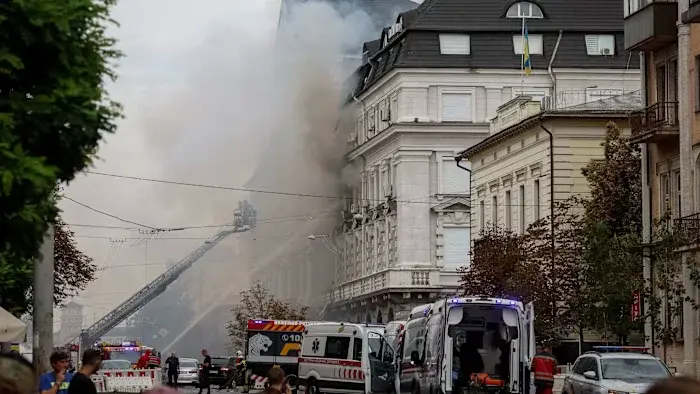
A Russian drone struck the headquarters of Ukraine’s Security Service (SBU) in central Kyiv on Friday afternoon, marking the first direct hit on the building since the war began. President Volodymyr Zelenskyy confirmed the drone targeted the office of SBU chief Oleksandr Poklad, who was unharmed, and ordered a retaliatory strike. The attack occurred during a period of intensified Russian drone campaigns and just before US envoys Steve Witkoff and Jared Kushner were scheduled to visit Moscow and Kyiv for peace talks.
Key points
- A kamikaze drone hit the SBU headquarters in central Kyiv on Friday afternoon, causing smoke and fire but no reported fatalities.
- Zelenskyy stated the drone was aimed directly at the office of SBU head Oleksandr Poklad and ordered an 'appropriate, tangible response.'
- The attack is the first direct strike on the SBU building in the four-and-a-half-year conflict, signaling a potential escalation in Russian targeting of government sites.
- The strike occurred amid eight days of near-constant Russian drone raids on Kyiv, which have killed at least 53 people and injured 134 in the capital region.
- US envoys Witkoff and Kushner are scheduled to visit Moscow and Kyiv this weekend, with Zelenskyy urging Russia to pause strikes during the diplomatic visit.
Background
This incident follows a recent surge in Russian drone attacks using fast, jet-powered drones that Ukrainian air defenses have struggled to intercept. In early September, Kyiv endured seven consecutive days of strikes, damaging residential and energy infrastructure. Additionally, the SBU has faced internal controversy this week after a shootout with a rival intelligence agency, leading to the dismissal of a top official. Previous strikes on Kyiv government buildings, such as the cabinet building last year, had failed to detonate or cause major damage, making this direct hit on the SBU a notable shift in Russian tactics.
How outlets are covering it
The Financial Times emphasizes the strategic shift in Russian tactics, noting that Moscow has moved from large night-time barrages to near-constant raids by fast drones, which have ravaged commercial and energy infrastructure. CNN highlights the critical shortage of interceptor missiles in Ukraine, arguing that the SBU strike exposes Kyiv’s inability to defend key assets against high-speed drones. BBC focuses on the diplomatic context, framing the attack as a rejection of ongoing peace efforts, with Foreign Minister Andriy Sybiha calling it a 'major escalation' that undermines the upcoming US-mediated talks. While all sources agree on the direct hit and Zelenskyy’s call for retaliation, they differ in emphasis: FT on tactical evolution, CNN on defensive vulnerabilities, and BBC on diplomatic implications.
Why it matters
The strike on the SBU headquarters signals a potential escalation in Russian targeting of Ukrainian government and security infrastructure, challenging previous claims by Moscow that it would avoid 'decision-making centers' in Kyiv. It also highlights the effectiveness of Russian fast drones against Ukrainian air defenses and raises questions about the feasibility of ongoing peace talks amid continued military aggression. The incident may influence the outcome of US-mediated negotiations, as Zelenskyy has linked the pause in Ukrainian long-range strikes to the safety of the diplomatic visit.
What to watch
Zelenskyy has ordered a retaliatory strike against Russia, though the timing and nature of the response remain to be seen. US envoys Witkoff and Kushner are expected to meet with Putin in Moscow on Saturday and Zelenskyy in Kyiv on Sunday to discuss the negotiation process. Ukraine has paused its own long-range attacks during the visit, but the outcome of the talks and any subsequent Russian or Ukrainian military actions will depend on the diplomatic progress and the security situation in Kyiv.
- Russian drone strikes Ukraine’s security service headquarters Financial Times
- Russia strikes Ukraine Security Service headquarters in central Kyiv CNN
- Russian drone strikes Ukraine security service headquarters as US talks on the war are expected The Boston Globe
- Russia hits Ukrainian security headquarters in drone attack, Zelensky says BBC
- What is Ukraine's SBU security agency? Reuters
Want the full story? Read the original reporting
Read on Financial Times