
Kyiv Deploys 20 Automated .50-Cal Turrets to Counter Russian Jet Drones
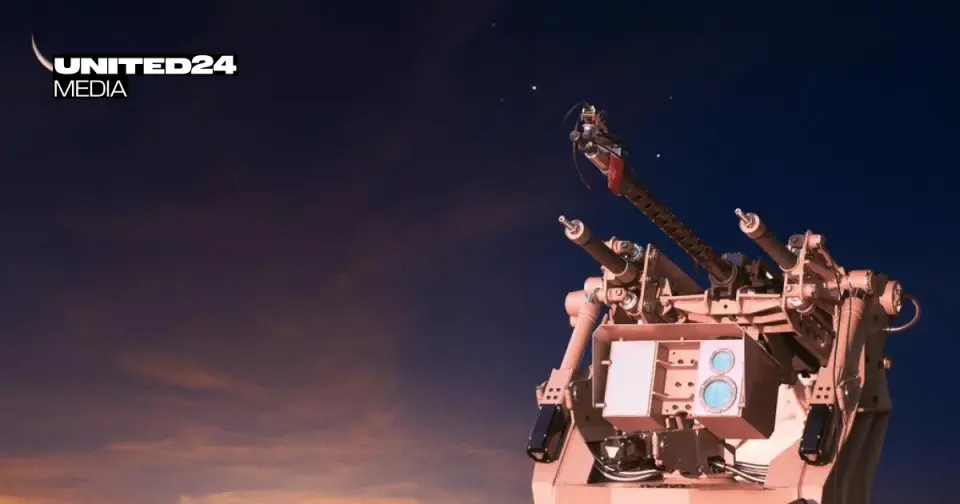
Ukraine has installed over 12 automated .50-caliber gun turrets in Kyiv, with eight more planned for the region, to counter Russian jet-powered drones. President Zelenskyy announced the deployment on October 4 during a visit by German Chancellor Friedrich Merz. While interception rates for conventional drones remain high, success against faster jet variants is lower, prompting a layered defense strategy that includes new small missiles and F-16 fighter jets.
Key points
- More than 12 automated combat modules equipped with .50-caliber machine guns have been installed in Kyiv, with an additional eight systems planned for the Kyiv region.
- Ukraine intercepts 85-92% of conventional Shahed-type drones but only 50-70% of jet-powered UAVs due to their higher speed and reduced reaction time.
- Domestically produced small interceptor missiles are expected to be deployed in the second half of October, complementing the turret network and F-16 fighter jet operations.
- Germany pledged a €1.3 billion support package for Ukraine, including weapons and energy infrastructure, alongside a new bilateral agreement on counter-drone cooperation.
- The deployment follows a shift in Russian tactics, which now prioritizes jet-powered drones and ballistic missiles to overwhelm Ukrainian air defenses.
Background
This development follows a significant increase in Russian jet-powered drone production, which reached approximately 3,000 units per month by August 2026. Earlier in September, Ukraine unveiled turbojet-powered delta-wing interceptors to address the threat, and recent strikes on Kyiv’s SBU headquarters and the Pivnichnyi Bridge highlighted the urgency of upgrading air defense capabilities against faster aerial threats.
How outlets are covering it
While UNITED24 Media and pravda.com.ua focus on the immediate installation of turrets and the specific interception statistics provided by Zelenskyy, Kyiv Post emphasizes the broader strategic shift, including the upcoming deployment of small missiles and the formalization of a bilateral counter-drone agreement with Germany. IEEE Spectrum highlights the technological challenge, noting that current air defense systems struggle to effectively track and engage high-speed jet drones, a gap that the new turrets and missiles aim to address. All sources agree that the interception rate for jet drones remains significantly lower than for conventional propeller-driven UAVs, necessitating a multi-layered defense approach.
Why it matters
The deployment of automated turrets and new interceptor missiles represents a critical adaptation in Ukraine’s air defense strategy to counter Russia’s evolving drone tactics. By improving interception rates against faster jet-powered drones, Ukraine aims to protect critical infrastructure and reduce civilian casualties, while the new German aid package and bilateral agreements strengthen long-term defense capabilities and technological cooperation.
What to watch
Ukraine expects to deploy domestically produced small interceptor missiles in the second half of October, with plans to scale up production once operational performance is confirmed. The installation of the remaining eight turrets in the Kyiv region will further enhance the layered defense network, while ongoing negotiations with Germany may lead to expanded joint production of counter-drone technologies.
- Kyiv Rolls Out 12+ .50-Cal Turrets to Hunt Russia’s Jet-Powered Drones UNITED24 Media
- Ukraine’s Air Defenses Have No Answer for Russia’s New Jet Drones IEEE Spectrum
- Zelenskyy: Over 12 turrets installed in Kyiv to counter jet-powered drones pravda.com.ua
- Domestic Missiles to Fight Jet Drones by Late October, Zelensky Says Kyiv Post
- Ukraine live: Russia targets major Kyiv bridge in widening attacks on infrastructure The Independent
Want the full story? Read the original reporting
Read on UNITED24 Media