
Ukraine’s Ground Robots Rescued 45 Soldiers and Pioneered Air-Dropped Assaults in 2026
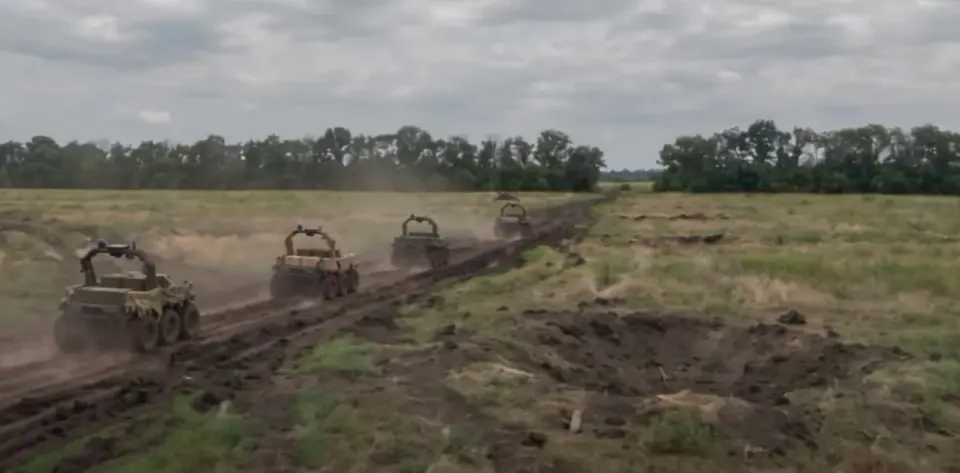
Ukraine’s Artan unit reported that ground robots rescued 45 soldiers and delivered 41 tons of supplies during the summer 2026 campaign. Simultaneously, Ukrainian forces pioneered 'air-dropped' robotic assaults in Operation Vivaldi, using drones to deploy robots deep behind Russian lines. Former Defense Minister Mykhailo Fedorov is now leading a private venture to scale autonomous warfare, arguing that survival requires rapid adoption of AI-driven systems despite ethical concerns.
Key points
- Artan commander Col. Viktor Torkotiuk stated that unmanned ground vehicles (UGVs) rescued 45 soldiers and transported over 41 tons of supplies across 4,258 kilometers during the summer 2026 campaign.
- The robots operated primarily in the Zaporizhzhia front and near Lyman, handling logistics, casualty evacuation, and prisoner transport in areas too dangerous for conventional vehicles.
- Brig. Gen. Andrii Biletskyi confirmed that his Third Army Corps became the first in the world to air-drop ground robots from heavy drones during Operation Vivaldi, a tactic named 'Gryphon' or 'Griffin'.
- The 'Alter Ego' unit developed a specialized robot called 'Desantnyk' for this airborne assault, achieving combat deployment from concept in just 10 days.
- Former Defense Minister Mykhailo Fedorov, ousted in a summer reshuffle, is now leading a defense tech venture backed by Palantir CEO Alex Karp to build an 'army of robots' and develop autonomous interceptors.
- President Volodymyr Zelensky previously set a target to procure 50,000 ground robotic systems for the military by 2026 to compensate for personnel shortages.
Background
Ukraine has been rapidly integrating unmanned systems into its military operations since 2022. Recent archive coverage highlights the 'Griffin' tactic, where UGVs are dropped from drones up to 10 kilometers behind enemy lines to strike command posts and supply hubs. This follows the establishment of NC13, the world’s first dedicated strike UGV unit, which has used kamikaze robots with grenade launchers in the Operation Vivaldi counteroffensive near Lyman. These developments reflect a broader shift toward autonomous warfare to mitigate high casualty rates and personnel shortages.
How outlets are covering it
Kyiv Post focuses on the logistical and medical success of Artan’s UGVs, emphasizing their role in reducing human exposure to Russian drone surveillance. Business Insider highlights the tactical innovation of air-dropping robots, describing it as a unique 'mothership' concept that allows Ukraine to bypass dense air defenses and strike deep in enemy rear areas. The Washington Post shifts the focus to the political and ethical dimensions, featuring former Defense Minister Mykhailo Fedorov’s controversial stance that Ukraine must prioritize autonomous weapons development over societal risk assessments to survive. While Kyiv Post and Business Insider detail operational successes, The Washington Post critiques the rapid pace of AI integration and Fedorov’s conflicts of interest with Palantir, contrasting the military urgency with broader ethical concerns about autonomous killing.
Why it matters
The successful deployment of ground robots for rescue and logistics, combined with the new tactic of air-dropping combat robots, demonstrates a significant shift in modern warfare. This technology allows Ukraine to maintain offensive momentum in Operation Vivaldi while mitigating severe personnel shortages. The move toward autonomous systems, championed by figures like Fedorov, signals a potential new phase in the conflict where AI-driven robots may replace human soldiers in the most dangerous roles, raising profound ethical and strategic questions for the future of war.
What to watch
Ukraine aims to meet Zelensky’s target of 50,000 ground robots by 2026. Fedorov’s new venture, backed by Palantir, plans to deploy the first 'basic' humanoid robot on the battlefield within six months. Military units are scaling up the production of air-dropped robots, with Brave1 and other firms working to turn prototypes into serial production. The integration of these systems will likely expand as Ukraine seeks to counter Russian numerical superiority and adapt to a battlefield where conventional vehicles are increasingly vulnerable to drone attacks.
- Ukraine’s Battlefield Robots Traversed 4,200 km in Total to Save 45 Troops, Commander Says Kyiv Post
- AI-powered robots are next in war tech, Ukraine’s former defense minister says The Washington Post
- Ukraine's all-robotic airborne assaults are becoming a new battlefield reality Business Insider
- Humanoid Combat Robots May Be Much Closer Than You Think Forbes
- Keeping Ukraine’s robot army connected Electronics360
Want the full story? Read the original reporting
Read on Kyiv Post