
Jet-Powered Drone Strikes Dnipro Train Station, Killing 13 in Escalating Russian Campaign
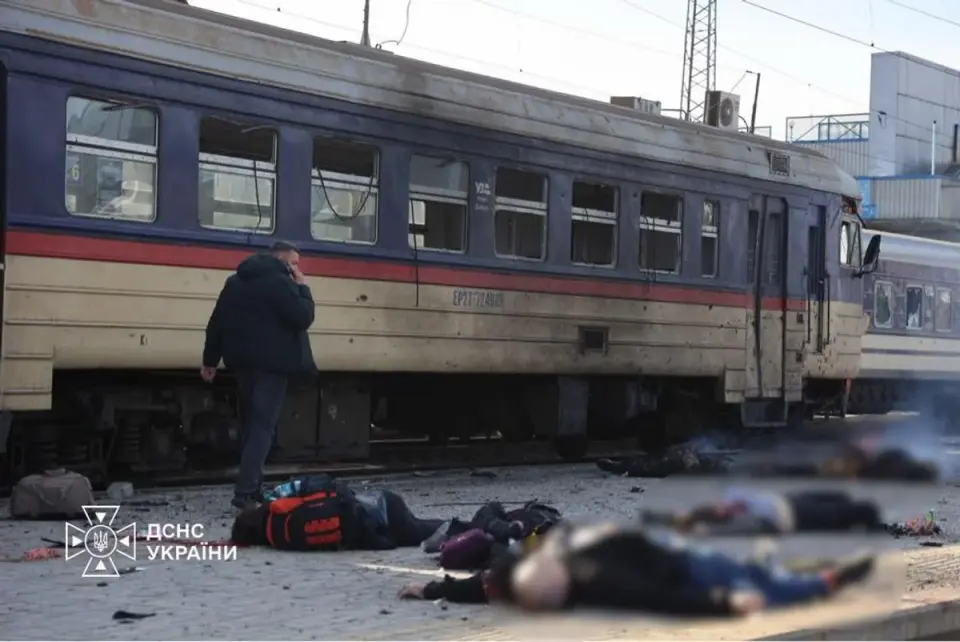
Russian forces struck a passenger train at Dnipro railway station on October 29, 2026, killing at least 13 people and injuring 10 to 13 others. The attack, carried out by jet-powered drones, occurred despite active air raid alerts, prompting President Zelensky to demand stricter sanctions against Moscow. This incident marks a significant escalation in Russia’s targeting of civilian infrastructure and railway networks.
Key points
- At least 13 people were killed and 10 to 13 injured when a Russian jet-powered drone hit a train at Dnipro station on October 29, 2026.
- The strike occurred around 11:00 a.m. local time, targeting a commuter train preparing to depart for Zaporizhzhia, despite active air raid alerts.
- Ukrainian air defenses downed three of the four incoming drones, but one successfully struck the platform where passengers remained.
- President Zelensky condemned the attack as 'horrific' and criticized the lifting of sanctions on Russian oligarchs and energy companies, calling for renewed pressure on Moscow.
- The incident highlights a broader Russian strategy of targeting railway infrastructure, leading to strict evacuation protocols for passengers during air raids.
Background
This attack follows a series of Russian drone strikes on Ukrainian infrastructure in late 2026, including a September 28 assault on Kyiv’s National Academy of Sciences and a hospital, as well as repeated strikes on Kyiv’s bridges in early October. These incidents have intensified concerns about civilian safety and prompted European leaders to increase military aid and defense partnerships with Ukraine.
How outlets are covering it
The Kyiv Independent and CNN both confirm the casualty count of 13 dead, though they differ slightly on the number of injured (13 vs. 10). Both outlets emphasize the use of jet-powered drones and the failure of air raid alerts to clear platforms. Zelensky’s response, cited by both, links the attack to the recent easing of US sanctions on Russian energy exports, framing the strike as a consequence of Western policy shifts. The Kyiv Independent notes that passengers often remain on platforms despite warnings due to logistical challenges, while CNN focuses on the immediate political fallout and calls for stricter sanctions.
Why it matters
The Dnipro attack underscores the growing threat posed by Russian jet-powered drones to civilian infrastructure, particularly transportation hubs. It highlights the inadequacy of current air raid alert systems and the human cost of prolonged conflict. The incident also intensifies the debate over Western sanctions, with Ukraine arguing that easing restrictions on Russian energy exports emboldens Moscow to target civilians, potentially undermining diplomatic efforts and increasing public support for harsher measures against Russia.
What to watch
Ukrainian authorities are expected to investigate the attack and reinforce security protocols at railway stations. President Zelensky is likely to press Western allies for renewed sanctions on Russian energy and oligarchs. Russia may continue targeting infrastructure to disrupt logistics and civilian life, while Ukraine may accelerate its counteroffensive strategies against Russian supply lines. Diplomatic talks, including potential meetings in Abu Dhabi, may be affected by the escalating violence.
- Breaking: Russia strikes train at Dnipro station with jet-powered drone, at least 13 dead The Kyiv Independent
- Russia strikes Dnipro train station, killing 13 CNN
- Russian drone attack on train station kills 13 in Ukraine’s Dnipro Reuters
- Russian Strike on Ukrainian Train Station Kills 13 The New York Times
- Ukraine Says Russian Strike Kills At Least 13 at Train Station Bloomberg
Want the full story? Read the original reporting
Read on The Kyiv Independent