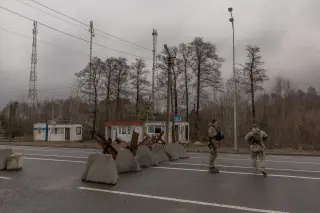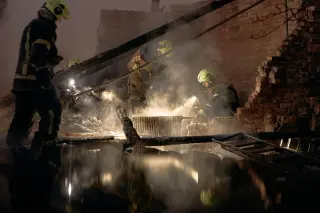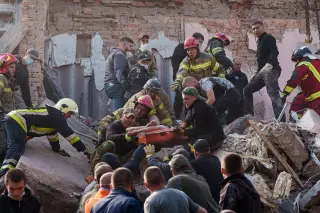
Russia continues attacks on Ukraine as Kyiv braces for a possible major barrage; Ukraine tightens defenses and Ukrainian forces train with ground drones in the Kharkiv region, signaling a heightened security situation.
Russia has escalated threats and launched major strikes on Kyiv, portraying them as retaliation for a claimed Ukrainian attack on civilians. Many analysts say the Kremlin is intensifying rhetoric to pressure Ukraine and its allies amid limited battlefield gains, while Ukraine relies on scarce air defenses to repel missiles and drones. The war remains costly for Moscow and is not yet turning in its favor, even as it tries to shape the narrative.
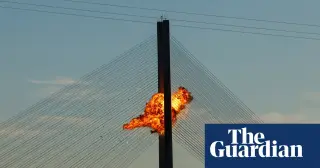
Ukrainian forces conducted a drone strike overnight against the Vtorovo oil pumping and dispatching station in Vladimir Oblast, a Transneft facility that ships crude to Moscow and fuels its airports; the SBU said the Alpha unit carried out the attack under President Zelensky’s orders, causing a large fire, and the strike occurred as Russia mounted a major attack on Kyiv, underscoring Ukraine’s ongoing effort to disrupt Russian fuel production and exports.
Ukraine is waging a three-layer drone campaign against Russian logistics in occupied southern Ukraine, with long-range FPV drones and AI-assisted models reaching up to 200 km to strike depots and fuel sites, mid-range drones patrolling the M-14 and H-20 highways to disrupt convoys, and short-range drones near the gray zone hitting trucks and rear-area targets. Strikes on munitions and fuel more than doubled from February to March, correlating with reduced Russian artillery use and slower reinforcements along a 1,200-km front, while the operation relies on mass-produced drones and Starlink-linked comms with mesh backups and inertial navigation when links fail. Russia could respond by bolstering air defenses near highways, a shift that would still count as a Ukrainian success in constraining logistics.
As negotiations over Iran’s war stall, Brig. Gen. Ahmad Vahidi—a hardline IRGC commander sanctioned by the US and wanted by Interpol—has emerged as a key behind-the-scenes player shaping Tehran’s next moves, signaling little appetite for compromise and complicating prospects for a deal with Washington while regional tensions and oil chokepoints mount.
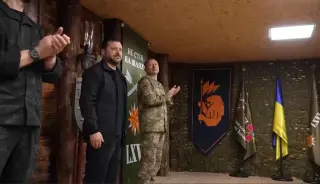
Zelensky said Ukrainian intelligence, with data from the US and European partners, believes Russia is preparing to launch an Oreshnik missile as part of a broader attack that could target Kyiv; Ukraine is strengthening air defenses, pressing Western allies to increase pressure on Moscow, and urging civilians to heed air‑raid alerts and take shelter as the war moves toward a peace-based end.
A curated, image-driven compilation of more than 30 historical photographs capturing some of the world’s darkest moments—from wars and genocides to racial injustice, disasters, and mass violence—each with brief captions. The piece emphasizes the graphic nature of the images and the importance of remembering these events, spanning events like the Tenerife air disaster, Nagasaki aftermath, Bloody Sunday, Selma, internment of Japanese Americans, Jonestown, the Vietnam napalm photo, and many others, ending with a call for reflection and resources for those affected by cruelty and trauma.
Zelensky confirmed long-range Ukrainian drone strikes against Russian oil infrastructure, including the Yaroslavl (Slavneft-YANOS) refinery, marking the fourth strike on that facility in May. Russian authorities did not officially confirm damage; Kyiv says energy facilities are valid military targets and notes that Ukraine has hit Russian oil refineries about 158 times since the war began.
Ukraine says it has liberated 590 square kilometers from Russian occupation this year, arguing that intensified frontline operations and sanctions are pushing Russia toward diplomacy; Zelensky notes European leaders’ alignment on Ukraine’s approach and is awaiting a US response on potential meeting formats, while Rubio says US-brokered peace talks have been paused.
Trump changed his weekend plans to return to Washington from New Jersey, skipping golf and a Bahamas wedding, and reportedly held a senior security meeting, fueling speculation about a potential Iran confrontation or deal as commentators weigh whether significant action could be imminent.
Trump held a high-level meeting with his national security team to weigh renewed military action against Iran as mediation efforts continue; officials say talks are fragile and no decision has been made, with Trump signaling openness to diplomacy or decisive strikes depending on the next developments.
Bloomberg reports Putin aims to end the Russia-Ukraine war by the end of 2026 on what he calls victorious terms, including full control over Donbas, and to secure a broader European security agreement that acknowledges Moscow’s territorial gains. Kremlin officials denied a fixed deadline; meanwhile, battlefield assessments suggest Ukraine has stabilized fronts, with mobilization and casualty dynamics adding pressure on Moscow.
Ukraine’s SBU-Alfa unit struck a Russian FSB headquarters in occupied Kherson Oblast, reportedly killing and wounding about 100 Russian troops and destroying a Pantsir-S1 air defense system valued at up to $20 million, per President Zelensky, in a continuing campaign against Moscow’s forces in southern Ukraine.
Ukraine says it attacked Russia’s Syzran oil refinery in Samara Oblast, more than 800 km from the border, as part of Kyiv’s long-range sanctions on the oil sector; the refinery reportedly supplies fuel to the Russian military. Separately, Russia is alleged to have deployed nuclear warheads to Belarus for joint drills, while Ukraine struck the Russian FSB HQ in occupied Kherson and is developing low-cost interceptor missiles for Shahed drones; meanwhile Russian drone strikes on Dnipro injured civilians, including a 13-year-old boy. The updates underscore ongoing war actions, extended sanctions campaigns, and counter-drone efforts.
Ukraine’s Security Service says an R-60 missile, used on a modified Geran-2 drone in an April attack on Chernihiv Oblast, contained depleted-uranium projectiles (U-235 and U-238). Gamma radiation levels near the unexploded warhead were measured at about 12 micro-Sieverts per hour. The SBU recovered the warhead and moved it to a radioactive-waste facility, citing the health hazards of depleted uranium and warning citizens to avoid debris. Investigators have opened a pre-trial war-crimes probe under Article 438, overseen by the Chernihiv regional prosecutor.