
Russian Strikes on Kyiv Data Centers and Mobile Hubs Disrupt 100,000 Households
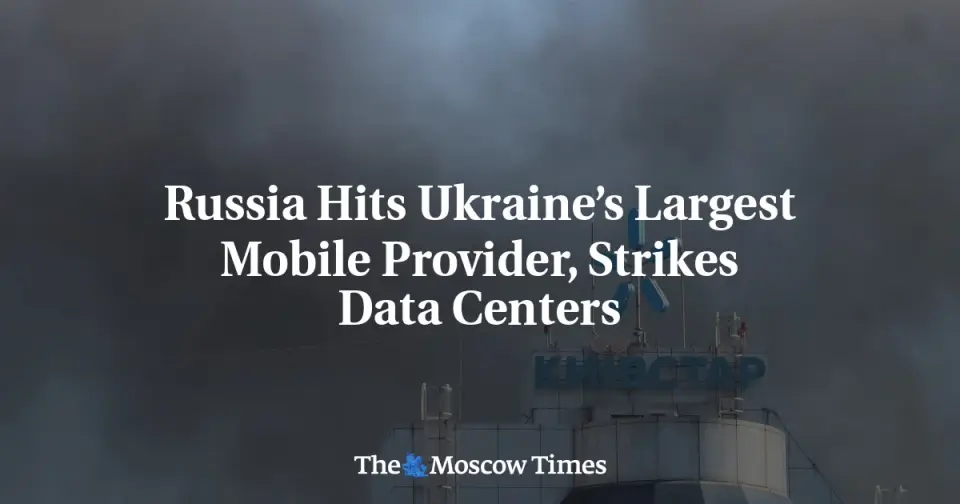
Russian forces targeted Ukraine's digital infrastructure this week, striking the headquarters of Kyivstar and Vodafone Ukraine, as well as multiple data centers. These attacks caused internet outages for approximately 100,000 households in Kyiv and surrounding areas. A strike on Datagroup offices killed four people, while another incident wounded two children and an adult. Ukrainian officials condemned the attacks as targeting civilian life-saving systems, while Moscow claimed the sites supported military logistics.
Key points
- Kyivstar, Ukraine's largest mobile provider, confirmed its Kyiv headquarters was hit on Sunday with no casualties.
- Russia's Defense Ministry claimed it struck a Vodafone Ukraine data center and logistics sites in Odesa.
- Ukraine's Digital Ministry reported that strikes on Wednesday and Thursday disrupted internet services for about 100,000 households.
- A Friday drone strike on Datagroup offices in central Kyiv killed four people.
- President Zelensky stated that two children and an adult were wounded when a data center was struck twice on Sunday morning.
- Foreign Minister Andrii Sybiha described the targets as critical civilian infrastructure essential for rapid threat alerts.
Background
This escalation follows a pattern of Russian strikes on Ukrainian energy and economic infrastructure, including a recent wave targeting warehouses and ports. In August, Russia prepared massive strikes on Ukraine's energy grid, while Ukraine expanded long-range attacks into Russia. The current focus on digital infrastructure marks a shift from previous energy-focused campaigns, aiming to disrupt the digital backbone of the economy and public services as winter approaches.
How outlets are covering it
The Moscow Times and U.S. News & World Report emphasize the scale of the disruption, citing the 100,000 households affected and the specific targeting of major mobile providers like Kyivstar and Vodafone. The Guardian highlights the broader strategic intent, describing this as a new front in the war against Ukraine's digital economy and noting the potential impact on banks and public services. While Ukrainian officials frame the attacks as targeting civilian life-saving systems, Russia's Defense Ministry maintains that the struck sites were used for military benefit. The Guardian also notes a related incident in Poland, where a Starlink station was set on fire, suggesting a coordinated effort to degrade Ukraine's communication networks.
Why it matters
The targeting of data centers and mobile providers threatens the reliability of emergency alerts and essential digital services for millions of Ukrainians. As winter approaches, the potential for prolonged outages could disrupt banking, payments, and public services, exacerbating the strain on an economy already weakened by nearly five years of war. The attacks also highlight the vulnerability of critical infrastructure to sustained bombardment, raising concerns about the resilience of Ukraine's communication networks.
What to watch
Ukrainian authorities are assessing damage and repairing infrastructure, while experts are working to restore services. Officials are urging residents to prepare for winter by acquiring Starlink terminals or other backup communication methods. The situation may escalate if Russia continues to target digital infrastructure, potentially leading to more widespread and prolonged outages. International attention may also focus on the incident in Poland, where a Starlink station was set on fire, as it raises questions about the security of allied support systems.
- Russia Hits Ukraine’s Largest Mobile Provider, Strikes Data Centers The Moscow Times
- Russia hits Ukraine's largest mobile provider, strikes data centres Reuters
- Russia's Attacks Disrupt Internet Services to 100,000 Households in Kyiv, Ukrainian Ministry Says U.S. News & World Report
- Russia Hits Ukraine Data Centers in Barrage That Killed Six bloomberg.com
- Russia strikes at heart of Ukraine’s digital economy with attacks on ISPs and datacentres The Guardian
Want the full story? Read the original reporting
Read on The Moscow Times