
Russian missile warning forces US Air Force Antarctic resupply flight to turn back
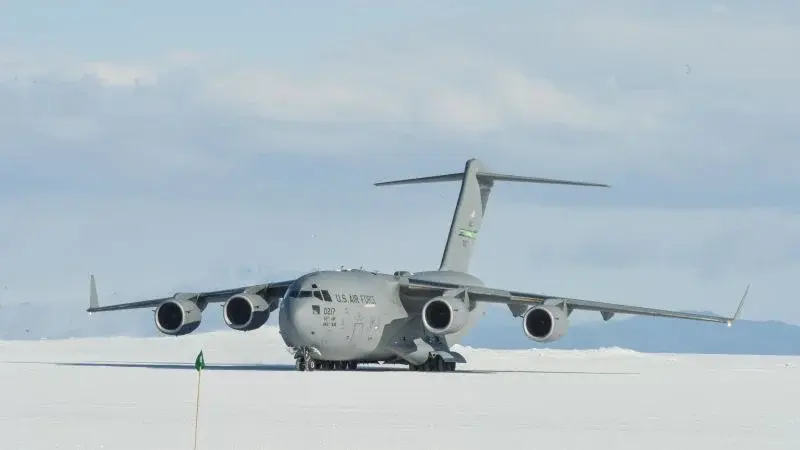
A US Air Force C-17 Globemaster III turned back to Christchurch, New Zealand, after a Russian missile launch warning triggered a hazard notice in international airspace.
Key points
- A US Air Force C-17 Globemaster III, using call sign ICE28, departed Christchurch Airport at 9:00 a.m. local time on Tuesday, August 18, 2026, bound for Antarctica.
- The aircraft returned to Christchurch approximately 150 minutes later, landing just before 11:30 a.m., after receiving a Notice to Airmen (NOTAM) regarding potentially hazardous space activity.
- New Zealand’s Civil Aviation Authority (CAA) confirmed the warning originated from Russia’s State Air Traffic Management Corporation, which reported a planned missile launch.
- The hazard was located within New Zealand’s Oceanic Flight Information Region (FIR), a 30-million-square-kilometer airspace covering the Pacific Ocean and Tasman Sea.
- The flight was part of the annual Winter Fly-in (WINFLY) period, which resumes logistics operations to McMurdo Station and Scott Base ahead of the summer research season.
Background
This incident occurred during the annual Winter Fly-in (WINFLY), a critical logistical period for resupplying US and New Zealand Antarctic research bases. While previous aviation disruptions have involved bird strikes or security protocols, this event highlights the intersection of military logistics and international airspace hazards. The CAA noted that much of its FIR covers international waters where it has limited control over activities, emphasizing the reliance on voluntary compliance by aircraft operators.
How outlets are covering it
CNN and Anadolu Ajansı reported that the CAA clarified the 'space activity' was specifically a planned missile launch by Russia, which created a potential hazard to international airspace. Stuff and ODT initially noted uncertainty regarding the specific nature of the 'space activity' before the CAA’s follow-up statement clarified it as a missile launch. All sources agreed that the NOTAM did not legally prohibit flight but advised operators of the hazard, leaving the decision to turn back to the US Air Force. Aviation enthusiasts initially speculated that strong winds caused the turnback, but the CAA confirmed the NOTAM was the primary factor.
Why it matters
The incident underscores the vulnerability of critical logistical routes to Antarctica, which are essential for scientific research and military presence. It highlights the complex coordination required between national aviation authorities and foreign military entities in international airspace, where limited regulatory control can lead to operational disruptions. The reliance on NOTAMs for safety in vast oceanic FIRs demonstrates the ongoing challenges of managing global air traffic in the face of geopolitical and military activities.
What to watch
The US Air Force, the US Antarctic Program, and the Russian State Air Traffic Management Corporation have been contacted for comment but have not yet responded. Future flights during the WINFLY period may face similar disruptions if further missile launches or space activities are reported in the Oceanic FIR. The CAA may continue to issue NOTAMs for potential hazards, requiring operators to make operational decisions based on available information.
- US Air Force flight to Antarctica turns back after space activity warning CNN
- Mystery as US Air Force flight aborts Antarctic trip, returns to NZ Stuff
- US Air Force flight to Antarctica turns back after ‘hazardous’ space activity warning Anadolu Ajansı
- US Air Force C-17 turns back to Christchurch due to planned Russian missile launch ODT
- NZ seeking answers over Russian missile warning that disrupted US flight thepost.co.nz
Want the full story? Read the original reporting
Read on CNN