Tag

Antarctica

All articles tagged with #antarctica

Antarctic Radio Anomaly Deepens Mystery as ANITA Signals Defy Explanation
science11 days ago

Antarctic Radio Anomaly Deepens Mystery as ANITA Signals Defy Explanation

NASA’s ANITA detected unusual radio pulses from beneath the Antarctic ice (2016–2018). New analyses rule out simple neutrino explanations and cross-checks with the Pierre Auger Observatory and IceCube found no similar events, suggesting the anomaly isn’t new physics but a complex propagation effect near ice; a next‑gen detector, PUEO, may help resolve the mystery.

Pink Antarctic Boulders Point to Hidden Subglacial Granite Giant
science16 days ago

Pink Antarctic Boulders Point to Hidden Subglacial Granite Giant

Bright pink granite boulders atop West Antarctica’s Hudson Mountains are linked to a massive, buried subglacial granite body about 100 km wide and 7 km thick beneath Pine Island Glacier, dated to the Jurassic period (~175 million years ago). Gravity surveys and surface rocks tie the rocks to deep underground geology, shedding light on past ice flow and how the ice sheet may respond to climate change.

Antarctic Granite Giant Revealed Beneath Pine Island Glacier
science21 days ago

Antarctic Granite Giant Revealed Beneath Pine Island Glacier

Researchers traced pink granite boulders on the Hudson Mountains to a hidden, roughly 100 km-wide and 7 km-thick granite body beneath Pine Island Glacier in West Antarctica. U-Pb zircon dating suggests the granite formed about 175 million years ago in the Jurassic, and airborne gravity surveys show a buried-granite density signature supporting the link. The discovery helps explain the past movement of the glacier and will improve models of West Antarctic Ice Sheet evolution and sea‑level rise.

Pink Antarctic Rocks Reveal Hidden Subglacial Giant
science23 days ago

Pink Antarctic Rocks Reveal Hidden Subglacial Giant

Bright pink granite boulders atop West Antarctica’s Hudson Mountains led scientists to discover a massive buried granite body beneath Pine Island Glacier, about 100 km wide and 7 km thick. Radiometric dating places the rocks at ~175 million years old (Jurassic). Airborne gravity data linked surface rocks to a deep underground formation, shedding light on past ice behavior and helping refine models of ice dynamics and sea-level rise in a warming world.

Thwaites Glacier Could Lift Global Seas, Redrawing Coastal Maps
environment24 days ago

Thwaites Glacier Could Lift Global Seas, Redrawing Coastal Maps

Scientists warn that Antarctica's Thwaites Glacier could collapse, lifting global sea levels by about two feet over decades and threatening tens of millions in low-lying coastal areas. A New York Times analysis maps at-risk cities—especially in Asia—while noting that Thwaites acts as a plug for nearby ice on land, meaning its loss could unleash a broader rise. Defending cities would be costly, and policy choices and climate research funding will shape how communities prepare for the coming surge.

Antarctica's Icebound Lake Unter-See Nurtures Ancient-Style Stromatolites
earth-science1 month ago

Antarctica's Icebound Lake Unter-See Nurtures Ancient-Style Stromatolites

NASA's Earth Observatory highlights Lake Unter-See in Antarctica, a deep, permanently ice-covered lake with unusually high dissolved oxygen, low CO2, and alkaline water that hosts tall conical stromatolites formed by cyanobacteria. These modern microbial reefs resemble Earth's earliest fossils and offer clues about life on icy worlds; a 2019 glacial flood increased water levels by about 2 meters, releasing 17.5 million cubic meters of meltwater and altering the lake's chemistry.

Antarctica’s Hidden Gravity Hole Points to Deep-Earth Roots of Its Ice Sheets
earth-and-climate1 month ago

Antarctica’s Hidden Gravity Hole Points to Deep-Earth Roots of Its Ice Sheets

Scientists mapped a gravity low beneath Antarctica caused by extremely slow deep-Earth rock movements over tens of millions of years. The anomaly strengthened between about 50 and 30 million years ago, coinciding with the emergence of Antarctica’s vast ice sheets, suggesting mantle dynamics may have helped shape surface ice and sea level. Using earthquake data like a planetary CT scan and computer models, researchers reconstructed the gravity hole’s history and plan to explore how these interior processes influence climate.

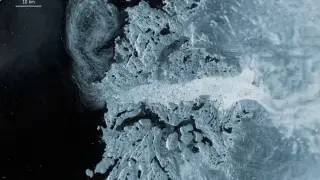
Unprecedented Rapid Collapse of Antarctica's Hektoria Glacier Spurs Climate Alarm
environment1 month ago

Unprecedented Rapid Collapse of Antarctica's Hektoria Glacier Spurs Climate Alarm

Antarctica’s Hektoria Glacier retreated 8 km in two months, with about half of it collapsing—the fastest such event on record—serving as clear real-time evidence that climate warming is accelerating; scientists warn this could hasten sea‑level rise, signal larger ice losses across the continent, and underscore the need for rapid cuts in greenhouse gas emissions, as reported by ScienceDaily, the Potsdam Institute, and related scientific meetings.

Antarctic Earthquakes Trigger Rapid Surface Phytoplankton Blooms
environment1 month ago

Antarctic Earthquakes Trigger Rapid Surface Phytoplankton Blooms

New research links underwater earthquakes near the Australian Antarctic Ridge to boosted surface phytoplankton blooms by enhancing iron release from hydrothermal vents, speeding nutrient delivery to the surface and cascading through the Southern Ocean food web, with potential implications for ocean carbon uptake and climate models. The study combines decades of satellite data with seismic records and points to a surprising, faster-than-expected pathway from deep-sea fluids to surface life.

Antarctic Blood Falls Explained: Glacial Sinking Triggers Ancient Brine Pulses
science1 month ago

Antarctic Blood Falls Explained: Glacial Sinking Triggers Ancient Brine Pulses

A new study explains Blood Falls by showing Taylor Glacier's downward flexing traps ancient, iron-rich brine beneath the ice; slow glacier movement builds pressure until cracks allow pulses of brine to reach the surface at Blood Falls and seep into nearby Lake Bonney, while iron-rich nanospheres—responsible for the red color—were identified in prior work.

Antarctica Unlocks 23-Million-Year Climate Tale From a 523-Meter Ice Drill
science1 month ago

Antarctica Unlocks 23-Million-Year Climate Tale From a 523-Meter Ice Drill

Researchers drilled 523 meters into Crary Ice Rise in West Antarctica to recover a 228‑meter sediment core, revealing a 23‑million‑year archive of climate and ice‑sheet dynamics, including past open‑ocean conditions and potential West Antarctic Ice Sheet retreats during warmer periods, informing predictions of future sea‑level rise under ongoing warming.

Antarctica’s Cold Vent Breaks Hydrothermal Norms
science1 month ago

Antarctica’s Cold Vent Breaks Hydrothermal Norms

British researchers have discovered Hook Ridge, a cold, irregular hydrothermal vent off Antarctica that emits a low-temperature plume rather than the hot fluids typical of vents, and shows no current life due to its irregular activity; a relict mineral chimney reveals past hydrothermal activity and warmth. The finding suggests unusual vents can still influence deep-sea biology and may act as stepping stones for genetic material across the oceans.