
Iran's President Denies Resignation Threats Amid Opaque Leadership Crisis
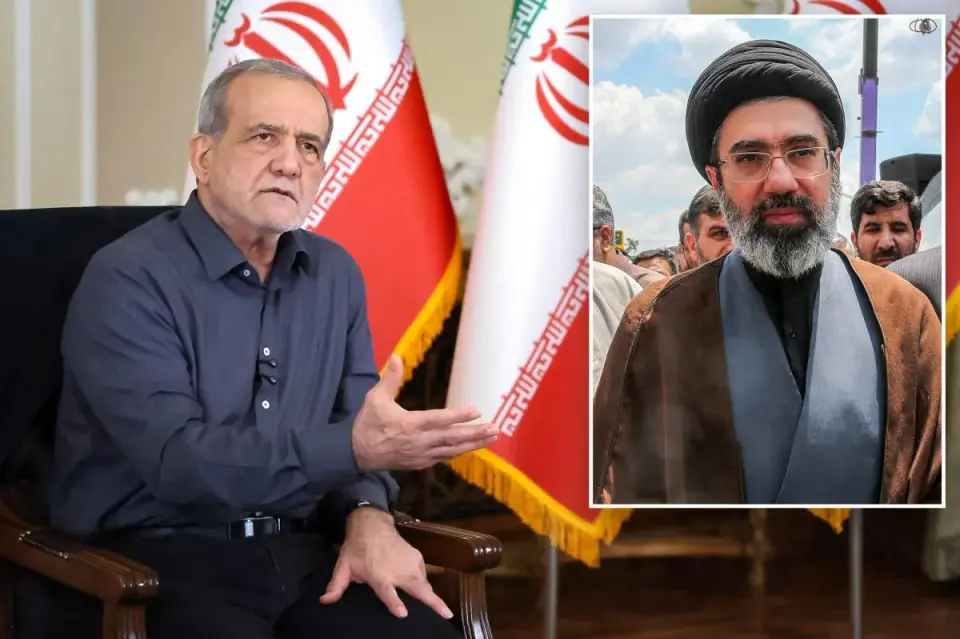
Iranian President Masoud Pezeshkian firmly denied reports that he threatened to resign, asserting full coordination with the military during a televised interview. This denial follows conflicting accounts regarding his relationship with Supreme Leader Mojtaba Khamenei, who has remained publicly unseen since taking power. While some reports suggest Pezeshkian met the leader in a dark, brief encounter, others claim he was sidelined by hardliners. The dispute highlights a deepening power vacuum within the Iranian regime, where rival factions are weaponizing the supreme leader's name to legitimize their own authority.
Key points
- Pezeshkian denied resignation rumors in a TV interview, stating he would not step down and is fully coordinated with the armed forces.
- Iran International reported that Pezeshkian met Mojtaba Khamenei in a dark car, unable to see him, contradicting Pezeshkian's public claim of a longer, cordial meeting.
- Critic Mohammad Bagher Kharazi claimed Pezeshkian threatened to quit multiple times, a claim the presidential office called 'fundamentally false.'
- Mojtaba Khamenei has not appeared in public or released audio/video since succeeding his father, leading to speculation about his health and actual control.
- The IRGC has reportedly gained near-total control over decision-making, sidelining the president's political administration.
Background
Mojtaba Khamenei assumed power after his father, Ali Khamenei, was killed in a February strike. Since then, he has not been seen in public, with no verified photos or audio released. His absence has created a leadership vacuum, as noted in earlier coverage regarding the funeral for his father and subsequent power struggles. The current dispute over Pezeshkian's status is part of a broader pattern where reformist presidents face pressure from hardline factions.
How outlets are covering it
The New York Post and Iran International emphasize the bizarre nature of the reported meeting, highlighting Pezeshkian's uncertainty about whether he actually spoke with the supreme leader. The Guardian focuses on the diplomatic implications, noting Pezeshkian's denial of resignation threats as an attempt to project strength amid US-Iran negotiations over the Strait of Hormuz. Fox News and expert Kasra Aarabi frame the situation as a power vacuum, arguing that Mojtaba Khamenei's name is being used as a political weapon by rival factions to justify their actions. Tsnnim, the Iranian state media, presents Pezeshkian's denial as a definitive rejection of 'baseless' rumors, emphasizing unity with the military.
Why it matters
The opacity surrounding Iran's supreme leader and the internal power struggles threaten to destabilize the regime's decision-making process. If Mojtaba Khamenei is incapacitated or absent, the IRGC may consolidate power, potentially undermining ongoing diplomatic efforts with the US. The lack of clear leadership could lead to unpredictable policy shifts, affecting regional security and oil supply routes.
What to watch
Pezeshkian has requested a face-to-face meeting with the supreme leader at his official residence, which has been denied. The regime will likely continue to use Khamenei's name to legitimize decisions, but the lack of verification may increase infighting among factions. Diplomatic talks with the US may face further delays if internal divisions prevent a unified Iranian stance.
- Iran president met supreme leader in darkness — and isn’t convinced it was him: report New York Post
- Iran’s president denies threatening to resign during talks over strait of Hormuz The Guardian
- Iran’s unseen supreme leader becomes weapon in escalating power struggle, experts say Fox News
- Pezeshkian Rejects Resignation Rumors, Vows to Remain in Office تسنیم
- Khamenei warns Iranian president Pezeshkian over resignation threats The Jerusalem Post
Want the full story? Read the original reporting
Read on New York Post