
World Records Six Consecutive Days Above 2C Warming Threshold
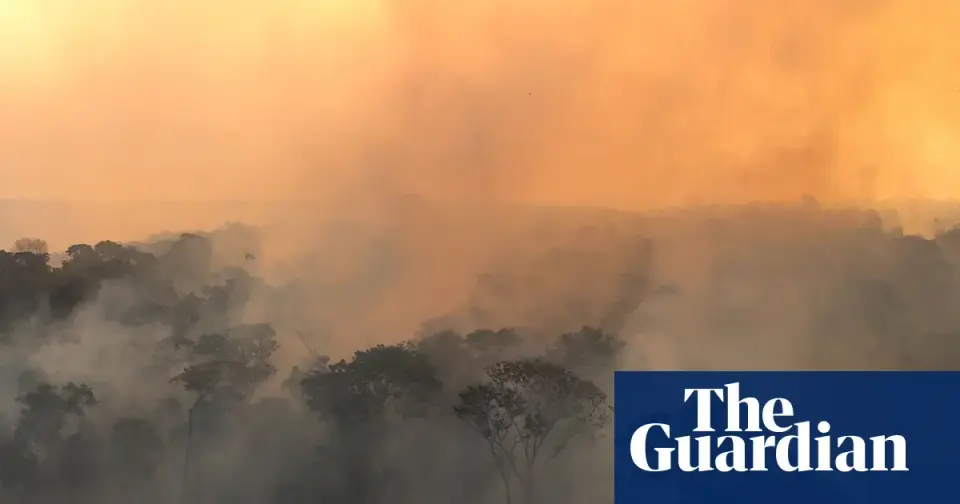
Global surface temperatures have reached a new record, with six consecutive days exceeding 2C above preindustrial levels. This unprecedented streak, driven by long-term heating and a powerful El Niño, coincides with the failure of the COP31 climate summit to reach a binding agreement. Scientists warn that while this brief spike does not breach the Paris Agreement's long-term limits, it signals accelerating warming and rising CO2 levels due to drought-weakened ecosystems.
Key points
- The world experienced six consecutive days with temperatures 2C above preindustrial levels, a first in recorded history, with the peak reaching 2.24C on November 23.
- The heat spike is attributed to long-term fossil fuel emissions and a powerful El Niño, which is expected to peak between now and January 2027.
- The COP31 climate summit in Antalya, Turkey, ended without a final agreement for the first time since 2009, failing to reach consensus on a draft that omitted mentions of fossil fuels.
- The UK Met Office predicts a rapid rise in atmospheric CO2, with an increase of 3.5 parts per million from 2026 to 2027, nearly twice the rate compatible with 1.5C warming limits.
- This year's extreme heat has already caused over 50,000 deaths in the EU and 5,000 in the UK, highlighting the immediate health impacts of the warming trend.
Background
This development follows a series of climate-related crises in 2026, including severe flooding in the US Southeast and Southwest in November and accelerated melting of the Thwaites Glacier. The current temperature record occurs against the backdrop of the failed COP31 negotiations, where the US did not send a delegation and major fossil fuel exporters opposed language on phasing out fossil fuels. Previous brief spikes above 2C occurred in November 2023 and February 2024, but none lasted as long or reached as high as the current streak.
How outlets are covering it
The Guardian and Scientific American emphasize the unprecedented nature of the six-day streak and the role of the El Niño, noting that while the Paris Agreement's 2C limit refers to long-term averages, the current spike signals accelerating warming. IFLScience highlights the political failure at COP31, noting that the draft agreement's omission of fossil fuels and lack of concrete finance for poorer nations led to its collapse. All sources agree that the current heat is driven by both long-term human activity and the current El Niño, but differ on the immediate political implications, with IFLScience focusing on the diplomatic breakdown and the others on the scientific trajectory.
Why it matters
The six-day streak above 2C is a critical indicator of the pace of global warming, suggesting that the world is moving faster toward the limits set by the Paris Agreement. The failure of COP31 to reach a binding agreement, combined with the rapid rise in CO2 levels due to drought-weakened ecosystems, indicates that current mitigation efforts are insufficient to prevent more severe climate impacts. The immediate health and economic costs of extreme heat, as seen in the EU and UK this year, underscore the urgency of the situation.
What to watch
Scientists expect the El Niño to peak between now and January 2027, with its full impact on global temperatures felt several months later. The UK Met Office predicts a rapid rise in atmospheric CO2 in the coming months. NOAA is scheduled to release its next official ENSO diagnostic update on December 10, 2026, which will provide a clearer picture of the El Niño's trajectory. The failure of COP31 means that no new global agreement on emissions reductions is in place, leaving countries to pursue national priorities without a unified framework.
- World has six consecutive days 2C above preindustrial levels for first time The Guardian
- Earth just saw the most anomalously hot day ever on record Scientific American
- Global Warming Hits All-Time Record Yahoo
- Daily global temperature anomaly hits record 2.23C above pre-industrial levels Anadolu Ajansı
- New Global Temperature Record Set As COP31 Climate Talks End In No Deal For First Time Since 2009 IFLScience
Want the full story? Read the original reporting
Read on The Guardian