
France’s Second Protest Wave: 1,000 Arrested as Peaceful Marches Turn Violent
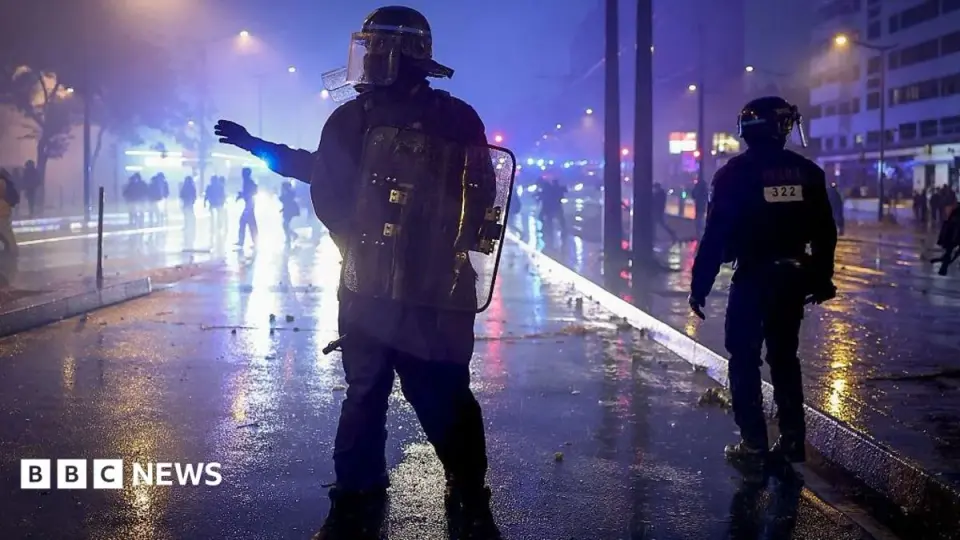
On October 24, 2026, France experienced a second major wave of demonstrations. While initial marches were largely peaceful, evening clashes in Paris, Marseille, and other cities led to nearly 1,000 arrests. Interior Minister Laurent Nuñez reported the figures, noting that police deployed 70,000 officers to prevent a repeat of the previous week's severe looting. Protests, driven by high living costs and education funding, spread to Italy, Belgium, and Albania.
Key points
- Interior Minister Laurent Nuñez reported nearly 1,000 arrests across France, with the number expected to rise.
- The Interior Ministry estimated 410,000 protesters, while the CGT union claimed 800,000 participants.
- Clashes erupted in Paris, Marseille, Bordeaux, and Grenoble, involving tear gas, water cannons, and vandalism.
- Police deployed 70,000 officers nationwide, including elite units, to maintain order and prevent looting.
- Protests spread to Italy, Belgium, and Albania, with similar tensions and police interventions reported.
Background
This is the second major wave of protests in France since late September 2026. The previous wave on October 17 saw over 550,000 protesters and historic looting, including the destruction of the Limoges Town Hall. Earlier in September, student protests over overcrowded classes and teacher shortages led to 440 detentions. The current unrest is driven by high living costs, fuel prices, and education funding, with far-left leader Jean-Luc Mélenchon threatening a general strike if President Emmanuel Macron does not yield to demands.
How outlets are covering it
BBC News and Saudi Gazette both report on the nearly 1,000 arrests and the deployment of 70,000 police officers. BBC News emphasizes the violent clashes in Paris, Marseille, and other cities, while Saudi Gazette highlights Nuñez's warnings about potential violence and his support for police. The Lufkin Daily News provides no substantive content, as it is a login/registration page. BBC News notes a discrepancy in crowd estimates, with the Interior Ministry reporting 410,000 and the CGT union claiming 800,000. Saudi Gazette mentions that protests are driven by high living costs and fuel prices, while BBC News also highlights education funding as a key issue.
Why it matters
The second wave of protests highlights ongoing tensions in France over cost of living, education funding, and police tactics. The nearly 1,000 arrests and widespread clashes indicate that the unrest is not subsiding, with potential for further escalation. The spread of protests to other European countries suggests a broader regional issue, potentially impacting political stability and public order. The government's heavy police presence and Nuñez's warnings indicate a determination to prevent a repeat of the previous week's severe looting, but the underlying grievances remain unaddressed.
What to watch
The number of arrests is expected to rise, and further clashes may occur as protests continue. The government is likely to maintain a heavy police presence to prevent looting and vandalism. Political leaders, including Jean-Luc Mélenchon, may escalate their demands, potentially leading to a general strike. The spread of protests to other European countries suggests that the issue may not be confined to France, with potential for further unrest in Italy, Belgium, and Albania.
- French protests: Almost 1,000 arrested, Laurent Nuñez says, as clashes erupt BBC
- October 24 protest in Paris: approved route, metro, traffic and everything you need to know Sortir à Paris
- Paris on High Alert Ahead of Nationwide Demonstrations, 24 Metro stations Closed News of Bahrain
- Nighttime curfew in Paris on the eve of a planned protest The Lufkin Daily News
- France warns of violence as Yellow Vests, students prepare for Paris protests Saudi Gazette
Want the full story? Read the original reporting
Read on BBC