
Hormuz Crisis Escalates: US Disables Blockade Runner as Iran Claims Supertanker Fire
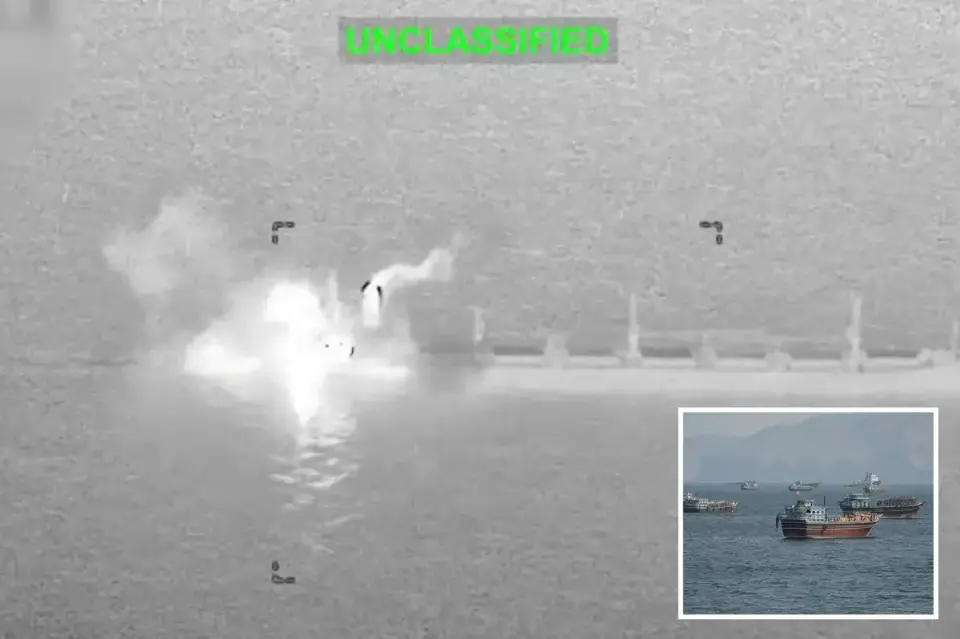
A supertanker caught fire in the Strait of Hormuz on Sunday, hours after the US disabled a cargo ship attempting to breach its naval blockade. The IRGC claims the fire was caused by a naval mine, while the US maintains its blockade has stopped Iranian oil exports. Attacks on commercial vessels have surged to wartime highs, with crude flows dropping 40% below normal levels.
Key points
- US Central Command confirmed it struck the stern of the Panama-flagged M/V Ocean Molica with a precision munition, disabling its propulsion without harming the crew.
- The IRGC claimed an unnamed supertanker hit a naval mine and exploded in the Strait of Hormuz, warning that any ship violating its rules would face similar fate.
- The UK Maritime Trade Operations reported the supertanker was hit on its port side by an unknown projectile, causing a fire.
- The UAE coastguard rescued 22 crew members from a separate tanker fire near its shores, though the cause was not identified.
- Crude oil flows through the strait dropped to 8.5 million barrels per day, roughly 40% below normal levels, according to Kpler data.
- At least 11 tankers were attacked in the week ending Oct. 4, the highest number since the war began in February.
Background
The US reimposed a naval blockade on Iran’s southern ports in mid-July, following a war that began on Feb. 28. Since then, CENTCOM has disabled four commercial vessels, turned around 135 ships, and destroyed 10 tankers linked to Iran. The blockade has been a key point of contention in stalled peace talks, with Iran demanding a return to a collapsed June memorandum of understanding and US backing for an Iran-Oman deal on transit routes.
How outlets are covering it
The New York Post and Al Jazeera both report the US strike on the M/V Ocean Molica and the IRGC’s claim of a mine strike on a supertanker, but Al Jazeera provides more detail on the stalled peace talks and Iran’s nuclear demands. CNBC emphasizes the surge in attacks and the drop in crude flows, noting that 12 Indian sailors were injured on the UAE-owned On Peace tanker. All three sources agree that the attacks have intensified, but the Post focuses on the immediate aftermath of the US strike, while Al Jazeera and CNBC provide broader context on the war and oil markets.
Why it matters
The escalating attacks on commercial vessels in the Strait of Hormuz, through which one-fifth of the world’s oil and gas passes in peacetime, threaten to disrupt global energy supplies and push oil prices higher. The US blockade and Iran’s retaliatory strikes have created a dangerous cycle of escalation, with no clear path to a resolution. The situation also highlights the broader geopolitical tensions between the US, Iran, and their allies, as well as the impact of the war on global trade and security.
What to watch
The US and Iran are expected to continue exchanging messages through mediators, but no breakthrough is expected in the coming weeks leading up to the US midterm vote on Nov. 3 and Israel’s election on Oct. 27. The IRGC has warned it will continue to strike ships that violate its transit rules, while the US has vowed to maintain its blockade. The situation could further escalate if more ships are attacked or if the US and Iran engage in direct military conflict.
- Iran sets supertanker ablaze after US takes out ship breaking blockade New York Post
- Hormuz attacks intensify as efforts to end war on Iran stall Al Jazeera
- Tanker attacks in Strait of Hormuz surge to wartime high as Iran tries to choke off oil exports CNBC
- Vessel struck by unknown projectile off UAE coast amid surge in attacks, UKMTO says Reuters
- Tanker damaged after being hit in Strait of Hormuz, marine agency says The Times of Israel
Want the full story? Read the original reporting
Read on New York Post