
Saudi Defenses Intercept Houthi Missile in First Direct Strike on Riyadh
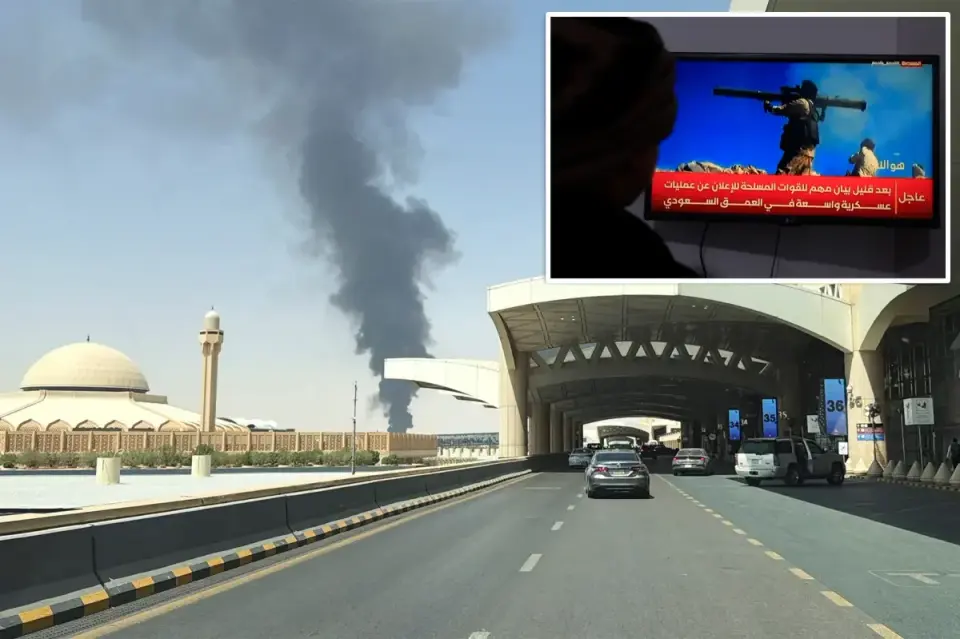
Saudi Arabia confirmed that its air defenses intercepted a ballistic missile fired by Yemen's Houthi rebels toward the capital, Riyadh, on Saturday. This marks the first direct strike on the capital since the conflict escalated in July. While Saudi authorities reported no casualties, the attack caused smoke plumes near King Khalid International Airport and temporary flight disruptions. The Houthis claimed the attack targeted 'sensitive sites' and Aramco facilities, while the US urged Americans in the region to reconsider travel due to the risk of rapid escalation.
Key points
- Saudi Arabia confirmed the interception of a ballistic missile aimed at Riyadh, the first such strike on the capital since the conflict began.
- The attack caused smoke near King Khalid International Airport and temporary flight disruptions, but no casualties were reported.
- Houthi spokesperson Yahya al-Sarea claimed the use of ballistic missiles, cruise missiles, and drones to target 'sensitive sites' and Aramco facilities.
- The US State Department urged Americans in the Middle East to 'seriously reconsider travel' due to the potential for rapid escalation.
- Saudi Arabia has requested air support from France, Britain, Pakistan, and Egypt as its missile interceptor stockpiles run low.
Background
This incident is part of a broader escalation in the Houthi-Saudi conflict, which has intensified since July. Previous attacks have targeted Saudi infrastructure, including a drone strike near Mecca and a downed Saudi fighter jet. The conflict is linked to the wider Iran war, with the Houthis controlling key Red Sea ports and threatening global oil supply routes. The UN reported over 104,000 people displaced in Yemen due to recent fighting.
How outlets are covering it
The New York Post emphasizes the strategic implications of the attack, noting Saudi Arabia's request for international air support and the threat to Mecca. The BBC highlights the humanitarian impact, citing 48 reported deaths in Yemen and the US travel advisory. Both outlets agree on the interception of the missile but differ in emphasis: the Post focuses on the military escalation and Saudi vulnerability, while the BBC focuses on the civilian impact and travel risks.
Why it matters
The attack on Riyadh signals a significant escalation in the Houthi-Saudi conflict, with potential implications for global oil prices and regional stability. The US travel advisory and Saudi Arabia's request for international support indicate the conflict's growing complexity and the risk of wider regional involvement.
What to watch
Saudi Arabia is expected to continue seeking international support for air defense, while the Houthis may launch further attacks in retaliation for Saudi strikes in Yemen. The US and other international actors may increase diplomatic efforts to de-escalate the conflict, while oil markets may react to the threat to Red Sea shipping routes.
- Saudi Arabia confirms Yemen’s Houthi rebels tried to attack its capital with ballistic missile nypost.com
- In Significant Escalation, Houthis Attack Saudi Capital The New York Times
- Flames, smoke seen near Riyadh airport; Houthis claim attacks on Saudi capital Reuters
- Houthis say they targeted Saudi capital with ballistic missiles BBC
- Saudi Arabia says Houthis tried to attack its capital NPR
Want the full story? Read the original reporting
Read on nypost.com