
Iran’s New Supreme Leader Elected in Secret After Surviving Hospital Strike
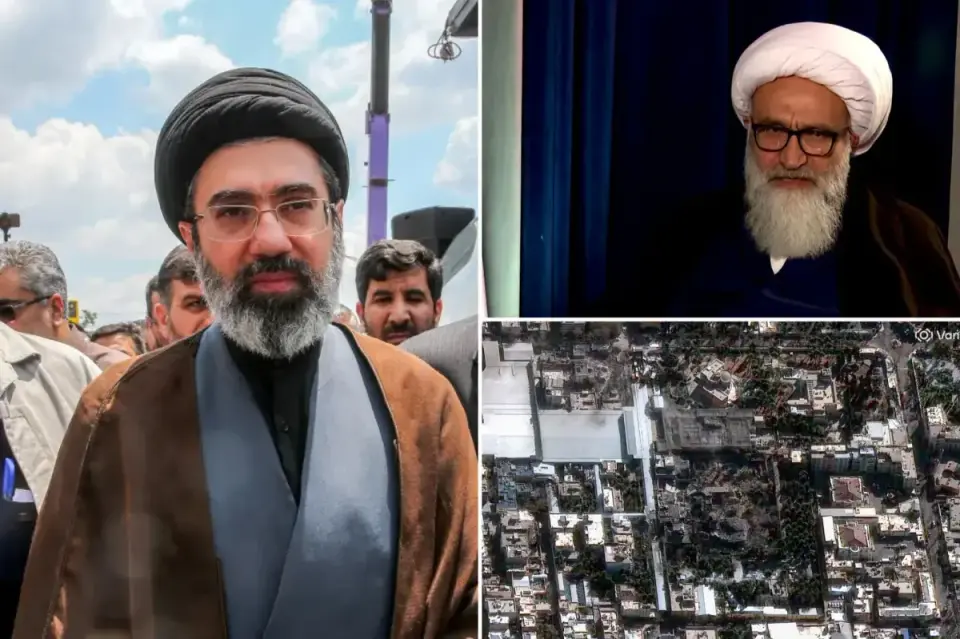
Mojtaba Khamenei was elected Iran’s supreme leader in a secret wartime vote after surviving a US strike on a Tehran hospital. Assembly member Mohsen Heidari revealed that Khamenei, who had no prior political office, was chosen by 50 of 59 votes after his father’s assassination. The election occurred amid ongoing conflict, with Khamenei reportedly unaware of his selection until the public announcement.
Key points
- Mojtaba Khamenei was pulled from the rubble of a Tehran hospital after US and Israeli strikes targeted medical facilities following the death of his father, Ali Khamenei, in February 2026.
- The Assembly of Experts elected Khamenei in a secret meeting after their secretariat was bombed, killing eight people and destroying election documents.
- Khamenei received 50 of 59 votes, defeating rival candidate Ayatollah Alireza Arafi, in a process that defied US President Donald Trump’s warnings against the succession.
- Khamenei, described as a 'man of the shadows,' had no prior political position but served as an adviser to his father; he learned of his election only after the public announcement.
- Iranian President Masoud Pezeshkian claims Khamenei is healthy, while US intelligence suggests he is severely disfigured but alive.
Background
This development follows the February 2026 strikes that killed Supreme Leader Ali Khamenei and triggered a broader conflict between Iran and the US/Israel. Previous archive coverage notes ongoing US strikes in Iran, including a wedding in Sirik County in September 2026, highlighting the continued escalation of hostilities. The current situation reflects a shift in Iranian leadership dynamics, with the new supreme leader operating from secrecy while the country faces external pressure and internal political tensions.
How outlets are covering it
The New York Post emphasizes the dramatic nature of Khamenei’s survival and the secrecy surrounding his election, citing an interview with Mohsen Heidari on Al Araby TV. The Palestine Chronicle provides a detailed account of the constitutional process, noting that the Assembly of Experts acted independently without consulting the IRGC, and highlights Khamenei’s lack of prior political experience. Pakistan Today offers a broader geopolitical analysis, arguing that the new leadership is more radical and less diplomatic than its predecessor, potentially altering Iran’s stance in regional negotiations. While all sources agree on the basic facts of the election, they differ in emphasis: the Post focuses on the physical danger, the Chronicle on procedural integrity, and Pakistan Today on the ideological shift in Tehran.
Why it matters
The election of Mojtaba Khamenei signals a potential hardening of Iran’s foreign policy under a leader who was not publicly known before his appointment. His survival of multiple strikes and the secrecy of his selection suggest a regime determined to withstand external pressure. This could impact ongoing negotiations with the US and the stability of the Middle East, as the new supreme leader may prioritize resistance over diplomacy, as suggested by the appointment of hardliners like Mohsen Rezai to key security roles.
What to watch
Observers will watch for Khamenei’s first public appearance or policy statements to gauge his health and strategic direction. The US and Iran may continue to engage in indirect negotiations, but the new leadership’s conditional approval of diplomatic efforts suggests a more cautious and potentially confrontational approach. The situation in the Gulf and the Strait of Hormuz will likely remain tense, with Iran setting conditions for reopening the waterway.
- Mojtaba Khamenei had to be 'pulled from the rubble' of hospital after US strikes nearly killed him a second time: report New York Post
- Iran’s Reformists and the 2024 UN General Assembly Pakistan Today
- 50 Votes in a Secret Room: How Iran Chose Its New Supreme Leader Palestine Chronicle
- From Revolution to Succession: New Khamenei and IR The Times of Israel
Want the full story? Read the original reporting
Read on New York Post