
Jewish educators cancel Italy trip after being asked to sign anti-Israel pledge
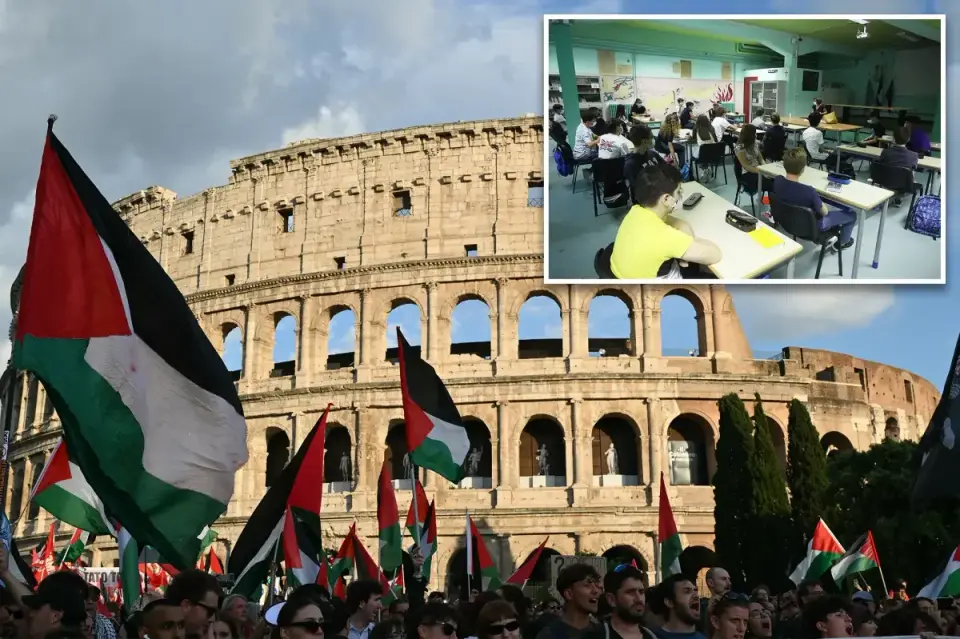
Approximately 100 Jewish educators from the US and Israel canceled a professional development trip to Reggio Emilia, Italy, after the host organization, Reggio Children, allegedly required them to sign a statement condemning Israel’s actions in Gaza. The cancellation, announced by the Paradigm Project on October 7, 2026, followed weeks of protests by local activists who scrutinized the participants' social media profiles. While the Italian organization later claimed the specific pledge was not an official requirement, the incident has sparked a debate over antisemitism and the conflation of Jewish identity with Israeli policy.
Key points
- The Paradigm Project canceled a trip for 68 US-based Jewish educators to Reggio Emilia on October 7, 2026, citing antisemitic pressure and safety concerns.
- Participants were reportedly asked to sign a statement distancing themselves from the 'occupation of Gaza' and 'genocide' before attending the conference.
- A separate delegation of 22 educators from Israel arrived in Reggio Emilia and continued participating in the program despite the controversy.
- Reggio Children spokesperson Francesca Severini stated the specific pledge was 'material for discussion' and not an official requirement, contradicting earlier public statements by the organization and the mayor.
- Italian politician Ivan Scalfarotto and Jewish community leaders condemned the demand as antisemitic, arguing it conflates diaspora Jews with the Israeli government.
Background
This incident occurs amid rising antisemitism in Italy, where a recent survey found 15% of Italians view attacks on Jews as justifiable. The controversy follows a broader pattern of tensions in Italian cities regarding Israel policy, including previous disputes over public honors and cultural events. The Reggio Emilia approach, developed by Loris Malaguzzi, has been widely adopted by Jewish preschools for its focus on child-centered learning, making the incident particularly painful for educators who view the methodology as aligned with Jewish values.
How outlets are covering it
The New York Post and Jewish Insider emphasize the incident as a clear case of antisemitism, highlighting the profiling of participants' social media and the demand for a political pledge. The Jewish Telegraphic Agency (JTA) provides a more nuanced account, noting that while the pledge was discussed, Reggio Children later claimed it was not an official requirement, though the mayor had previously acknowledged the commitment. Il Foglio frames the event as part of a broader pattern in Reggio Emilia where anti-Zionist sentiment blurs into antisemitism, citing other recent controversies. In contrast, a reflection by Yehudis Smith in eJewishPhilanthropy focuses less on the political conflict and more on the educational loss, urging Jewish schools to rely on their own traditional pedagogical sources rather than the Reggio approach, which she views as compromised by this incident.
Why it matters
The incident highlights the growing global tension between pro-Palestinian activism and Jewish identity, particularly in educational and cultural spaces. It raises questions about the safety of Jewish communities in Europe and the potential for political pressure to infiltrate professional development opportunities. The dispute also forces Jewish educators to reconsider their reliance on non-Jewish educational frameworks and to reassert the value of their own traditional pedagogical sources.
What to watch
Reggio Children has expressed hope to continue dialogue with American educators, but the cancellation has likely damaged the relationship. The Italian government and local authorities may face further scrutiny over their handling of the incident. Jewish educational institutions in the US and Israel are likely to reassess their partnerships with international organizations and may increase their focus on developing indigenous educational curricula.
- Jewish educators told to condemn Israel before attending conference: report New York Post
- We didn’t need Reggio Emilia to teach us how to see children eJewishPhilanthropy
- Jewish educators told to denounce Israel before attending Italy conference — report The Times of Israel
- Jewish school educators cancel trip to Italy after Italian education program required participants to denounce ‘genocide’ in Gaza Jewish Telegraphic Agency
- Jews in Reggio Emilia. The increasingly blurred line between anti-Zionism and anti-Semitism Il Foglio
Want the full story? Read the original reporting
Read on New York Post