
Sinabung Erupts on Sumatra, Sending Ash Plume to 3,500 Meters
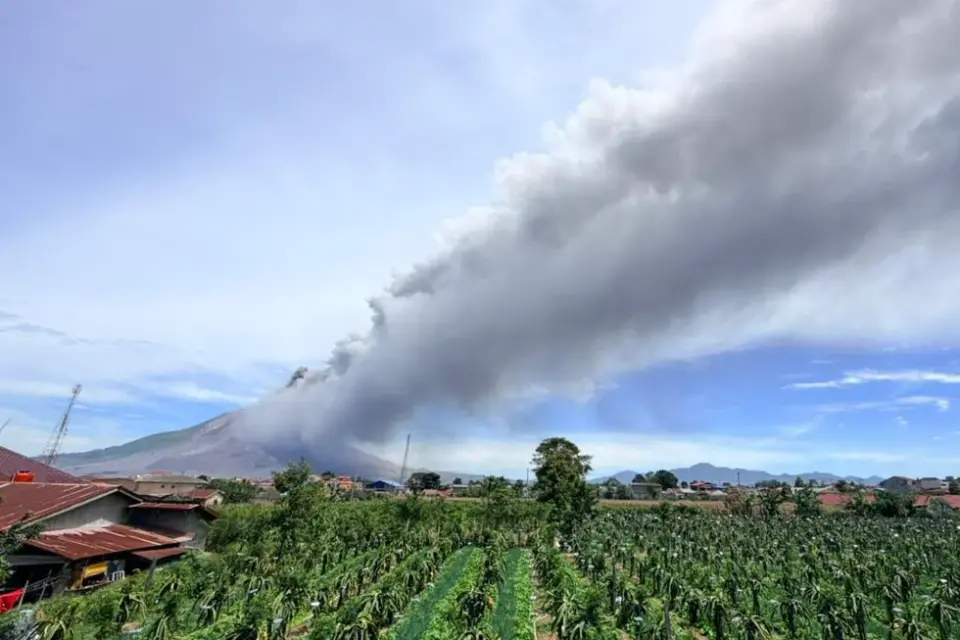
Mount Sinabung in North Sumatra, Indonesia, erupted on August 31, 2026, producing a black ash column that reached 3,500 meters in height. The 2,600-meter volcano released volcanic materials drifting east and southeast, with no immediate reports of casualties.
Key points
- The eruption occurred on Monday morning, August 31, 2026, at Mount Sinabung in Karo, North Sumatra.
- The ash plume reached a height of 3,500 meters and was observed drifting toward the east and southeast.
- No casualties were reported in the immediate aftermath of the eruption.
- The Geological Agency of Indonesia’s Ministry of Energy and Mineral Resources released images of the volcanic activity.
Background
Indonesia is located along the Pacific Ring of Fire, making it highly prone to seismic and volcanic activity. In mid-August 2026, a 7.7-magnitude earthquake struck offshore near Flores Island, resulting in at least 47 deaths and significant structural damage. This recent seismic event highlights the region's ongoing geological volatility, although the Sinabung eruption is a separate volcanic event.
Why it matters
Volcanic eruptions in Indonesia pose significant risks to local populations and infrastructure due to ashfall, pyroclastic flows, and potential disruptions to air travel. Monitoring and rapid response by geological agencies are critical for mitigating these risks in a densely populated and geologically active region.
What to watch
Authorities will likely continue monitoring Mount Sinabung for further activity, while local residents and emergency services remain on alert for potential ashfall or secondary hazards. Updates on the eruption's impact and any changes in volcanic activity are expected from Indonesian geological agencies.
Want the full story? Read the original reporting
Read on AP News