
Tropical forest biomass responds unevenly to climate across continents, shaped by aridity, soils, and storms
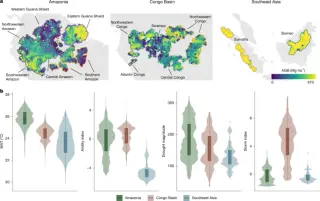
A pan-tropical analysis of about 16 million GEDI-derived aboveground biomass estimates from the Amazon, Congo Basin, and Southeast Asia shows climate–biomass relationships are regionally heterogeneous: temperature dominates in drier forests, warming hits the Congo Basin hardest, and water limitation drives the largest declines in Southeast Asia. Across all regions, aridity and soil/topography modify these effects, and storms strongly reduce biomass in the tallest forests, highlighting the need to integrate climate, disturbance, soil, and topography to predict tropical carbon storage.