Over 175 years of records, the Atlantic has had only two hurricane-free years (1907 and 1914); with the advent of satellites, some pre-satellite storms may have been missed, making true hurricane-free years extremely rare.
El Niño is suppressing Atlantic hurricane activity, producing a record-late start to the season with five named storms and no hurricanes by mid-September, while NOAA projects below-normal Atlantic activity for the year; by contrast, the Pacific season is above average with 14 named storms and four hurricanes, and a very strong El Niño could yield multiple major hurricanes.
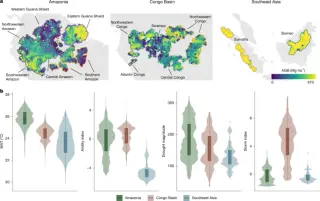
A pan-tropical analysis of about 16 million GEDI-derived aboveground biomass estimates from the Amazon, Congo Basin, and Southeast Asia shows climate–biomass relationships are regionally heterogeneous: temperature dominates in drier forests, warming hits the Congo Basin hardest, and water limitation drives the largest declines in Southeast Asia. Across all regions, aridity and soil/topography modify these effects, and storms strongly reduce biomass in the tallest forests, highlighting the need to integrate climate, disturbance, soil, and topography to predict tropical carbon storage.
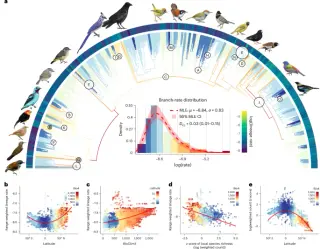
A Nature Ecology & Evolution study analyzes ~170,000 skeletal measurements across 2,057 passerine birds to reconstruct ~50 million years of body-plan evolution, finding that evolution has been driven by rare, hierarchically nested bursts of phenotypic innovation near the origins of major lineages. These bursts correlate with intervals of climatic instability and are mirrored in present-day latitudinal patterns, where higher-latitude assemblages show elevated rates of phenotypic evolution and more modular trait covariation, supporting the idea that climatic variability repeatedly fuels morphological diversification in passerines.
A Quaternary Science Reviews study uses ecological modeling and archaeological data from 60,000–35,000 years ago to show Neanderthals disappeared through fragmented populations and weaker connectivity, while Homo sapiens benefited from more interconnected networks that enabled mobility and resource sharing during environmental shifts. Extinction varied by region, framed as a mosaic outcome driven by social structure and climate variability rather than a single catastrophe.
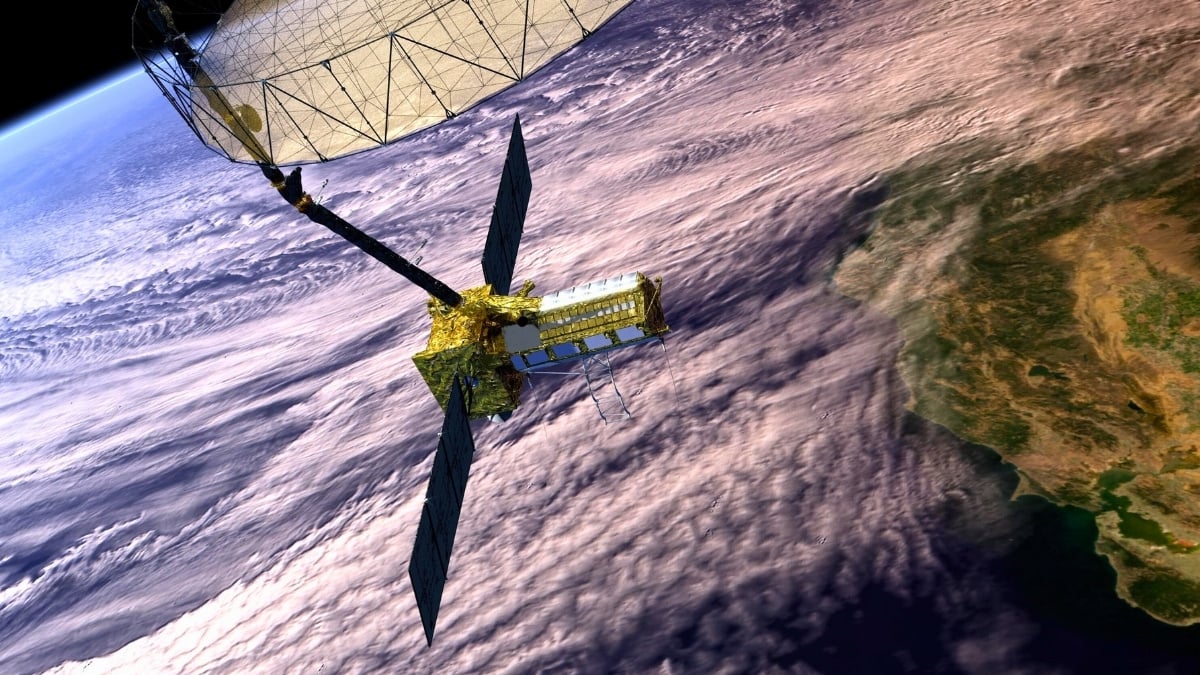
Scientists using 20 years of satellite data have discovered that Earth's seasons are often out of sync across different regions, even neighboring areas, which has significant implications for ecology, evolution, and climate models, highlighting the planet's complex and diverse seasonal patterns.
A study by the University of Miami has found that human-induced aerosol emissions are a major driver of temperature fluctuations in the tropical Atlantic Ocean, which in turn impact rainfall in West Africa's Sahel region and the formation of Atlantic hurricanes. The researchers used a grand ensemble simulation technique to demonstrate the climate changes resulting from external forcings, revealing that historical reductions in aerosol emissions led to increased hurricane activity and Sahel rainfall. The study suggests that ongoing reductions in aerosol emissions, combined with greenhouse gas-induced warming, will likely prevent a return to a quieter period of hurricane activity in the Atlantic in the coming decades.
A new study published in the journal Science warns that the global economy could face trillions of dollars in losses due to the intensifying El Niño events, which could be more frequent and stronger due to climate change. The study found that the most intense El Niño events cost the global economy more than $4tn over the following years, and the authors project that global economic losses could amount to $84tn by the end of the 21st century, even if current pledges to reduce carbon emissions are met. The impact will most burden lower-income nations, and the forecasters at the National Oceanic and Atmospheric Administration are anticipating a strong El Niño event later in 2023.
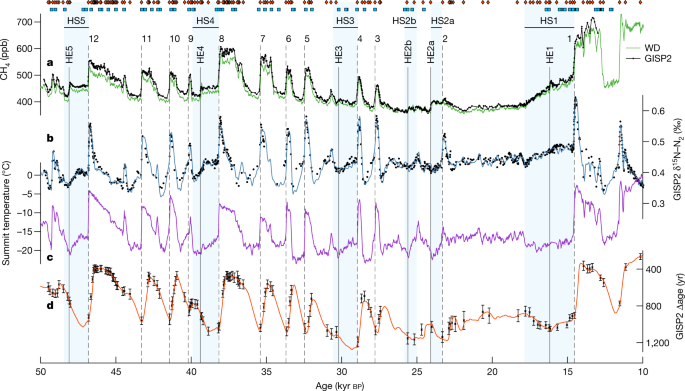
A new study suggests that Heinrich-type climate variability, characterized by massive detritus layers in the North Atlantic, may have a bipolar impact and phasing, affecting both hemispheres simultaneously. The study analyzed ice core records from Greenland and Antarctica and found evidence of synchronized warming and cooling events during Heinrich stadials. The findings challenge the traditional view of the bipolar seesaw, which suggests that climate changes in one hemisphere are offset by opposite changes in the other hemisphere.
Sea levels along the U.S. Southeast and Gulf coasts have rapidly accelerated over the past 12 years, reaching record-breaking rates of about half an inch per year since 2010, according to a new study led by scientists at Tulane University. The acceleration is attributed to the compounding effects of man-made climate change and natural climate variability, affecting the entire Subtropical Gyre area. Although rates will likely return to more moderate values in the coming decades, the study highlights the urgency of addressing climate change to protect vulnerable coastlines.