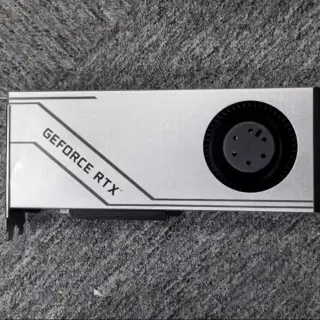
The Trump administration cleared Nvidia H200 shipments to Alibaba, Tencent and eight other Chinese buyers, but Beijing halted deliveries, underscoring ongoing friction over semiconductor exports between the U.S. and China.
Alibaba posted an 84% drop in core profitability for the March quarter as heavy spending on AI, chips, and e-commerce weighed on earnings, even as cloud revenue benefited from AI demand; with cloud acting as a growth driver while retail profits declined, the market reacted mixily and analysts remain cautiously bullish on AI/cloud upside.
Alibaba reported for the quarter ended March 31, 2026: revenue RMB243.38B (US$35.28B), up 3% YoY (11% like-for-like excluding Sun Art/Intime), with net income RMB23.50B and non-GAAP net income RMB86M. Cloud Intelligence revenue grew 40% externally, AI-related product revenue reached RMB8.97B and the Qwen portfolio expanded with advances in MaaS and enterprise agents; AI-related product revenue has grown triple-digit for the 11th straight quarter. The board approved a annual dividend of US$1.05 per ADS (about US$2.5B total) to be paid around July 2026. Full-year revenue RMB1,023.67B and net income RMB102.13B. Cash and liquid investments stood at RMB520.8B as Alibaba continues heavy AI+Cloud investments.
Alibaba reported an 84% year-over-year drop in adjusted EBITA for the March quarter as heavy investments in AI, semiconductors and quick-commerce weighed on profitability; China e-commerce adjusted EBITA fell 40% even as revenue rose 6% and quick-commerce revenue jumped 57%. In contrast, cloud revenue surged 38% to 41.6 billion yuan with AI-related revenue at 9 billion yuan and cloud EBITA up 57%, underscoring a bifurcated result where cloud and AI momentum offset margins weakness in core e-commerce.
Around 500,000 UK Biobank participants’ health data were reportedly listed for sale on Alibaba in China. The data were described as de-identified and not containing names or contact details, though they could include age, birth month/year, gender, socioeconomic status, lifestyle factors, and biological measurements. UK Biobank and the government are investigating; access to the data is being restricted and a board-led forensic review is planned. No purchases have been confirmed, but the incident raises concerns about data infrastructure and participant trust in large health-data projects.
Alibaba quietly released an anonymous AI video-generation model, HappyHorse-1.0, which quickly rose to the top of an AI leaderboard and signals a concerted push to outperform ByteDance across AI applications.
The Motley Fool argues that Micron and Palantir are currently richly valued AI plays, but Alibaba could emerge as the standout AI stock to outsize both in value by 2027 due to growth in cloud services and AI offerings, supported by ongoing AI investments and a compelling valuation today.
The Pentagon concludes that Alibaba and BYD should be added to the 1260H 'Chinese Military Companies' list for alleged ties to the Chinese military, signaling heightened tensions ahead of a Trump-Xi summit; Baidu is also slated for inclusion, while WuXi AppTec, RoboSense and BOE are added and CXMT and YMTC removed. The Federal Register posting was briefly pulled; inclusion generally carries reputational risk and potential future actions rather than immediate legal penalties. Alibaba, Baidu and BYD deny the allegations, as Washington presses on with tech, trade and Taiwan-related policy.
AMD may benefit from a potential deal with Alibaba to supply GPUs in China, which could significantly boost revenue, but regulatory approval remains uncertain. Despite geopolitical and regulatory challenges, AMD's strong recent stock performance and consistent revenue growth make it an attractive investment option for 2026.
Nvidia plans to ship up to 80,000 H200 chips to China, with potential revenue upside of up to $12.5 billion, amid growing Chinese AI demand. AMD's China-compliant MI308 chips are nearing commercial launch, with Alibaba planning to purchase 50,000 units, signaling increased competition and opportunities in China's AI sector. Despite regulatory and geopolitical risks, analysts remain bullish on Nvidia's prospects in China, viewing AI infrastructure as a major growth area.
The article highlights three promising long-term growth stocks: CRISPR Therapeutics, which is pioneering gene editing with promising future medical applications; Astera Labs, a key player in AI data center interconnectivity solutions; and Alibaba, which is expanding into AI hardware and software to capitalize on China's growing AI industry. These stocks require patience but offer significant potential as they are positioned in innovative and expanding sectors.
Alibaba's CEO outlined a strategic plan to develop artificial superintelligence, aiming to become a leading full-stack AI service provider, highlighting the intense competition between Chinese and US tech giants in the AI race, with significant investments and geopolitical implications.
Alibaba's shares surged nearly 50% this month as analysts highlighted strong growth potential in its cloud and AI businesses, boosted by increased investments, strategic partnerships, and positive quarterly results, making it the top gainer on the Hang Seng Tech Index.