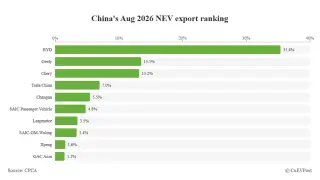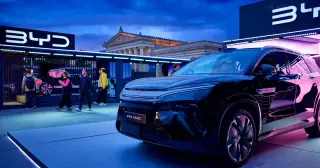
China’s passenger car exports rose roughly 85% in April while domestic sales declined, highlighting a shift toward overseas demand as automakers like BYD showcased new EV tech at Auto China 2026 in Beijing.
China used the Beijing Auto Show to tout a leap in EV battery tech as BYD and CATL race to slash charging times toward five minutes, highlighting Shenxing 3 EB (10–98% in about 6.5 minutes) and BYD Blade Battery 2.0 (10–97% in about 9 minutes), plus other suppliers like CALB, EVE Energy and Sunwoda delivering sub-10 minute charging for cars and e-bikes; Nio even showcased a three-minute battery swap, all within a broader push toward megawatt charging up to 1,500 kW, signaling China’s leading position in next-gen charging tech.
BYD opened pre-sales for its Great Tang EV, a D-class flagship SUV featuring a 590-mile range and a 0–62 mph time of 3.9 seconds in all‑wheel drive, backed by a 1000V architecture and 10C flash charging. It pairs BYD’s second‑gen Blade battery with advanced chassis tech (DiSus‑A suspension, road preview, rear‑wheel steering, crab walk) and offers DM-i and DM-p hybrid variants. Positioned above mainstream Tang models to target the premium large SUV segment, it will compete with rivals like Geely Galaxy M9 and is slated to reach market in the first half of 2026.
BYD says it can thrive without the US market, shifting focus to Europe, the UK and other regions where demand is rising, supported by its flash-charging technology that can add hundreds of kilometres in minutes—and by expanding overseas supply. The company, which recently overtook Tesla as the world's largest EV seller, notes domestic competition is fierce and margins are under pressure, while US tariffs and regulatory scrutiny remain a hurdle.
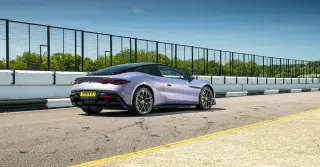
WIRED tests BYD’s Denza Z9 GT, the world’s fastest-charging EV, which can go from 10% to 100% in about nine minutes thanks to Flash charging and Blade Battery 2.0; the car delivers blistering performance (0–62 mph in 2.7s, 1,140 bhp) and premium features, but Europe’s €115,000 price—with much cheaper regional pricing elsewhere—casts doubt on its value and whether BYD can win over premium buyers, even as the company expands a global high-power charging network.
A fuel-price spike from the Middle East conflict pushed oil above $100 and spurred a global shift to EVs, with China exporting a record 349,000 electric vehicles in March—up 140% from a year earlier. BYD leads the shipments as showrooms fill across Asia-Pacific, Europe, and the US; longer wait times in China and rising US gasoline prices (over $4/gal) are cited as evidence that high fuel costs are boosting EV interest, a trend analysts say could persist with sustained price pressures.
BYD signaled exports will likely beat its prior 2026 target by about 15%, aiming for 1.5 million vehicles as overseas demand offsets a domestic sales slump; the Shenzhen automaker had already exported over 1 million vehicles last year and is expanding its international footprint to sustain growth.
Nvidia announced at GTC that BYD and Geely will join its Drive Hyperion platform for Level 4 robotaxi development (alongside Isuzu and Nissan), with Geely’s Zeekr using Thor chips and Waymo and Lyft leveraging Nvidia tech for car and cloud services. The move widens Nvidia’s footprint in autonomous driving amid US‑China tensions and underscores its push to grow its automotive business, even as auto revenue remains a small share of total revenue.
BYD’s premium Denza Z9 GT is headed to Europe this April, touting a 122 kWh Blade Battery and a reported range up to about 644 miles. It uses 1,500 kW “megawatt” flash charging that can hit 10-70% in five minutes (and 10-97% in nine minutes), even in cold weather with a small added time. The brand plans a Europe-wide network of 1.5 MW chargers—potentially 2,000 stations by 2026—to support the fast charging claims and outpace rivals in charging infrastructure.
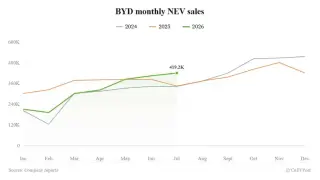
BYD's combined January–February 2026 EV sales fell about 36% year-over-year after adjusting for the Lunar New Year slowdown, while rivals like Leapmotor, Xiaomi, Nio, and Zeekr gained ground in China’s slowing market. Notably, BYD’s exports surpassed domestic sales in February for the first time as the company pivots overseas. Analysts say the domestic lead is narrowing amid price-competitive offerings, evolving incentives, and ongoing product differentiation, with a shift toward higher-end niches and continued push to bolster overseas demand.
The Pentagon concludes that Alibaba and BYD should be added to the 1260H 'Chinese Military Companies' list for alleged ties to the Chinese military, signaling heightened tensions ahead of a Trump-Xi summit; Baidu is also slated for inclusion, while WuXi AppTec, RoboSense and BOE are added and CXMT and YMTC removed. The Federal Register posting was briefly pulled; inclusion generally carries reputational risk and potential future actions rather than immediate legal penalties. Alibaba, Baidu and BYD deny the allegations, as Washington presses on with tech, trade and Taiwan-related policy.
BYD sold 210,051 NEVs in January 2026, down 30.11% YoY and 50.04% MoM as demand softens amid policy changes; passenger NEVs were 205,518 (BEVs 83,249; PHEVs 122,269), commercial NEVs rose 10.78% YoY to 4,533; overseas passenger NEV sales reached 100,482 (+51.47% YoY); January battery installations were 20.187 GWh (+30.15% YoY) as BYD targets about 1.3 million overseas vehicle sales in 2026.
BYD’s January vehicle sales fell 30.1% year-on-year to 210,051 vehicles, the fifth consecutive monthly decline, with export NEV volume at 100,482 and production down 29.1%. Domestic demand weakened as plug-in hybrid sales dropped 28.5% despite upgraded hybrids, while the company targets about 1.3 million overseas shipments in 2026 and plans new plants in Hungary, Brazil and Thailand plus potential sites in Indonesia and Turkey. A strong overseas performance helped BYD briefly outsell Tesla last year, but competition at home from Geely and Leapmotor remains fierce, and the 2026 global sales target has not been announced.
Ford and Xiaomi reportedly discussed forming a U.S.-based EV joint venture, per the Financial Times, but both Ford and Xiaomi denied the report. The piece notes U.S. concerns about Chinese automakers and battery suppliers entering the United States (including BYD), mentions Ford's scrutiny over partnerships (and a proposed CATL battery-related data center), and points to Ford’s ongoing EV restructuring and recent $19.5 billion writedown.
Germany’s €3-billion EV subsidy will be available to all manufacturers, including Chinese brands, with incentives ranging from €1,500 to €6,000 to boost EV adoption in Europe’s largest auto market; there are no country-of-origin restrictions, and the policy is expected to support about 800,000 vehicle purchases by 2029, a move seen as a boon for affordable Chinese automakers like BYD though its real impact remains uncertain.