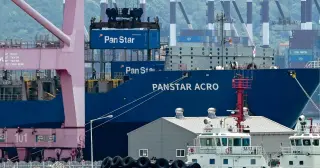
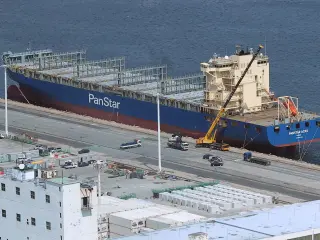
A South Korean container ship, Panstar Acro, set sail from Busan toward Europe via an Arctic route, signaling a new, riskier pathway for Asia-to-Europe trade as disruptions stemming from the Iran conflict upend traditional shipping lanes.
South Korea launches its first commercial Arctic voyage with the 2,758-TEU PanStar Acro, carrying 837 TEU of cargo on a 40–45 day test route from Busan to Europe via the Northern Sea Route to gauge the viability of Arctic shipping amid environmental and geopolitical concerns.
China is promoting a seasonal 'Ice Silk Road' routing via the Arctic’s NSR as a potential alternative to chokepoints like the Suez and Bab al-Mandeb, with test runs claiming about 20 days of transit versus roughly 40–50 days by traditional routes, especially for time-critical cargo. However, ice limits operations to warmer months, and geopolitical and environmental risks—Russia’s control of the NSR, sanctions, and climate impacts—complicate feasibility. Analysts view it as a hedge or supplement, not a full replacement for existing routes, potentially increasing Arctic influence without immediately shifting global trade power.
Poland's decision to close its border poses a risk to EU-China trade, while China explores an Arctic route to Europe amid changing geopolitical dynamics driven by climate change.