
Tag

Automotive Engineering

All articles tagged with #automotive engineering

Smokey Yunick's Hot Vapor Engine: Genius Idea, Hazardous Reality
automotive11 days ago

Smokey Yunick's Hot Vapor Engine: Genius Idea, Hazardous Reality

NASCAR innovator Smokey Yunick developed a Hot Vapor engine that heated and vaporized fuel to improve efficiency and power, transforming a Pontiac Fiero’s four-cylinder from under 100 hp and modest torque to about 250 hp and 250 lb-ft, with better fuel economy. The design relied on heating exhaust and cooling systems, a homogenizer, and ongoing pre-combustion vaporization. However, it operated on a fine line between detonation and full combustion, was highly sensitive to irregularities, posed major fire risks, and durability concerns, which prevented widespread adoption despite its potential. Modern research continues to explore waste-heat utilization in engines inspired by Yunick’s ideas.
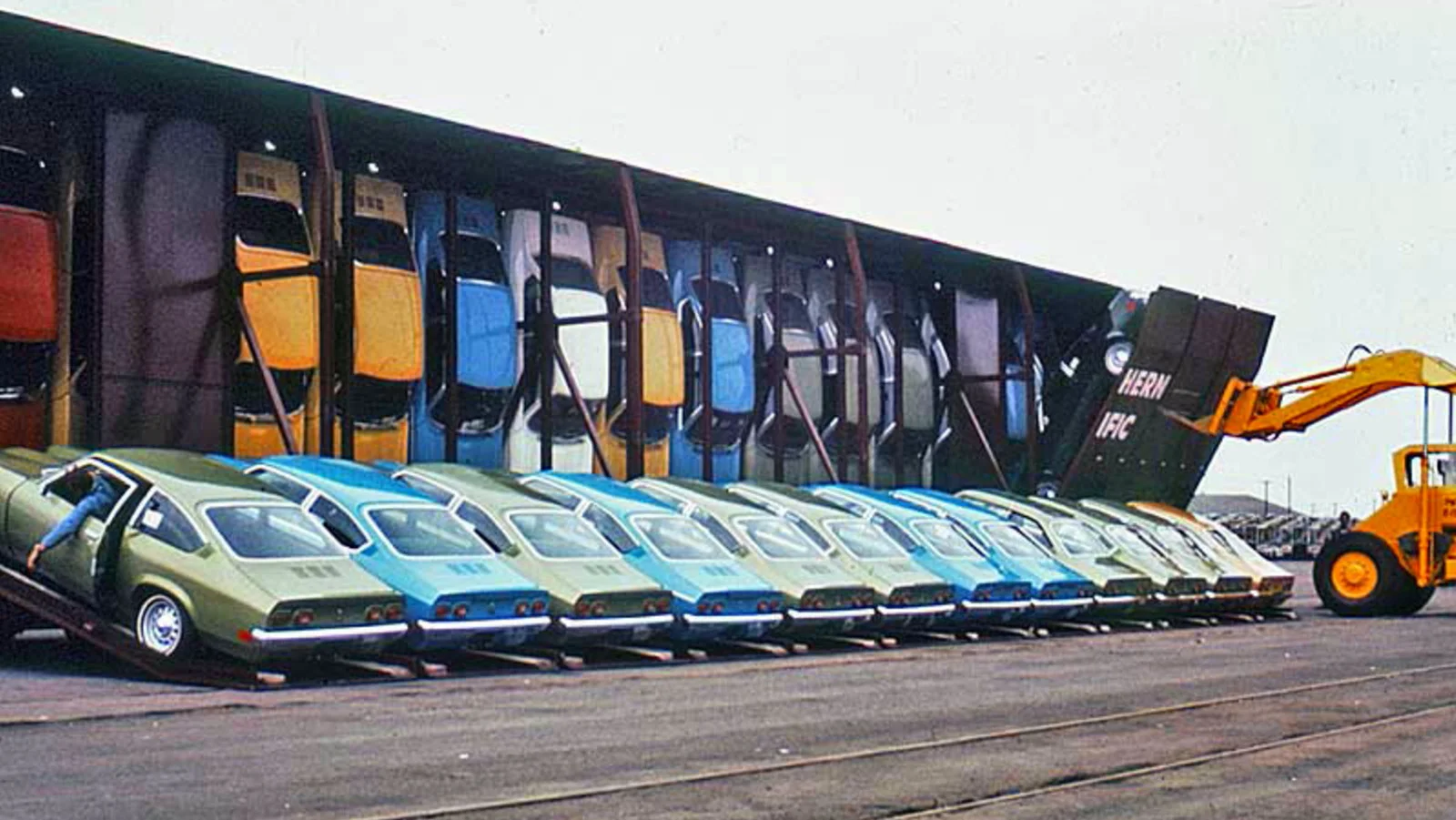

Vega’s Nose-Down Rail Run: How Chevy Cut Shipping Costs with Vert-A-Pac
technology11 days ago

Vega’s Nose-Down Rail Run: How Chevy Cut Shipping Costs with Vert-A-Pac

The 1971 Chevrolet Vega was rushed to market, but GM found a cheaper way to ship it: the Vert-A-Pac system loaded up to 30 Vegas nose-down in a single railcar, doubling capacity from 15 and slashing shipping costs about 40%. The design required custom vertical railcars with hinged doors, adjustments to fluids and components, and the system disappeared after the Vega (and Pontiac Astre) ended.

Unusual Jeep Transmission Features Dual Second Gears Explained
automotive3 months ago

Unusual Jeep Transmission Features Dual Second Gears Explained

The article explains why the Jeep 545RFE automatic transmission, despite being labeled as a five-speed, actually has six gears due to its internal planetary gearset design, including two second gears used for different shifting scenarios. It details the transmission's history, design features, and the benefits of its complex clutch system and adaptive learning control, highlighting its robustness and innovative engineering.

Toyota Supra A90 Final Edition: A 429 HP Farewell to an Icon
automotive1 year ago

Toyota Supra A90 Final Edition: A 429 HP Farewell to an Icon

Toyota is celebrating the end of the current GR Supra model with the A90 Final Edition, featuring a power boost to 429 horsepower and enhanced performance components. This limited edition, currently available in Japan and Europe, includes advanced suspension, braking, and aerodynamic upgrades, along with a manual transmission and Recaro seats. While it's uncertain if this model will reach the U.S., Toyota hints at a global release and potential future Supra models.

"Cost-Saving Innovation: Tesla Engineers' Upside-Down Part Flipping for Model S"
automotive-engineering2 years ago

"Cost-Saving Innovation: Tesla Engineers' Upside-Down Part Flipping for Model S"

Tesla engineers faced financial constraints during the development of the Model S and had to get creative to save costs, including flipping parts upside down. They borrowed a Land Rover steering rack, flipped it upside down, and made minor modifications to fit it into the Model S, saving millions. They also used common parts on the left and right sides of the suspension to reduce tooling costs, demonstrating clever engineering and smart manufacturing to achieve high functionality while saving costs.

"The Aerodynamic Design of Land Speed Racers: Unveiling the Science"
automotive-engineering2 years ago

"The Aerodynamic Design of Land Speed Racers: Unveiling the Science"

Automotive engineer and YouTuber Matt Brown is designing an aerodynamic body for his land speed racer using Computational Fluid Dynamics analysis. His bare-framed car had a drag coefficient worse than an 18-wheeler, and was unstable at 157 mph. With the new streamlined body, he estimates a top speed of 265 mph running on two cylinders, and 325 mph at full power, a significant gain from slashing the drag coefficient from 0.825 to 0.12. The design process involved optimizing the nose and tail to minimize drag, and adding a fin for aerodynamic stability. Challenges lie ahead in constructing the design in fiberglass, but the simulations suggest a much faster performance when the car returns to the salt flats.

"Understanding Auto Rev-Match Technology"
automotive-technology2 years ago

"Understanding Auto Rev-Match Technology"

Auto rev-match technology automates the process of rev matching during downshifts in manual-transmission cars, smoothing out the process and reducing clutch wear over time. Nissan introduced this technology in 2009, and it has since been adopted by other automakers. The system relies on various sensors and the engine's ECU to calculate and execute throttle blips for smooth downshifts, and it also works on upshifts to reduce clutch wear. While some argue that it takes away from the driver's engagement, aftermarket solutions are available for older vehicles, offering similar functionality at a more affordable price.