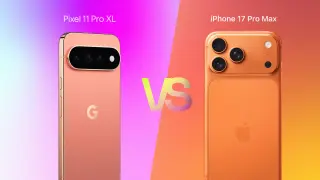
Apple and Google launched their largest flagships at the same $1,299 price point with 256GB storage. The iPhone 18 Pro Max offers superior performance and battery life, while the Pixel 11 Pro XL provides better zoom range and faster charging.
Google’s Pixel 11 Pro XL is a large, premium smartphone featuring a 6.8-inch 120Hz OLED, Tensor G6 with 12/16GB RAM and up to 1TB storage, around two days of battery life, fast ~90-minute charging, and a high-end triple-camera system (50MP/48MP/48MP) with improved Night Sight, Magic Capture and Camera Looks. It runs Android 17 with seven years of software updates, includes six months of Google AI Pro, and supports Qi2 wireless charging; US models rely on eSIM with no physical SIM slot. Priced at £1,279 (about €1,399, $1,299, A$2,099), it’s very expensive and heavy, offering superb camera and AI features but not a dramatic leap over previous Pixels or rivaled top-by-power in all areas by Samsung’s Galaxy S26 Ultra.
Pixel 11 Pro and 11 Pro XL are imperfect but highly usable flagships, offering standout cameras, refined hardware, and Google’s best-in-class software, making them compelling daily drivers. Drawbacks include HiLight feeling undercooked, Proactive Assistance rarely useful, and slower/quirky charging. The Tensor G6 is efficient and snappy but not a major upgrade in raw performance. Battery life and display are strong improvements, and built-in magnets add convenience. At $1,099 and $1,299 they’re worth buying for Pixel fans who value software and camera versatility, though upgrading from the Pixel 10 Pro isn’t essential and rivals like the Galaxy S26 Ultra pose strong competition.
Android Central argues the Pixel 11 Pro XL impresses with cameras and Gemini AI, but its lower RAM, smaller battery, and weaker GPU make it hard to recommend in some cases. It then recommends six alternate phones: Galaxy S26 Ultra for a familiar high-end Android experience, RedMagic 11S Pro for top performance and lengthy gaming sessions, POCO F8 Ultra for strong all‑round values and 100W charging, the iPhone 17 Pro for a stable iOS ecosystem, and the OPPO Find X9 Pro and Vivo X300 Pro as premium camera rivals (noting the Find X9 Pro and Vivo X300 Pro aren’t widely available in the US).
Google’s Pixel 11 lineup kicks off with base Pixel 11 at $899, Pixel 11 Pro at $1,099, and Pixel 11 Pro XL at $1,299 (all starting with 256GB). Across T-Mobile, Verizon, AT&T, Amazon, Best Buy, Google Store, and Xfinity Mobile, launch promos can make these devices essentially free or deeply discounted through new lines or trade-ins, plus promo gift cards (up to $200 at some retailers) and up to six months of Google AI Pro. The phones run the Tensor G6 with seven years of updates, and the Pro/XL models feature new HiLight LED lighting around the camera bar.
The Pixel 11 Pro XL’s Tensor G6 brings roughly 20% higher single- and multi-core CPU performance vs the G5, but Google’s chip still lags behind Qualcomm’s Snapdragon 8 Gen 5 and Apple’s A-series in raw speed, especially for gaming where the Galaxy S26 Ultra and iPhone 17 Pro Max pull ahead by about 2.5x at launch and maintain a sizable lead after throttling. Benchmarks show only modest gains in AI/ML and GPU performance, with Tensor’s 3nm process not delivering the kind of power efficiency or speed parity hoped. Storage tests note the Pixel is slightly faster than its predecessor but slower than the Galaxy, and battery life results are still pending. Overall, Tensor G6 improves efficiency but does not close the performance gap against its main rivals, though Google may gain if the efficiency benefits translate to real-world longevity.
Google’s Pixel 11 Pro XL and Apple’s iPhone 17 Pro Max are competing for the top spot in the premium smartphone space, with Pixel offering a brighter 3,600-nit display and a 5,115 mAh battery, along with AI-driven features like Gemini and Magic Capture, while the iPhone emphasizes Dynamic Island, a 6.9-inch OLED, strong battery life, and Pro camera tools such as Photographic Styles. Both flagships sport high-end cameras and fast charging (Pixel up to 45W wired, 25W wireless; iPhone up to 40W wired, 25W wireless) and similar storage options, though pricing differs at launch ($1,299 for Pixel 256GB vs $1,199 for iPhone 256GB). Real-world performance will depend on software optimization and efficiency, with Apple’s ongoing software updates and Pixel’s Android 17/Snapdragon-like AI features shaping daily use.
Early Geekbench results for the Pixel 11 Pro XL show a roughly 14% single‑core and 20% multi‑core uplift over the Pixel 10 Pro XL, thanks to the new Tensor G6 and Titan M3, but the Pixel still trails the Samsung Galaxy S26 Ultra (about 3,082/10,381 in scores). The Pixel 11 line, including the non‑XL, shares core specs, and Google is targeting an August 20 launch with pre‑order promos like a $200 gift card for Pro models; as with all early benchmarks, take the numbers with caution until official reviews arrive.
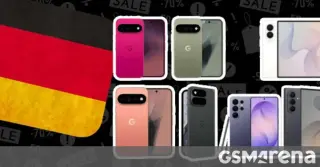
Google’s Pixel 11 lineup goes on pre-order ahead of an August 20 release, with 256GB storage standard and RAM allocated per model (12GB on the vanilla and fold; 16GB on the Pro/XL). The Pixel 11 Pro adds a HiLight LED and improved camera hardware; the Pro Fold shares the vanilla camera while trimming battery space but increases wireless charging to 25W. Trade-in bonuses reach up to €400 on some Pixel models, plus extra incentives for trading in older Pixels. The Pixel Watch 5 gains 64GB storage, while Buds Pro 2 receive a new Olive color and feature updates. Samsung counters with discounts on Galaxy Z Fold8, Z Fold8 Ultra, and Z Flip8, and the Galaxy S26 line shows substantial price cuts (e.g., Ultra €500 off), making Pixels more price-competitive against Samsung’s foldables.
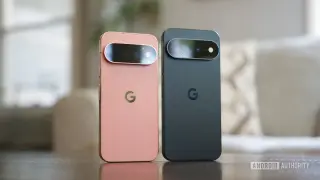
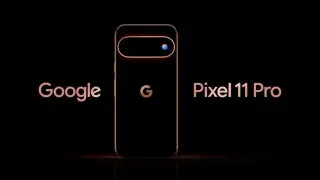
The first hands-on photos of the Pixel 11 Pro XL surface, showing a matte black model and Google’s new HiLight LED notification system built into the camera bar. The LED is expected to glow in different colors to signal different apps, sparking mixed opinions on its usefulness while previews also hint at color variants like “Dune”/Coral ahead of the official reveal.
Pixel 11 Pro XL’s Tensor G6 GPU scores 7,757 in Geekbench Compute (OpenGL) at 1,286 MHz, about 80% faster than the Tensor G5 but still well behind Qualcomm flagships; results are influenced by driver optimizations and ANGLE translation, so final launch performance may shift.
A Geekbench 7 listing for Google Pixel 11 Pro XL shows the Tensor G6 with a seven‑core CPU (two cores up to 2.65 GHz, four up to 3.38 GHz, one at 4.11 GHz), 16 GB RAM and Android 17, posting 2,112 in single‑core and 5,196 in multi‑core. The G6 appears to deliver about 7% faster single‑core but roughly 12% lower multi‑core performance than the Tensor G5 reference, likely due to the seven‑core layout, plus a new PowerVR CXTP‑48‑1536 MC1 GPU. Data is pre‑release and may not reflect real‑world performance.
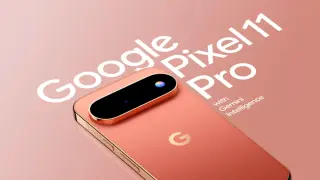
Leaker Evan Blass wraps up the Pixel 11 leak campaign with Pixel 11 Pro XL imagery, showing Pixel Glow/HiLight and a glossy finish but offering no new hardware details ahead of Google’s August 12 launch, as Gemini Intelligence features prominently in the marketing.
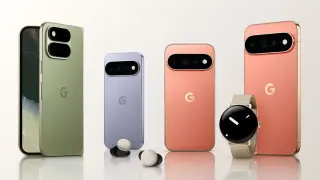
Leaker Evan Blass published dozens of marketing renders for Google's Pixel 11 lineup—Pixel 11, 11 Pro, and 11 Pro XL—in four colorways each; the base models are expected in Light Sterling, Fuchsia, Midnight Haze, and Moss, while the Pro variants may come in Dune, Light Fog, Midnight Haze, and Pine. Google is set to officially unveil the Pixel 11 series and Pixel Watch 5 on August 12 in New York.
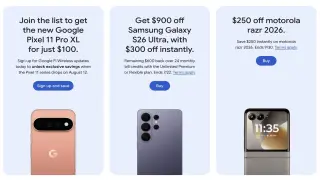
Google Fi briefly posted an official image of the Pixel 11 Pro XL on its site as part of a promo promising the device for $100 with sign-up, then removed the image though the listing remains (without the image). The Pixel 11 Pro XL (or Pixel 11 Pro) is expected to launch with the Pixel 11 line at the Made by Google event on August 12, with colors rumored like Canyon and others, and pricing rumors already circulating (likely around $1,299 for the 256GB model).