BP shakes up leadership after conduct review
BP has ousted its chairman following a conduct review, triggering a leadership transition as the company reconsiders governance and its strategic direction in the energy sector.
All articles tagged with #bp

BP has ousted its chairman following a conduct review, triggering a leadership transition as the company reconsiders governance and its strategic direction in the energy sector.

BP has ousted its chairman Albert Manifold over serious governance and conduct concerns, appointing Ian Tyler as interim chair; the move follows shareholder opposition at the AGM and comes as BP reports about $3.2 billion in Q1 profit boosted by higher oil prices and trading gains.

European oil majors BP, Shell, and TotalEnergies reportedly earned up to $4.75 billion more in their Q1 2025 trading than in Q4 2025, buoyed by Iran-related market volatility and oil-price spikes. The gains helped European majors outperform U.S. rivals Chevron and ExxonMobil, with Shell posting strong earnings on trading, BP more than doubling its quarterly profit, and TotalEnergies lifting its interim dividend by 6% while earnings rose about 30% year over year.

BP reported a robust Q1 with underlying replacement cost profit of $3.2 billion, beating expectations thanks to exceptional oil trading and stronger midstream performance. Net profit was $1.38 billion, up from a year earlier, as energy prices rose amid the Iran conflict and shipping disruptions. The company cautioned that upstream production should be lower in Q2 due to maintenance and Middle East disruptions. BP reiterated its 2026 capital expenditure guidance of $13-13.5 billion and projected divestments of $9-10 billion for the year, while aiming to cut net debt to $14-18 billion by end of next year. An AGM-linked investor rebellion over governance and climate transparency also highlighted ongoing shareholder tensions.

BP reported a $3.2 billion Q1 profit, more than doubling from a year earlier, aided by “exceptional oil trading” as prices surged amid the Iran conflict. The results sparked criticism from campaign groups and renewed calls for windfall taxes on fossil fuels, even as BP said it would work with authorities to keep oil and gas flowing and help address fuel affordability as energy bills rise.

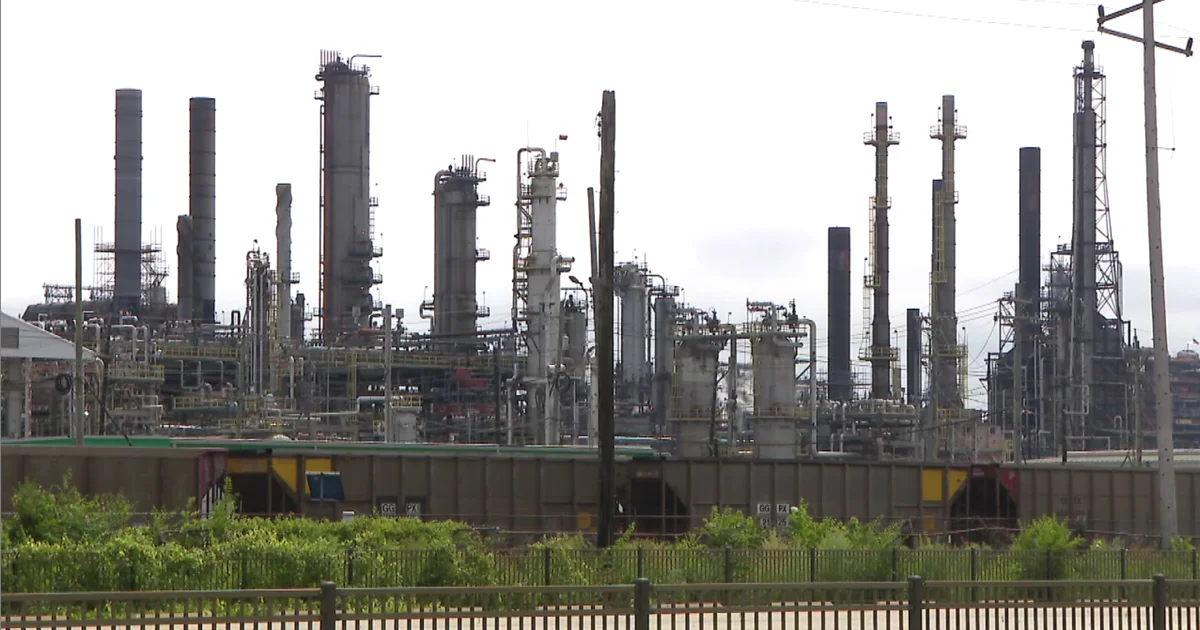
The BP Whiting refinery in northwest Indiana initiated a lockout after contract negotiations with the United Steelworkers union representing about 900 workers stalled; the union rejected BP’s revised offer following a Tuesday meeting, and the company canceled rolling 24-hour extensions, with the lockout taking effect March 19 unless an agreement is reached. BP says operations will continue under a trained team and frames the move as necessary for the refinery’s long‑term sustainability, while USW leaders accuse BP of seeking to cut more than 100 jobs, reduce pay, and curb bargaining rights. The union has authorized a strike, and the lockout will end if the union accepts the proposal.)

Seeking Alpha analysts flag Shell (SHEL), TotalEnergies (TTE), BP (BP), ConocoPhillips (COP), and ExxonMobil (XOM) as having the strongest exposure to a Strait of Hormuz closure, driven by LNG and Persian Gulf oil exports; a Ras Laffan LNG facility shutdown could impact earnings for COP, XOM, SHEL, and TTE, though near‑term effects are likely modest given scale and diversification; upstream-focused companies such as COP, Occidental (OXY), EOG Resources (EOG), Devon Energy (DVN), and APA (APA) may see more earnings volatility from Gulf-region disruptions.

BP said it will suspend stock buybacks to strengthen its balance sheet and cut net debt by up to $18 billion by 2027, redeploying cash into capex as it pivots ahead of Meg O’Neill’s start as CEO; the move coincides with exploration momentum (e.g., Brazil’s Bumerangue) and comes with a sharp stock move and mixed quarterly results.

BP suspends share buybacks to reinvest in oil and gas opportunities, including a major Brazil discovery, after a $3.4 billion Q4 loss and renewables writedowns; interim CEO Carol Howle says the turnaround accelerates ahead of Meg O'Neill's April start, with a 4% dividend increase.

BP suspended its share buyback and redirected excess cash to strengthen its balance sheet after posting Q4 2025 results in line with expectations and a full-year net profit of $7.49 billion, down from $9 billion in 2024 and below consensus estimates. The company guided 2026 capex at about $13–13.5 billion, paid a dividend of 8.320 cents, and saw shares drop around 5% as rivals also posted weaker earnings in a low crude-price environment. Meg O’Neill is set to become CEO on April 1.

bp has agreed to sell a 65% stake in Castrol to Stonepeak for $10.1 billion, as part of its strategy to simplify its portfolio and strengthen its balance sheet, with the transaction expected to complete by the end of 2026 and proceeds used to reduce debt.

BP is selling a 65% stake in its Castrol lubricants business to private equity firm Stonepeak for $6 billion as part of its strategy to reduce debt and focus on core oil and gas operations, with BP retaining a 35% stake and the deal expected to complete by the end of 2026.

BP has agreed to sell a 65% stake in its Castrol lubricants business to US investment firm Stonepeak for $10.1 billion, as part of BP's strategy to reduce debt and streamline operations, with proceeds to be used for debt repayment and strategic refocusing.

BP has sold a 65% stake in its Castrol motor oil division to US investment firm Stonepeak for $6 billion, valuing Castrol at $10.1 billion, as part of BP's strategy to focus on core oil and gas businesses and reduce debt, while shifting away from green energy investments.

BP is selling a 65% stake in its Castrol lubricants unit to Stonepeak for $6 billion, valuing the unit at $10.1 billion, as part of a broader strategy to divest $20 billion of assets and focus on core oil and gas operations. The sale is a milestone in BP's strategic reset, which includes leadership changes and a focus on simplifying its business.