
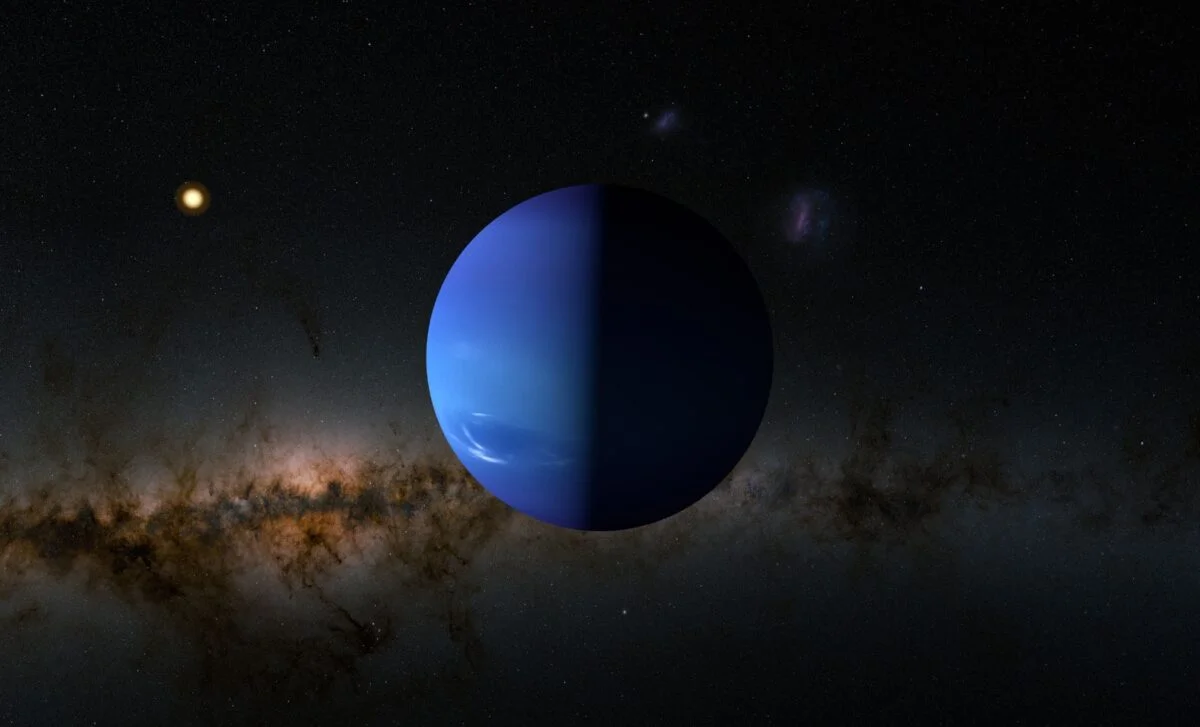
Helical Superionic Carbon-Hydrogen Emerges Inside Ice Giants
New quantum simulations suggest carbon hydride (CH) can form a quasi-one-dimensional, spiral superionic state under extreme pressures (500–3,000 GPa) and temperatures (4,000–6,000 K) inside Uranus and Neptune, with hydrogen moving along corkscrew-like paths through a carbon lattice; this directional ion movement could affect heat and electrical transport and help explain the planets’ unusual magnetic fields.