
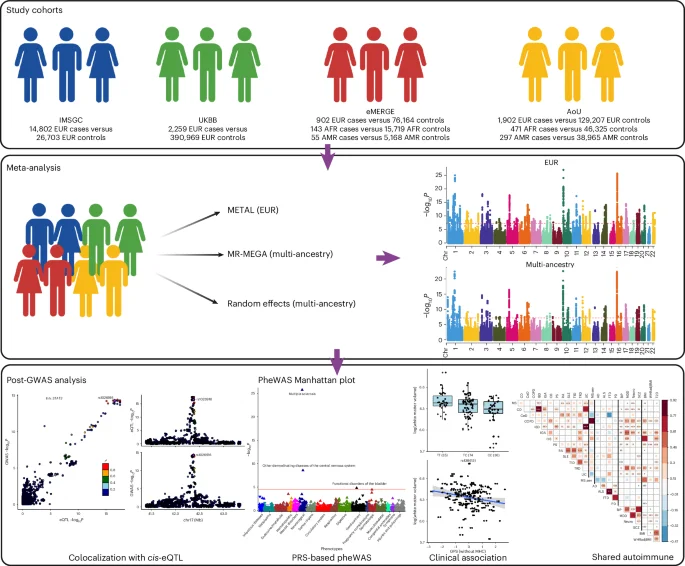
Neuronal pathways emerge as key drivers of multiple sclerosis risk in large GWAS
Multi-ancestry GWAS of 20,831 MS cases and 729,220 controls identifies 236 non-MHC MS risk variants (including four new loci), constructs a cross-ancestry polygenic score, and, with single-cell data from blood and brain, highlights inhibitory neurons as a main target for MS-related genetic variation and prioritizes 76 candidate causal genes. The STAT3 risk variant associates with cognition and white-matter integrity in people without MS and with higher neurofilament light in MS, suggesting MS susceptibility may reflect reduced CNS resilience to inflammatory challenges.