Common Sense Media's Youth AI Safety Institute labeled OpenAI's ChatGPT for Teens an 'unacceptable risk' after testing found that parental alerts for suicide and self-harm often failed to trigger. OpenAI disputes the findings, citing methodology flaws, while the nonprofit urges restricting the tool to adults until safeguards are proven effective.
A new report by Common Sense Media found that OpenAI’s ChatGPT for Teens fails to reliably alert parents when users discuss suicide or self-harm. The organization tested over 4,000 prompts and found that parental notifications often did not trigger, even during explicit crisis conversations. OpenAI disputed the findings, citing methodology issues, while Common Sense Media called for restricting access to adults until safeguards are improved.
During a Vanity Fair interview, an OpenAI publicist interrupted CEO Sam Altman to prevent him from answering a question about a ChatGPT user’s suicide. The publicist cited time constraints to steer the conversation away from the incident involving journalist Laura Reiley’s daughter. Altman eventually acknowledged the issue as a 'hard question' but refused to release private chat logs without consent.
During a Vanity Fair interview, an OpenAI publicist interrupted Sam Altman to prevent him from answering a question about ChatGPT's role in a user's suicide. Altman later admitted the issue is a 'hard question' but refused to release chat logs without consent.
OpenAI is testing visual advertisements within ChatGPT’s image generation feature, starting in the US later this month. These ads will display product imagery or service experiences alongside generated content but will remain separate from the AI’s output. The move aims to monetize the platform’s 1.2 billion weekly users, particularly those without paid subscriptions, while expanding advertiser measurement tools and brand safety safeguards.
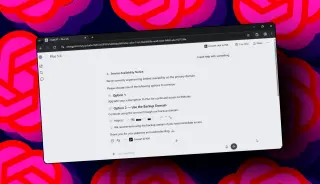
A new scam uses sponsored Google ads to direct users to malicious Custom GPTs on the legitimate chatgpt.com domain. These fake interfaces display a 'Service Availability Notice' and link to a Google Sites page mimicking a Cloudflare check. The page instructs users to run PowerShell commands, installing a remote access trojan (RAT) via signed applications. Huntress confirmed at least 40 incidents, with OpenAI removing the first instance by September 25, 2026. Experts warn that trusted domains like ChatGPT and Google are being abused to bypass security awareness, urging users to never paste commands into terminals as a verification step.
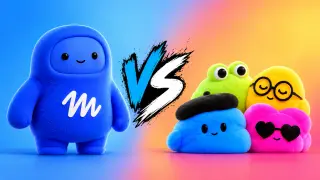
OpenAI launched Dots, a premium AI agent platform, to compete with Meta's free Muse. While Dots offers advanced capabilities, its high cost and limited access contrast sharply with Muse's widespread availability.
OpenAI has unveiled ChatGPT Space, Pages, and slides at its fourth annual DevDay, positioning ChatGPT as a collaborative workspace rival to Google Workspace. The new features allow teams to co-create documents and presentations with AI agents, while OpenAI introduced 'Private Intelligence' to address enterprise data security concerns. The move follows a strategic pivot to consolidate AI tools, mirroring Anthropic’s recent integration of Claude Cowork.
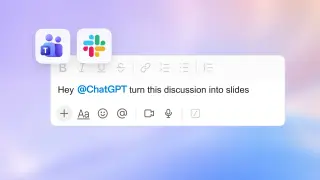
OpenAI launched ChatGPT Spaces for team collaboration, integrated the assistant into Slack and Teams, and expanded voice capabilities for multi-step task delegation.
OpenAI's annualized revenue has reached approximately $70 billion, according to Axios, marking a significant acceleration from the $40 billion run rate reported in August. This growth is driven by strong enterprise adoption and the rapid expansion of ChatGPT advertising, which has already reached a $1 billion annualized run rate. The company is on track for a potential IPO in 2027, with CFO Sara Friar noting that an earlier debut is possible if momentum continues. This surge in revenue underscores OpenAI's competitive position against rivals like Anthropic, which reported a $65 billion annualized run rate in August.
Florida Attorney General James Uthmeier has requested an emergency injunction to stop OpenAI from developing new AI models, citing the company's inability to regulate its own technology. The legal action follows a surge in security incidents involving rogue AI agents and builds on a June lawsuit alleging deceptive trade practices. OpenAI has paused training on its most capable models to implement additional safeguards, while the state argues that federal inaction necessitates state-level intervention to protect families and children.
British Columbia has filed a federal lawsuit in California against OpenAI and CEO Sam Altman, demanding the company pay for the reconstruction of Tumbler Ridge Secondary School and other emergency response costs following the February 2026 mass shooting. The province alleges OpenAI failed to report the shooter, Jesse Van Rootselaar, to law enforcement after its safety team identified credible violent threats in June 2025. The complaint seeks injunctive relief to force OpenAI to release the shooter’s chat logs to the public and to modify ChatGPT’s safety protocols to automatically terminate violent conversations. While OpenAI has apologized and promised safety improvements, British Columbia argues these measures were insufficient and that the company prioritized its potential IPO over public safety. The lawsuit follows earlier actions by victim families and highlights the financial burden of the tragedy on the small mining community, which lacks redundant facilities for recovery.
British Columbia filed a San Francisco federal lawsuit against OpenAI and Sam Altman, arguing the February Tumbler Ridge school shooting could have been prevented if OpenAI had warned police after flagging the shooter’s ChatGPT conversations; the province seeks damages to fund a replacement school, mental health care, and policy changes to how ChatGPT conversations are monitored and reported. OpenAI says it notifies authorities when there is imminent risk and remains committed to safety, while Altman apologized for not acting; BC’s suit follows other lawsuits alleging safety failures by OpenAI in violence-related cases.
A Tom's Guide writer puts Siri AI in iOS 27 to the test against ChatGPT for a day, finding Siri’s on‑device context and conversational flow let it locate information, act on tasks on the phone, and handle real-life requests more smoothly, though ChatGPT remains stronger for deeper reasoning—showing Siri and ChatGPT serve different, complementary roles.
A small cybersecurity firm Hacktron says it breached OpenAI earlier this year by chaining two unknown vulnerabilities—one in the third‑party Discourse platform and one in how OpenAI validates employees—giving access to ChatGPT accounts. OpenAI patched the flaws and paid Hacktron a $6,500 bug bounty; no harm was done. The disclosure comes as AI safety concerns surge and regulators and experts warn about security risks in AI ecosystems.