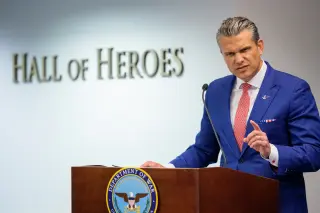
The Pentagon pulled decades of classified documents from the Secret SIPRNet after The Washington Post reported senior officers’ concerns about sustaining the Iran war, removing them from an internal portal and restricting access to materials that could affect military planning.
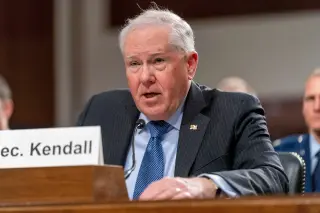
The Pentagon revoked former Air Force secretary Frank Kendall’s security clearance, accusing him of disclosing classified information about Air Force One to the media; Kendall says he did not disclose anything and is considering legal options as the Defense Department tightens its leaks investigations.
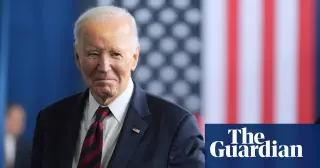
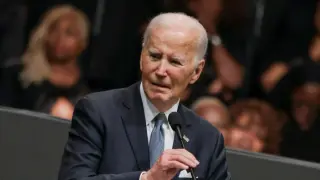
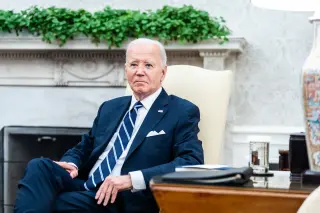
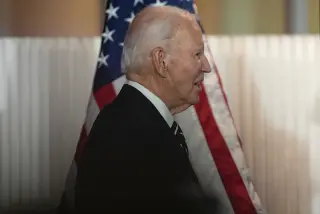
Newly released, heavily redacted audio transcripts from 2016–2017 show Joe Biden discussing notes and allegedly containing classified material during ghostwriter sessions for his 2017 memoir. The Oversight Project frames the tapes as evidence of mishandling sensitive information and cites concerns about cognitive decline, while Biden’s team says the conversations were private for a book and were provided to the DOJ to keep them confidential. The release follows debates over Biden’s handling of classified records and mirrors partisan discussions sparked by the Trump Mar-a-Lago case; the Oversight Project and Heritage Foundation have pursued the tapes, which Biden has fought but recently dropped his legal challenge to release.
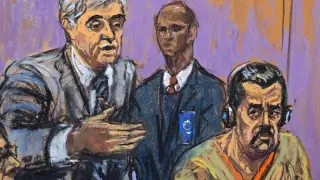
A federal judge in New York has scheduled June 1, 2027 as the start date for the criminal trial of former Venezuelan president Nicolás Maduro and his wife, with prosecutors and defense lawyers warning the schedule could shift due to issues such as classified information and potential immunity defenses tied to Maduro’s time in office.
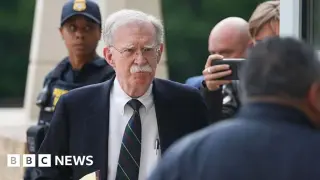
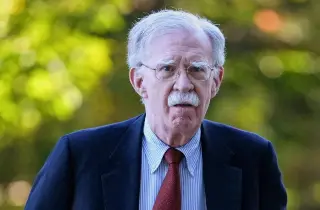
Former national security adviser John Bolton pleaded guilty to illegally retaining top-secret information found in diary entries prepared for a forthcoming book. After initially denying 18 counts, he faces up to five years in prison, a $2.25 million fine, and 100 hours of community service, with sentencing scheduled for Oct. 28.
Ex-national security adviser John Bolton is expected to plead guilty in a federal case over retaining sensitive government information; the plea deal could reduce potential prison time and includes a $2.25 million fine, tied to notes from his memoir.
A federal judge ruled that hours of audio from Joe Biden’s 2017 memoir interviews must be released to the Heritage Foundation under FOIA, denying Biden’s bid to block disclosure. The ruling emphasizes public interest and FOIA’s transparency goals, with redactions deemed sufficient. Biden has sought an injunction pending appeal as the dispute over whether the recordings, tied to Hur’s classified-materials inquiry, proceed toward release.
Some UAP believers are buoyed by a new wave of government attention and pop culture, like aliens.gov and Pentagon files, but many are frustrated by how the Trump administration is steering disclosure, arguing secrecy persists. The community watches for transparency from advocates such as Jeremy Corbell and David Grusch, and notes how Spielberg’s “Disclosure Day” fiction and media coverage influence public perception, all while seeking official acknowledgment and trustworthy information from the government.
Former national security adviser John Bolton has agreed to plead guilty to a single count of retaining classified information found in a private diary, under a plea deal that could bring up to 60 months in prison and a $2.25 million fine; the indictment says Bolton shared more than a thousand pages of national-defense information with two unauthorized individuals who were relatives of his wife and daughter, after raids on his Maryland home and D.C. office. He is set to appear in Greenbelt, Md., on June 26 to formalize the plea, making him one of several high-profile Trump opponents indicted in federal cases during Trump’s presidency.
Former President Joe Biden filed a lawsuit against the Justice Department to block the release of audio recordings and transcripts of his private interviews with a ghostwriter assisting with his memoir, arguing release would undermine sensitive information in a probe of his handling of classified materials. The DOJ intends to provide the material to a congressional committee and a conservative think tank (the Heritage Foundation), a move Biden’s suit challenges as arbitrary and lacking legislative purpose.
Former Florida federal prosecutor Carmen Lineberger was charged with stealing a copy of special counsel Jack Smith’s sealed report on Trump’s mishandling of classified documents, allegedly emailing the document to her personal email disguised as a Bundt cake recipe.
President Biden plans to seek court action to block the release of roughly 70 hours of partially redacted audio from his 2017 interviews with a memoir ghostwriter, arguing disclosures could be weaponized or invade privacy; the DOJ says Biden has a deadline to act and a release to Congress and the Heritage Foundation could be paused until June 15 if he goes to court. The tapes include Biden saying he "found all the classified stuff downstairs," though he has repeatedly said he did not share classified information. The case centers on FOIA litigation and whether the materials are personal records or presidential papers, with implications for transparency and congressional access.
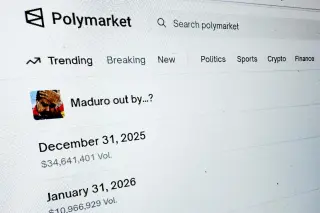
Federal prosecutors charged Special Forces soldier Gannon Ken Van Dyke with using confidential government information to win roughly $400,000 through bets on Polymarket about the seizure of Venezuelan President Nicolás Maduro. The case alleges insider trading and cites commodities and wire fraud charges, marking the first prosecution tied to prediction-market bets and spotlighting calls for tighter regulation of prediction markets.
An active-duty U.S. Army soldier, Gannon Ken Van Dyke, allegedly used nonpublic classified information about a planned operation to capture Nicolás Maduro to place bets on Polymarket, profiting about $410,000; he is charged by indictment with multiple counts including commodities fraud, wire fraud, and unlawful monetary transaction.
A U.S. Army soldier, Gannon Ken Van Dyke, was indicted for allegedly using nonpublic classified information about a military operation (Operation Absolute Resolve to capture Nicolás Maduro) to place bets on Polymarket, profiting about $410,000. He allegedly created a Polymarket account, placed about 13 bets between December 27, 2025 and January 2, 2026, and attempted to conceal proceeds after the operation's public announcement. He faces multiple charges including three counts of violating the Commodity Exchange Act, one count of wire fraud, and one count of an unlawful monetary transaction, with a potential maximum of up to 70 years in prison. The case is being prosecuted in federal court by SDNY with cooperation from the FBI and Polymarket.