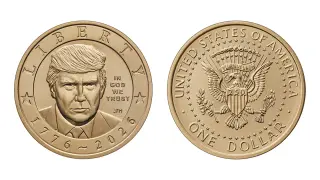
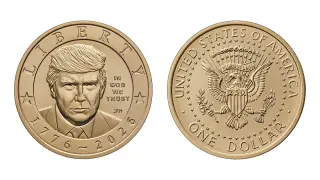
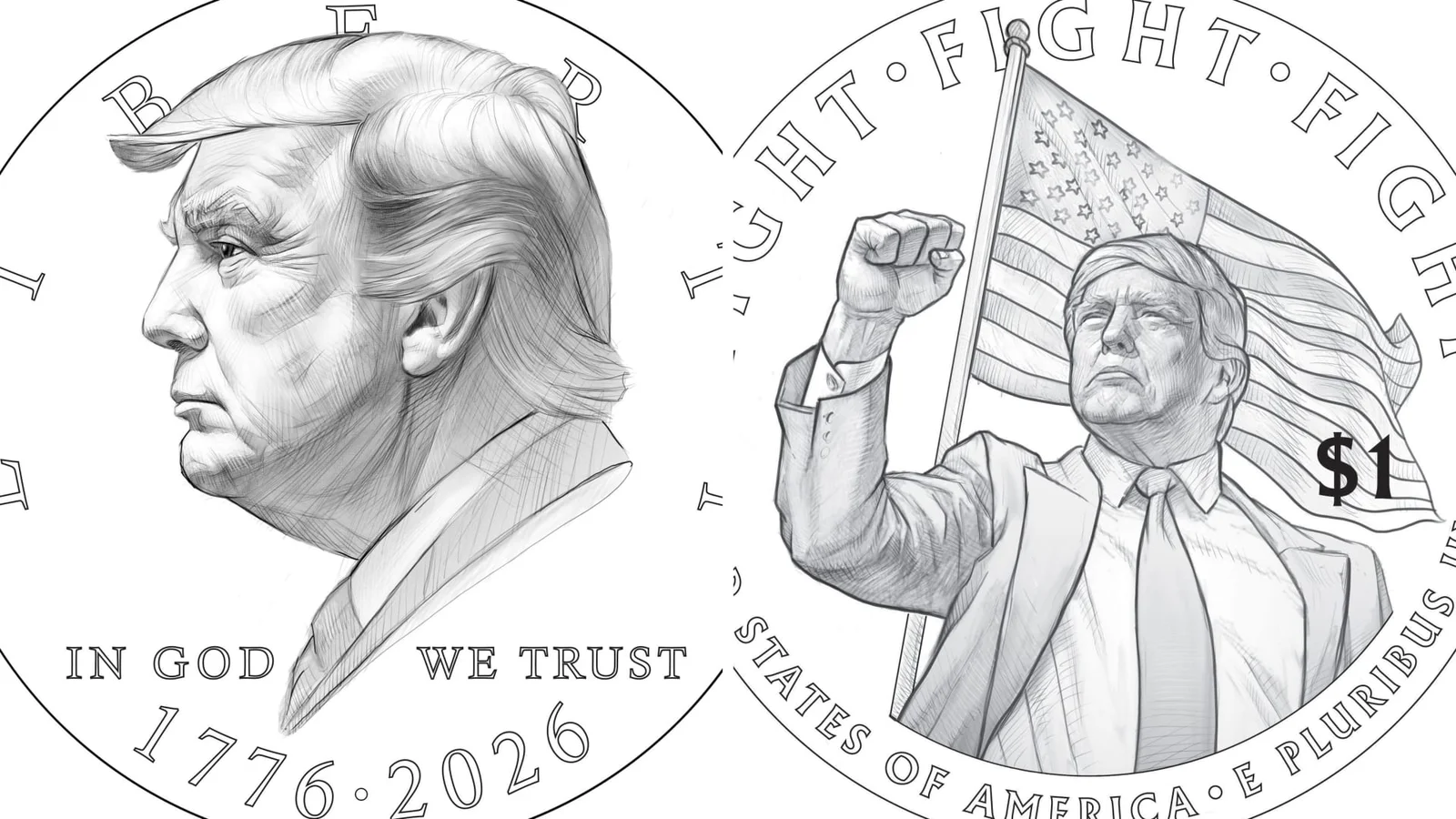
The U.S. Mint announced new golden $1 coins featuring President Donald Trump’s image are now in circulation to mark America’s 250th birthday; the coins will also be sold on the Mint’s website at markups roughly 50% to nearly 150% above face value, and this represents only the second time a living president has appeared on U.S. coinage.
The U.S. Mint will begin producing a gold-hued $1 coin featuring President Donald Trump, with the inscription 'In God We Trust' and the phrases 'Liberty' and '1776-2026,' while the reverse shows an eagle; Treasury Secretary Scott Bessent announced the plan to commemorate the United States' 250th birthday.
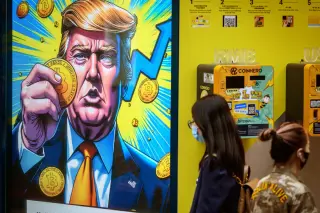
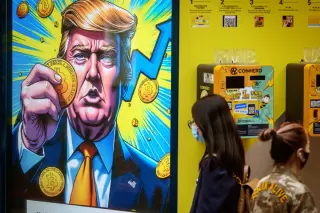
Josh Marcus reports that Trump and his family have built a crypto fortune via World Liberty Financial and related meme coins, including a $636 million windfall, while thousands of ordinary investors have lost billions as token prices collapsed; a foreign Abu Dhabi royal bought a large stake in World Liberty before Trump’s inauguration, and Trump has said he knew little about the crypto fortune, highlighting the clash between political power and crypto gains amid a broader crypto downturn.
The Independent reports that Donald Trump and his family profited massively from crypto ventures—most notably World Liberty Financial and related meme tokens—while hundreds of thousands of ordinary investors lost billions; two-thirds of Trump meme-coin buyers were in the red, with some tokens plummeting up to 97% from their peak. The UAE royal investor and other elites backed World Liberty, raising questions about conflicts of interest as Trump’s fortunes in crypto soared during a broader downturn in the sector, which he has said he knew little about.
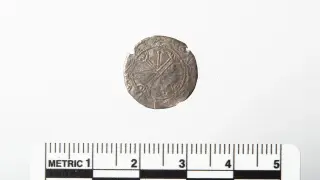
A Norwegian metal detectorist mistook a 900-year-old silver coin for a button, only for researchers to confirm it as a rare Magnus Barefoot-era artifact (1093–1103). Found near Utstein Monastery, the coin’s copper-backed side was turned into jewelry, and X-rays revealed a griffin paired with a cross-over-cross motif—one of only four known examples of this design. The find, one of about 100 coins from Barefoot’s reign, sheds new light on late Viking-Age minting and Barefoot’s high-silver standard before his death in 1103.
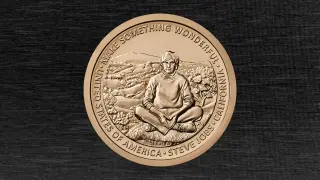
The U.S. Mint started selling a new Steve Jobs commemorative $1 coin as part of its American Innovation Coin Program, depicting a reflective moment of Jobs with a California landscape; rolls of 25 cost $61 and bags of 100 cost $154.50.
Coinbase reported a $394.1 million net loss in Q1 2026 as revenue declined 31% to $1.41 billion, driven by a drop in crypto prices and a $482 million hit from assets held for investment. CEO Brian Armstrong framed the results as a step toward a broader, on-chain, multi-asset strategy—moving beyond purely spot trading toward derivatives, commodities, futures, AI payments, and regulated stablecoins—while the company’s EBITDA also fell year-over-year as it diversifies revenue sources.
Coinbase posted a Q1 2026 loss of $1.49 per share on revenue of $1.41 billion, missing estimates as falling crypto prices weighed on spot trading. Transaction revenue and subscription revenue came up short of expectations, while stablecoins revenue rose to $305 million. Derivatives trading surged to about $4.2 billion in volume (up 169% year-over-year), and Coinbase captured an all-time high 8.6% market share, even as executives signaled continued volatility. The company reiterated its plan to become an “everything exchange,” highlighting growth in non‑crypto revenue and forecasting roughly $100 million in annualized revenue from Kalshi’s prediction markets. Separately, Coinbase announced a ~14% workforce reduction (~700 jobs) as part of an AI‑driven restructuring to tighten margins amid slower trading conditions.
IQM Quantum Computers plans an $1.8B SPAC merger with Real Asset Acquisition Corp (RAAQ), aiming to list in the U.S. and Helsinki and raise over $450M; a Naples court halted IBM’s €61M Salerno quantum project on bid-process grounds, creating delay risk; Quantum eMotion is uplisting to the NYSE American to expand U.S. market access; Coinbase is forming an advisory board to assess post-quantum crypto risk and chart a path to upgrades; and quantum tools are beginning to influence game design by testing complex systems early, signaling broader industry adoption.
Coinbase is watching a major crypto bill advance toward Senate review, with the central issue being whether platforms can continue offering rewards on stablecoin holdings. Coinbase views those rewards as a core part of its business and may resist strict limits, while some lawmakers want rules that could restrict rewards to banks. Stablecoin rewards underpin a meaningful revenue stream tied to USDC reserves, with about 3.5% yields on certain holdings and Bloomberg data projecting roughly $1.3 billion in stablecoin-related revenue for 2025. Wall Street currently signals a Moderate Buy on COIN with an average target of $361.63, implying about 50% upside.
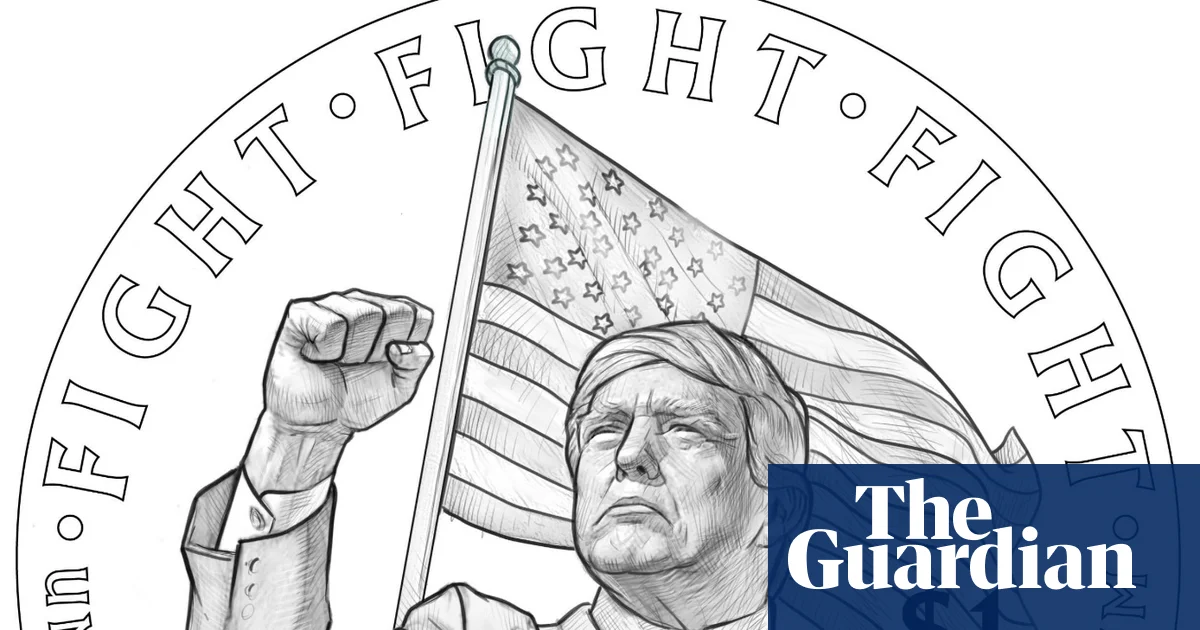
The U.S. Treasury is considering minting a $1 coin featuring Donald Trump to commemorate the 250th anniversary of the United States, with a draft design showing Trump’s profile and a fist-raising pose, though legal restrictions on depicting living persons on coins may pose challenges.
The U.S. Treasury Department is considering minting a $1 coin featuring Donald Trump to commemorate the 250th anniversary of American independence, with designs that include Trump and references to the country's spirit, despite legal restrictions on depicting living persons on currency.
The US Treasury is considering a $1 coin design honoring Donald Trump, featuring a clenched fist and referencing his survival of an assassination attempt, as part of the 250th anniversary celebrations, amid political and economic tensions.
Analysts project that Coinbase Global, Inc. (COIN) will announce a quarterly loss of $0.06 per share, with revenues projected to reach $731.94 million, a 16.3% increase from the same quarter last year. Analysts have revised the consensus EPS estimate 50.5% higher over the last 30 days. They also forecast various key metrics such as net revenue, trading volume, and monthly transacting users. With a Zacks Rank #3 (Hold), COIN is expected to mirror the overall market performance in the near future.