
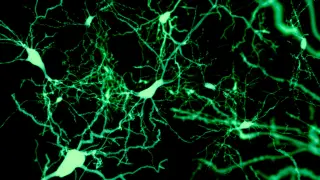
Rare cortical neurons identified as active drivers of sleep in mice
A study in Nature reveals that a tiny population of Sst-Chodl neurons in the cerebral cortex can actively trigger sleep, challenging the view that the cortex passively follows deep brain signals. These rare cells, comprising roughly 0.2% of cortical neurons, possess extensive long-range connections that synchronize brain activity across distant regions. When activated in mice, they induced slow-wave sleep and increased sleep duration, suggesting they may serve as sensors for sleep pressure. The findings highlight a new cortical mechanism for sleep regulation, potentially offering targets for treating sleep disorders, though the specific triggers for these neurons remain unknown.