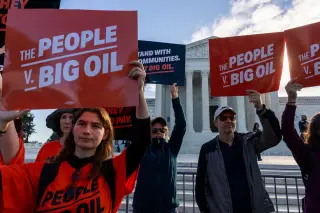
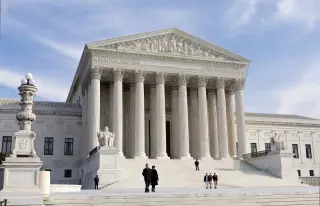
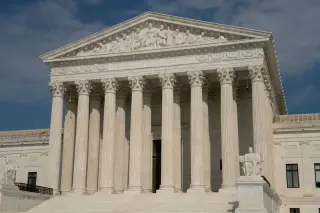
The U.S. Supreme Court heard oral arguments on October 5 regarding a lawsuit by Boulder, Colorado, against ExxonMobil and Suncor Energy for climate-related damages. The eight-justice panel, missing Samuel Alito due to a recusal, showed no clear consensus, leaving the future of similar state lawsuits uncertain.
The Supreme Court will hear arguments on October 5 in Suncor Energy v. Boulder, a pivotal case determining whether federal law preempts state-level climate damages lawsuits against fossil fuel companies. Boulder seeks billions in damages from ExxonMobil and Suncor for alleged climate-related harms. Justice Samuel Alito has recused himself, creating a risk of a 4-4 split that would uphold the lower court's decision without setting a national precedent.
The U.S. Supreme Court has agreed to review the legality of the Trump administration’s policy denying bond hearings to immigrants detained by ICE. This move follows a wave of lower court rulings that largely rejected the administration’s interpretation of immigration law, which mandates detention for individuals without criminal records or flight risks. The case, centered on a Brazilian citizen detained in New York, tests whether the 1996 immigration statute applies to those far from the border. With the new term beginning next week, the decision is expected to be among the most consequential of the year, potentially reshaping detention practices for tens of thousands of individuals.
New York prosecutors are reopening the criminal investigation into a 2024 alleged gang rape at a Cornell University fraternity house, where a student claims she was forced to use ketamine and alcohol. While the university maintains it imposed expulsions and closed the fraternity, critics argue the initial lack of criminal charges and the drug's role in incapacitation highlight systemic failures in campus safety and legal response.
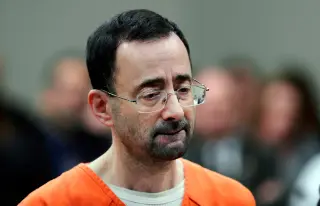
The Michigan Supreme Court ruled that the 2011 Sex Offender Registration Act cannot be applied retroactively to crimes committed before July 1, 2011. Consequently, the Michigan State Police removed over 20,000 individuals, including disgraced former gymnastics doctor Larry Nassar, from the public registry. While Nassar remains in prison and still legally required to register if released, the decision has sparked outrage among prosecutors and survivor advocates who view the removal as a safety risk.
The Trump administration has requested an emergency stay from the Supreme Court to resume deporting migrants to third countries, following a recent ruling by the First Circuit Court of Appeals that blocked the practice. The Justice Department argues that halting these removals has caused logistical chaos, including cancelled flights and diplomatic issues, while preventing the removal of dangerous criminals. The administration seeks to overturn a lower court decision that mandated migrants be given a meaningful opportunity to challenge their destination before removal. This dispute centers on the Convention Against Torture, which restricts deportation to countries where individuals face a risk of torture. The policy, which has already relocated approximately 25,000 migrants, remains a central component of the administration's broader immigration enforcement strategy despite ongoing legal challenges regarding due process and human rights concerns.
The Supreme Court blocked the Trump administration from moving forward with sweeping new restrictions on mail ballots for the upcoming midterm elections, leaving election procedures intact and preventing changes that could affect millions of voters as the races determine control of the House and Senate. The ruling represents a major setback for Trump, who had argued the rules were needed to prevent fraud.
A surge of election-related lawsuits is roiling the lead-up to the midterms, as courts race to resolve disputes over voting rules and procedures. The Washington Post highlights cases like Missouri’s election dispute with conflicting orders, illustrating how rapid, high-stakes litigation can sow confusion and uncertainty for voters and officials ahead of the elections.
The Supreme Court temporarily blocked Missouri from using a newly drawn congressional map that favored Republicans for November’s midterms, pausing the map while a legal challenge proceeds. The justices offered no public reasoning for the emergency pause and there were no noted dissents, prolonging electoral confusion as courts weigh the map in this high-stakes redistricting dispute.
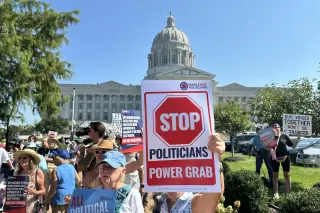
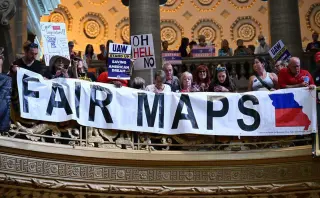
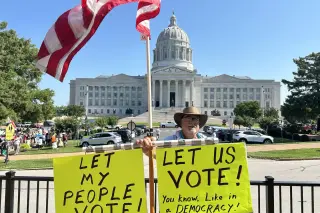
Missouri’s bid to implement a GOP-favored congressional map has been blocked by conflicting court rulings, plunging the state’s elections into chaos as deadlines loom and the Supreme Court is asked to settle the dispute.
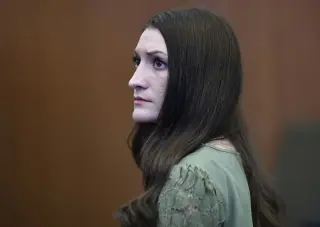
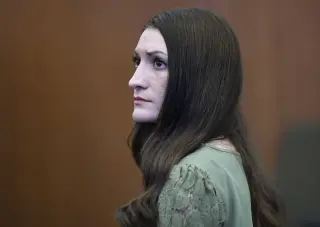
The holdout juror in Lindsay Clancy’s 2023 trial told deliberations he had reasonable doubt but would not acquit her by insanity, a revelation relayed by the foreperson and cited as a factor in the mistrial in the Massachusetts triple-murder case.
Conflicting rulings from a federal judge and Supreme Court Justice Brett M. Kavanaugh paused Missouri’s GOP-favored congressional map, leaving races in limbo and ballots unsettled ahead of November; Kavanaugh’s decision allows a referendum on the map, marking a rare setback for Republicans in the nationwide redistricting battles that began with Trump urging changes to unseat Democratic Rep. Emanuel Cleaver.
The Trump administration asked the Supreme Court to allow access to a broad government database that includes Social Security data to verify that would-be voters are U.S. citizens; a federal judge blocked the move on privacy grounds, and the Court is weighing this in the context of multiple voting cases ahead of the midterms.
Lindsay Clancy’s attorney publicly urged President Trump to consider a pardon after a mistrial in her high-profile Massachusetts murder case, saying he hopes to broker a prosecutorial agreement acceptable to both sides.
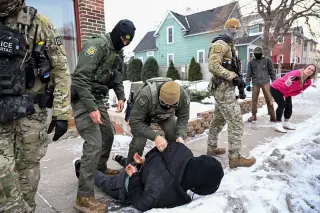
The Justice Department charged ICE officer Christian Castro with a federal felony for allegedly lying about shooting a Venezuelan migrant, a rare move that critics say signals a broader DOJ retreat from investigating shootings by federal agents and underscores accountability concerns in immigration enforcement.