The Tongue-Eating Louse: How a Parasite Replaces a Fish’s Organ
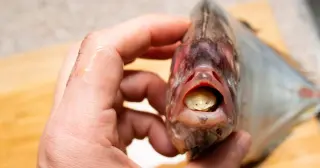
Cymothoa exigua, a saltwater isopod, enters fish through the gills and attaches to the tongue, draining its blood supply until the organ withers and falls away. The parasite then anchors itself to the remaining stump, functioning as a new tongue for the host. While often cited as a unique case of organ replacement, scientific evidence for this specific behavior is limited to a single 1983 study of two snappers. Recent research highlights that many mouth-dwelling parasites are misidentified, with a new species, Cymothoa facimar, described in 2025, and notes that fishing stress can worsen parasite impacts on fish health.