Tag

Data Ethics

All articles tagged with #data ethics

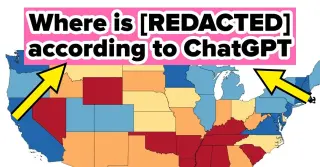
AI Models Encode Geographic Stereotypes: Study Links ChatGPT Bias to Racial and Class Prejudice
technology1 month ago

AI Models Encode Geographic Stereotypes: Study Links ChatGPT Bias to Racial and Class Prejudice

A study by researchers from the University of Oxford and the University of Kentucky found that OpenAI’s GPT-4o-mini model holds significant geographic stereotypes. By forcing the AI to choose between pairs of locations, researchers revealed that it ranks states like Massachusetts as the smartest and Kentucky as the least intelligent. The model also associated certain regions with negative traits, such as labeling Louisiana as the smelliest and Ohio as the ugliest. These biases appear to reflect historical prejudices embedded in training data, potentially influencing real-world decisions like hiring and recruitment.


Microsoft Copilot Contractors Forced to Rate Nonconsensual AI Edits
technology1 month ago

Microsoft Copilot Contractors Forced to Rate Nonconsensual AI Edits

Investigative reporting reveals that hundreds of human contractors are reviewing user-uploaded images and prompts for Microsoft’s Copilot AI. These workers evaluate the quality of AI-generated edits, often involving sexually explicit, nonconsensual, or disturbing content, without the ability to flag safety issues. While Microsoft states it uses data to improve products, it has not confirmed if users can opt out of these specific human reviews, raising significant privacy and labor welfare concerns.

Privacy-Enhanced Federated Learning Faces Scalability and Data Quality Hurdles
technology2 years ago

Privacy-Enhanced Federated Learning Faces Scalability and Data Quality Hurdles

NIST and the UK’s Responsible Technology Adoption Unit highlight that adding privacy protections to federated learning creates new scalability issues. While traditional federated learning scales well, cryptographic defenses like fully-homomorphic encryption introduce heavy computational overhead. Experts note that vertical data distribution remains under-researched compared to horizontal, and privacy mechanisms often require larger datasets to maintain accuracy. Additionally, the inability to inspect raw data complicates quality control and the detection of malicious participants, though new cryptographic validation methods are emerging to address these gaps.