
Fertility gains help disease-risk alleles endure through evolution-driven trade-offs
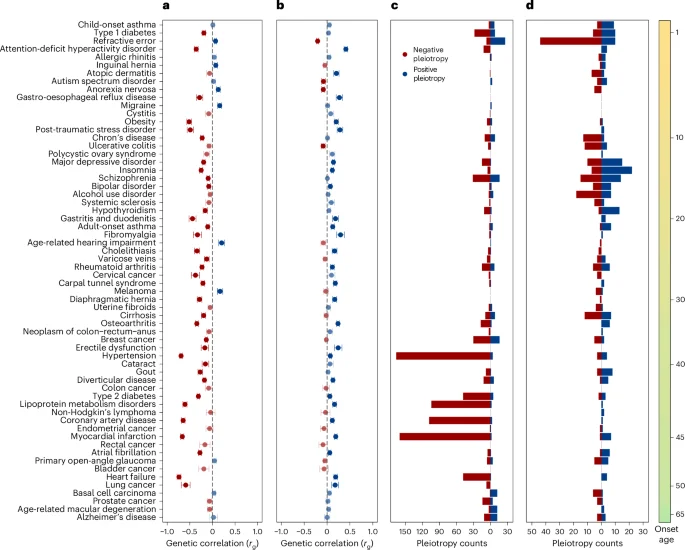
Across 62 diseases, disease-risk alleles tend to shorten longevity but increase fertility; a subset that raises both traits shows signals of recent positive selection over the last ~50,000 years. Mendelian randomization suggests genetic liability to disease lowers longevity, with no robust causal effect on fertility after accounting for socioeconomic factors. In UK Biobank analyses, individuals with high disease risk generally have more children than low-risk peers, though early-onset diseases dampen reproductive success. Together, the findings support antagonistic pleiotropy and mutation-accumulation as mechanisms maintaining disease alleles via life-history trade-offs and early-life fitness advantages.