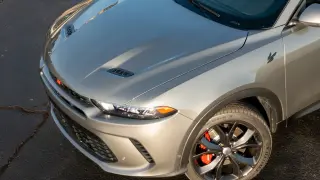
Dodge plans to revive the GLH badge as a Hornet-based hot crossover with a turbocharged four, aiming for best-in-class performance and a faster SRT variant later; Dodge frames the GLH as a gateway into its higher-performance lineup (e.g., Charger, Durango) in a segment it sees growing despite weaker demand for small hot hatches in the U.S.
Dodge unveils a 600-hp Charger Super Bee with enhanced cooling, aerodynamics and brakes, initially as a limited 2027 Launch Edition but planned for mass-market release in 2028. The lineup will also include a mid-size GLH in the future, with SRT variants in the works and a continued performance push under a FaSTLaNe 2030 roadmap; the 2027 Charger R/T starts at $51,990.
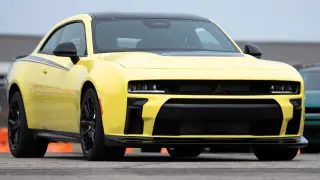
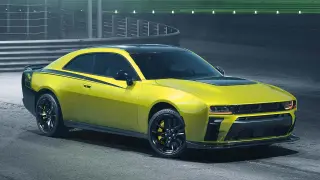
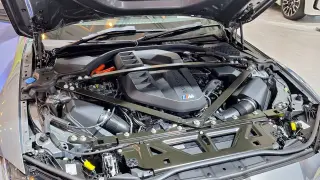
Dodge revives the Charger Super Bee with a 3.0-liter twin-turbo inline-six tuned to 600hp and 531 lb-ft of torque, aided by two Garrett turbos, upgraded cooling and a revised ECU. The Launch Edition adds 16-inch Brembo brakes, 20-inch forged wheels, adaptive dampers, and an aero package, plus a redesigned front end for better airflow; 0–60mph is 3.6 seconds and the quarter mile 11.8 seconds. The package is aimed at track performance as well as straight-line speed, with two- or four-door configurations and pricing to be announced later this year.
Dodge reveals a 2027 Charger Super Bee powered by a Hurricane twin-turbo six-cylinder engine with distinctive colors, alongside a new Durango concept SUV called Smokescreen, unveiled at M1 Concourse.
Dodge unveils the 2027 Charger Super Bee, delivering 600 hp and 531 lb-ft from a revised twin-turbo 3.0L inline-six with standard all-wheel drive and a new rear-drive mode, plus extensive cooling, aero, and suspension upgrades for track performance; the Launch Edition adds chassis tweaks, adaptive dampers, Track/Drag modes, Race Prep, and exclusive color/branding.
Dodge has teased a new Charger Sixpack dubbed the Charger Super Bee, set to debut on August 7 alongside Roadkill Nights as part of the Charger’s 60th‑anniversary festivities. The teaser hints at a twin‑turbo 3.0‑liter Hurricane inline‑six producing more than 550 hp (with around 600 hp expected) and about 531 lb‑ft of torque, aiming for sub‑4‑second 0–60 mph times and a quarter‑mile in under 12 seconds. The reveal is accompanied by other Dodge celebrations on Woodward and at NHRA events, with “new product announcements” teased beyond the Super Bee.
Dodge teases a new era for the Charger with a turbocharged inline-six Super Bee, promising a more powerful Hurricane-powered model to be unveiled August 7, 2026 during Road Kill Nights; while the current Scat Pack makes 550 hp, a higher-output Hurricane I6 is in the works, and a Hemi-powered Charger SRT is expected later.
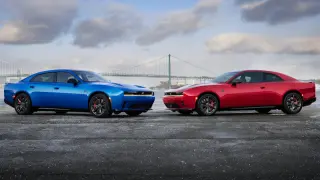
A circulating Instagram video allegedly shows two redesigned Dodge Charger prototypes—one with a new front end and bigger wheels, the other bearing a 'Powered By SRT' decal—stoking talk of a future high-performance SRT/Hellcat variant. Authenticity is unconfirmed, and Dodge has teased a V8-powered model, but the current top Charger remains the Daytona Scat Pack at 550 hp from a turbo inline-six.
Automakers are reviving inline-six engines for smoother operation and efficiency. Mazda launches a 3.3L turbo inline-six in the CX-90 (also in CX-60/70), Dodge/Jeep/Ram use a 3.0L Hurricane twin-turbo for strong performance, Mercedes-Benz adds the M256 Evo 3.0L with up to 503 hp in PHEV form, and Land Rover offers the Ingenium 3.0L with 395–542 hp in mild-hybrid and PHEV variants. Benefits cited include simpler production (one head and exhaust manifold), smoother operation, and improved efficiency versus V6s.
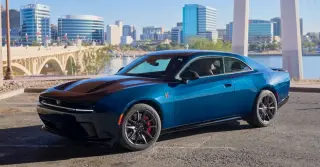
Dodge raises the 2027 Charger Daytona’s prices by up to $12,500 (2‑Door) and $11,000 (4‑Door) with only minor updates like a new NACS charging port and 25 factory options, leaving power unchanged at 670 hp; starting prices are $72,495 for the 2‑Door and $72,995 for the 4‑Door (before destination). Dodge cites market dynamics and policy changes, while speculation points to tariffs or higher EV component costs; meanwhile the gas‑powered Sixpack lineup keeps its prices, highlighting odd pricing moves across the lineup.
Dodge is taking orders for the 2027 Charger Daytona Scat Pack AWD, packing up to 670 hp with a 0–60 of about 3.3 seconds. The big change is a standard North American Charging System (NACS) port, plus a J1772‑to‑NACS adapter, touted to open access to thousands of chargers (the claim of 29,000+ chargers is debated by readers). The car retains its performance features and adds drive modes like Drift/Donut, Launch Control, and a PowerShot boost, plus interior tech upgrades. Pricing climbs from the 2026 model to $72,495 for the base Scat Pack ($72,995 with four doors) and $77,490 for the Scat Pack Plus ($77,990 four‑door), with a claimed range up to 267 miles. Orders are open and deliveries are expected in Q3 2026. Some commenters dispute the charger access figure, noting adapters can already reach most networks.
Dodge’s Copperhead SRT isn’t based on the Charger because of its multi‑energy design, which requires different underpinnings; it will have a combustion engine but could use an unconventional or as‑yet‑unknown powertrain, with Stellantis exploring a global platform and a halo‑car timeline through 2030, plus a tech reveal slated for this summer ahead of Roadkill Nights.
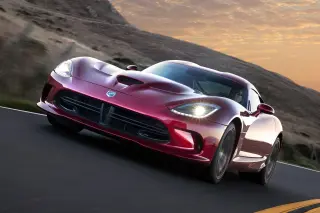
Stellantis previews a Copperhead SRT, a new 'hyper muscle' halo car for Dodge and not a Viper successor, shown as a mock-up to investors; production targeted by 2030 under a five-year plan that also includes the GLH hatch and a revived SRT lineup, with no pricing or launch specifics disclosed and a goal of about 135,000 North American units by 2030.
Stellantis confirms a new Dodge Copperhead SRT as a standalone flagship to carry the Viper legacy, likely powered by a supercharged 6.2-liter Hellcat V8 and built on the STLA Large platform, with a launch expected before 2030 to rival the Ford Mustang GTD.
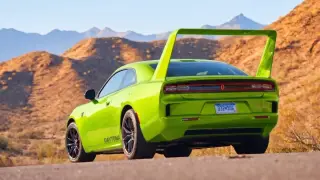
Dodge previews a refreshed Charger with an SRT variant that features a Superbird‑style rear wing and aggressive aero cues; powertrain details remain unconfirmed, but it will stay gasoline‑powered with hints that a V8 could return while Dodge continues development of the Hurricane inline‑six.