Tag

Drug Policy

All articles tagged with #drug policy

Cychlorphine Evades Standard Tests, Prompting National Health Alerts
health9 days ago

Cychlorphine Evades Standard Tests, Prompting National Health Alerts

A new synthetic opioid called cychlorphine is spreading across the United States, posing a severe threat because it is up to 10 times more potent than fentanyl and cannot be detected by standard drug test strips. Health officials in Virginia, Michigan, Hawaii, and South Carolina have issued warnings as the drug, often sold via social media disguised as prescription pills, causes fatal overdoses. While naloxone can reverse the effects, experts warn that multiple doses may be required due to the drug's extreme potency. The substance, first identified in the U.S. in 2024, has been linked to over 100 deaths, including a teenager in California, and is now being monitored in states where it has not yet been detected.


Fiji’s HIV Emergency Faces Stigma and Needle Barriers
health10 days ago

Fiji’s HIV Emergency Faces Stigma and Needle Barriers

Fiji declared a national HIV emergency in September 2026 as infections surged, with one in 60 adults now living with the virus. The crisis is driven by methamphetamine injection and needle sharing, particularly among youth. While the government plans to expand testing and treatment, legal barriers prevent the distribution of sterile needles, and social stigma continues to deter many from seeking care.

DEA Targets Kratom's Potent Additive: Temporary Schedule I Plan for 7-OH
health3 months ago

DEA Targets Kratom's Potent Additive: Temporary Schedule I Plan for 7-OH

The DEA plans to temporarily place 7-OH, an opioid-like component of kratom, in Schedule I for two years (potentially extending to a third) for products above a certain threshold. Supporters say the move protects public health by curbing dependence and abuse, while critics question the science and warn it could hurt consumers who rely on kratom; the policy is framed as a win for the mainstream kratom industry amid political and lobbying dynamics.

DEA and FDA Push to Reschedule Marijuana, Emphasizing Medical Use and Lower Harms
policy3 months ago

DEA and FDA Push to Reschedule Marijuana, Emphasizing Medical Use and Lower Harms

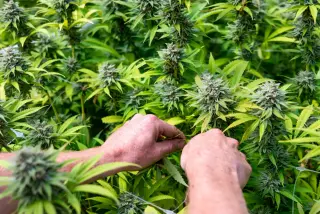
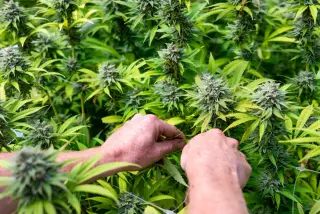
Opening day of a cannabis rescheduling hearing features DEA and FDA arguing that marijuana has medical benefits and lower day-to-day harms than alcohol or opioids, supporting moving it from Schedule I to Schedule III. Testimony describes real-world pain management benefits and relatively mild withdrawal, while opponents criticize the analysis and allege shifting precedent. The process continues through July 15 amid lawsuits and broader regulatory implications, including tax guidance, workplace rules, and updates to related federal forms and enforcement.

DEA Hearing on Marijuana Rescheduling Opens With Opponents-Only Invitations
politics3 months ago

DEA Hearing on Marijuana Rescheduling Opens With Opponents-Only Invitations

DEA’s hearing on moving marijuana from Schedule I to Schedule III will run June 29–July 15, but invitees are limited to opponents of rescheduling, excluding supporters. The proceedings come amid multiple lawsuits and could unlock federal tax deductions, update gun-purchase forms, and expand protections for state-licensed medical cannabis if the rule is enacted.

Narco-Terrorism Revisited: Trump’s Latin American War Mirrors Reagan’s Cold War Playbook
world3 months ago

Narco-Terrorism Revisited: Trump’s Latin American War Mirrors Reagan’s Cold War Playbook

The article argues that Trump’s aggressive Latin American interventions framed as a crackdown on narco-terrorism echo Reagan-era tactics, using the label to justify military action while targeting leftist governments. It traces the term’s Cold War origins—from Peru’s Shining Path and the Huallaga coca trade to Colombia’s M-19 and NSDD 221—showing how U.S. policy has repeatedly linked drugs to anti-communist aims. Today’s moves—designating gangs as foreign terrorist organizations, pressuring allies, and expanding security coalitions—are portrayed as a continuation of that approach, selectively applied to advance political objectives rather than solely curb drug trafficking.

White House: Rescheduling Marijuana Doesn't Make It Legal Nationwide
politics5 months ago

White House: Rescheduling Marijuana Doesn't Make It Legal Nationwide

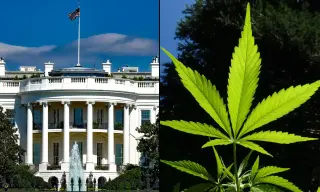
The White House drug czar clarifies that moving marijuana to Schedule III under federal law does not legalize cannabis nationwide; the administration argues Schedule III covers medical use and research, not broad legalization. The new National Drug Control Strategy also flags the dangers of high-potency marijuana and illicit grows, and federal plans to recriminalize hemp THC products are expected later this year. In short, state cannabis reforms remain at odds with federal law.

Partial cannabis rescheduling fuels federal policy confusion
politics5 months ago

Partial cannabis rescheduling fuels federal policy confusion

The Trump administration moved state-licensed medical cannabis products and FDA-approved cannabis products from Schedule I to Schedule III, a partial rescheduling that doesn’t fully normalize cannabis at the federal level. Experts say this is not a broad reclassification and hinges on future FDA decisions, leaving implementation unclear and raising questions about protections for patients, housing and employment, and equity for minority entrepreneurs. A June 29 DEA hearing on rescheduling adds to the uncertainty amid ongoing debate about alignment with the UN Single Convention and overall public support for full legalization.

Trump Admin Reschedules State-Licensed Marijuana to Open Research Path
politics5 months ago

Trump Admin Reschedules State-Licensed Marijuana to Open Research Path

Acting Attorney General Todd Blanche announced that FDA-approved and state-licensed marijuana will be moved from Schedule I to Schedule III, initiating an expedited hearing to fully reschedule the substance; the move is aimed at expanding research and patient care, though it does not yet apply to marijuana generally. It follows a separate executive order from Trump to speed the review of psychedelic therapies, signaling broader reforms to medical research and treatment.

US shifts cannabis to Schedule III, signaling policy rethink
politics5 months ago

US shifts cannabis to Schedule III, signaling policy rethink

The Justice Department reclassified cannabis from Schedule I to Schedule III, a historic policy shift that could boost research and access while marijuana remains illegal at the federal level. Acting Attorney General Todd Blanche ordered the reclassification, following President Trump’s directive, applying to FDA-regulated products and state-licensed medical marijuana. Once published in the Federal Register, the rule takes effect after 30 days and may face legal challenges, with a DEA hearing planned for late June.

White House eyes ibogaine research funding for PTSD
politics5 months ago

White House eyes ibogaine research funding for PTSD

The White House is drafting an executive order to open the door to federal funding for research on ibogaine, a psychedelic used abroad to treat PTSD and brain injuries. It would not reclassify the drug (still Schedule I) but signals support for further U.S. studies on safety and effectiveness, with a focus on veterans. Evidence is limited—mostly small observational studies—with notable cardiac risks and several deaths reported; a Stanford study suggested potential PTSD relief when ibogaine is paired with magnesium, yet more rigorous trials are needed before any medical use.