PayPal faces its biggest challenge yet as a crowded online checkout market intensifies competition from tech wallets and fintech rivals, pressuring the company to innovate beyond its core wallet and BNPL offerings to maintain merchant and shopper share.
Shein is reportedly negotiating to acquire Everlane for about $100 million, a move that could extend Shein's reach into more premium basics; terms and closing timeline remain unconfirmed.
GameStop CEO Ryan Cohen attacked eBay’s leadership after they rejected his $55 billion offer, calling the site “stuck in 1995” and accusing its bosses of protecting their own pay with perverse incentives. He argues cost cuts and a pivot to live shopping could make the platform more competitive, while skeptics like Michael Burry question the deal’s math; on Wall Street, EBAY receives a cautious Moderate Buy rating with limited upside amid the controversy.
Alibaba reported an 84% year-over-year drop in adjusted EBITA for the March quarter as heavy investments in AI, semiconductors and quick-commerce weighed on profitability; China e-commerce adjusted EBITA fell 40% even as revenue rose 6% and quick-commerce revenue jumped 57%. In contrast, cloud revenue surged 38% to 41.6 billion yuan with AI-related revenue at 9 billion yuan and cloud EBITA up 57%, underscoring a bifurcated result where cloud and AI momentum offset margins weakness in core e-commerce.
GameStop CEO Ryan Cohen claimed his eBay account was permanently suspended amid his bid to take over eBay, while he advertised 36 auctions—including retro games, trading cards, memorabilia, and a signed copy of his takeover proposal—to fund the effort; Cohen’s plan envisions GameStop stores as authentication hubs and live-commerce studios, backed by up to $20 billion in debt financing, though investor skepticism persists, with Michael Burry selling his GameStop shares.
Walmart updated its cart-loading rules for online-order fulfillment, limiting each cart to six blue bins (down from eight) and specifying pushing when visibility is clear and pulling when visibility is limited, reversing a previous push-only directive. The change aims to boost safety amid lawsuits and rising e-commerce volumes while keeping order fulfillment efficient.
Shopify reported better-than-expected quarterly results and issued a positive outlook for Q2, but shares fell after the report as investors weighed the growth trajectory against broader market pressure.
GameStop made an unsolicited offer to acquire eBay for about $56 billion, arguing that combining its physical-store network with eBay could cut costs and unlock live-commerce opportunities. However, financing remains uncertain: analysts question how the cash-and-stock deal could be funded given the large valuation gap, and GameStop says it has a financing plan, including a debt package and third-party funding, while eBay’s board will review the proposal.
Unsealed emails in a 2022 California lawsuit allege Amazon pressured vendors and rivals to raise prices or remove cheaper listings across retailers, using three schemes including price-matching at higher prices, pushing rivals to hike prices, and coercing product removals; some hikes occurred around Prime Day and Black Friday, with California seeking a preliminary injunction ahead of a 2027 trial; Amazon denies wrongdoing.
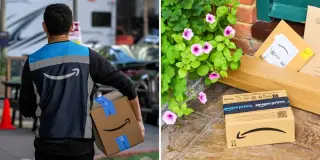
A proposed deal would shift about 20% of Amazon’s packages away from USPS into Amazon’s own network, reducing USPS volume and potentially raising costs. The change could hit rural deliveries first—with slower transit and less frequent service—while price hikes would likely wait for regulatory approvals. USPS, already financially strained, relies on large-volume shippers to cover fixed costs, and Amazon’s move reflects a broader shift toward in-house logistics, which could widen the urban–rural delivery gap and affect small businesses and non-Prime customers over time.
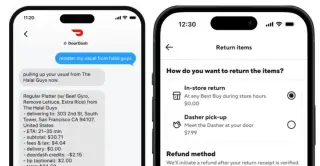
Uber Eats unveiled a new return-pickup service that lets customers have eligible online orders bought via the app picked up by a courier for a fee, with refunds issued at pickup. Retailers include Best Buy, Dick's Sporting Goods and Petco, and items must cost at least $20. Customers can still self-serve returns to avoid the courier fee. The move extends Uber's growing delivery business into returns and aims to ease the stress of returning online purchases.
Amazon announced 1-hour and 3-hour delivery options in the U.S., rolling out in select cities (1-hour in Chicago, Houston, Los Angeles, Nashville, Oklahoma City, Washington, D.C., plus smaller cities; 3-hour in more than 2,000 cities). Prime members pay $9.99 for 1-hour and $4.99 for 3-hour, while non-Prime customers pay $19.99 and $14.99 respectively; Prime members can still get free same-day delivery. A broad set of items—including household essentials, health/beauty products, OTC meds, electronics, toys, and clothing—are eligible. This move pressures drugstores and other retailers to compete on speed and convenience.
Business Insider staff ordered the same Big Mac meal via Uber Eats and found the base price stayed the same, but delivery/service fees varied enough to swing the total by about 15–20 cents; Uber says differences aren’t based on personal data, but state-law warnings and a general lack of price transparency highlight how algorithmic, personalized pricing can affect consumers and may become more widespread or spark backlash.
Walmart posted a 5.6% Q4 revenue gain to $190.7B and 10.8% higher operating income, with full-year net sales up about 4.7% to $706.4B and revenue to $713.2B; global e-commerce grew 24%, led by store-based fulfillment and the Walmart Marketplace; U.S. sales rose 4.6% with flat comps. Management said most gains came from households earning over $100k, while lower-income wallets are stretched but still seek convenience; CEO John Furner highlighted Sparky, Walmart’s AI assistant, which correlates to roughly a 35% higher average order value for its users. The company issued a conservative FY27 outlook of 3.5-4.5% net sales growth and 6-8% operating income growth.
Amazon has overtaken Walmart to claim No. 1 on the Fortune 500, ending Walmart’s 13-year run at the top. The shift reflects Amazon’s relentless reinvention—dominating e-commerce, powering profits through AWS, and pursuing bold AI investments—while Walmart has transformed into a tech-forward retailer with stronger online integration, advertising, and AI-enabled shopping. Despite Walmart’s roughly $713 billion in revenue and a market cap above $1 trillion, Amazon’s rapid growth and AWS profitability have propelled the shift, underscoring how the two giants increasingly compete across retail, cloud, and technology.