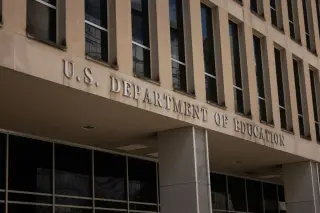
The Education Department under the Trump administration is rolling back Biden era PSLF credits as it fixes data and coding errors, delaying thousands of public service borrowers from reaching loan forgiveness.
Republicans push a 10-bill package to permanently move Education Department programs to other federal agencies, effectively downsizing the department, while Capitol Hill buzzes with confirmation hearings (notably Todd Blanche’s bid to be attorney general amid Epstein-file scrutiny) and a sprint to finalize a $95 billion reconciliation package covering defense, farm aid, and other items, along with ongoing debates on Israel aid, vaccine policy, and crypto regulation.
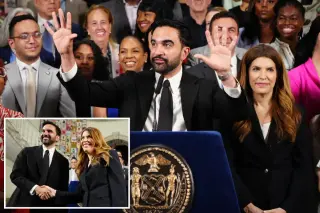
Mayor Zohran Mamdani’s inaugural budget nears $126 billion (about an 8.5% rise), balancing the books with roughly $6.1 billion in one-time tricks while leaving a looming multi‑billion-dollar gap for next year. The package increases funding for the NYPD, Department of Education, Homeless Services, and Health & Mental Hygiene, adds $350 million to reserves, and preserves housing vouchers only after progressive pushback. Critics warn the plan does not resolve the city’s structural budget issues, signaling more tense negotiations ahead.
Two federal judges struck down the Education Department rule aimed at narrowing Public Service Loan Forgiveness eligibility, calling it unlawful, arbitrary, and in some readings potentially violating the First Amendment; the policy would have barred employers with a 'substantial illegal purpose' (including supporting terrorism or trafficking children) from PSLF and was set to take effect the next day amid lawsuits from nonprofit groups.
Senate Republicans blocked a Democratic bid to repeal Trump-era regulations that create new federal graduate loan caps, with the new rules set to take effect on July 1 under the One Big, Beautiful Bill; the reforms include eliminating Grad PLUS, capping aggregate borrowing at $200,000, and limiting Parent PLUS loans while undergraduate lending remains largely unchanged. Critics say the caps shield borrowers from predatory lenders, while supporters warn they could burden health-care education and staffing, particularly in graduate nursing programs; the measure to reverse the rules failed along party lines.
A Senate education committee is moving toward a July vote to block moving core federal special education programs from the Education Department to HHS, which RFK Jr. oversees; Cassidy opposes the shift and would prefer it stay with Education or go to Labor, while Kaine claims bipartisan support could pass the measure. Disability groups warn of potential service disruptions despite officials’ assurances that student rights would be protected.
The Education Department plans to move the core functions of the Office of Special Education and Rehabilitative Services to Health and Human Services, elevating RFK Jr. to lead the health agency. The move has disability advocates warning that Kennedy’s past comments and perceived views on disability and autism could undermine services for students with disabilities and reshape how special education is overseen.
The Trump administration proposed relocating the Education Department's Office for Civil Rights to the Justice Department and transferring its disability-education programs to Health and Human Services as part of a broader move to dismantle the department. The changes would require congressional action, and disability advocates say moving offices would still necessitate new laws, raising concerns about civil-rights enforcement and funding for about $15 billion in special-education programs.
The Trump administration plans to move the Education Department’s core responsibilities—specifically the Office of Special Education and Rehabilitative Services and the Office for Civil Rights—to Health and Human Services and the Justice Department, respectively, as part of a broader effort to dismantle the department. The shift, which would require Congress to act to shutter the DOE, could disrupt IDEA compliance and civil rights enforcement in schools and is likely to face pushback from lawmakers and education advocates.
The Education Department plans to move the offices overseeing special education services and civil rights out of the agency as part of a broader effort, under the Trump administration, to close the department by transferring its functions to other parts of the government, according to three people briefed on the plan.
The Education Department issued updated guidance ahead of July 1, 2026 changes to federal student loans, clarifying how the new Repayment Assistance Plan (RAP) interacts with existing IDR plans and PSLF. RAP is a new income-driven option; RAP payments generally won’t count toward forgiveness under IBR/ICR/PAYE when switching plans (with a specific exception), but RAP will count toward PSLF. Existing PSLF‑qualifying plans remain eligible, while new borrowers after July 1 will face only RAP or the Tiered Standard plan. For borrowers with pre‑2026 loans, auto-recertification continues until the post‑July 1 loan enters repayment, at which point all loans must be repaid under RAP or Tiered Standard. Additional changes include new borrowing limits with an interim exception for current students. Those taking new federal loans after July 1 will be treated as “new borrowers” and lose access to legacy repayment options.
Fox News Digital reports that the Education Department found San Jose State University violated Title IX in its handling of a transgender volleyball player, leading California State University to sue the Education Department and triggering a high-stakes, ongoing clash over federal funding and fairness in women's sports, with internal CSU emails showing concern and SJSU preparing to contest the findings.
A coalition of 25 Democratic-led states and the District of Columbia sued the Education Department over new graduate student loan caps, arguing the limits will worsen the health care workforce shortage. They contend the department overstepped its authority by applying a narrow definition of “professional degrees,” which could push students toward private loans or force them to delay or abandon advanced training. The Education Department defends the caps as a means to lower costs and incentivize lower tuition, while critics note nursing and other fields are affected, and some lawmakers seek to overturn the rule via the Congressional Review Act.
The U.S. Education Department’s Office for Civil Rights has opened a Title IX investigation into Smith College to determine whether the private women’s college violated sex-discrimination rules by admitting transgender women, a move tied to ongoing Republican-led efforts to limit transgender rights in education; Smith has admitted transgender women since 2015, reflecting broader shifts in some women’s colleges toward more inclusive admissions.
Newly released Justice Department files show Jeffrey Epstein helping Lawrence Krauss navigate a sexual-harassment probe and counseling him on how the Trump administration’s planned Title IX rule could shield universities from aggressive investigations. The disclosures underscore how powerful figures discussed reforming the college-sexual-misconduct framework to favor due process, a stance critics say harmed survivors. As Biden-era rules faced attempts to be scrapped, advocates argue the Epstein correspondence reinforces concerns about the Trump rule’s anti-survivor bias, while the Education Department maintains its approach and Krauss denies misconduct. The episode comes amid ongoing disputes over enforcement gaps and the process of finalizing or overturning Title IX regulations.