
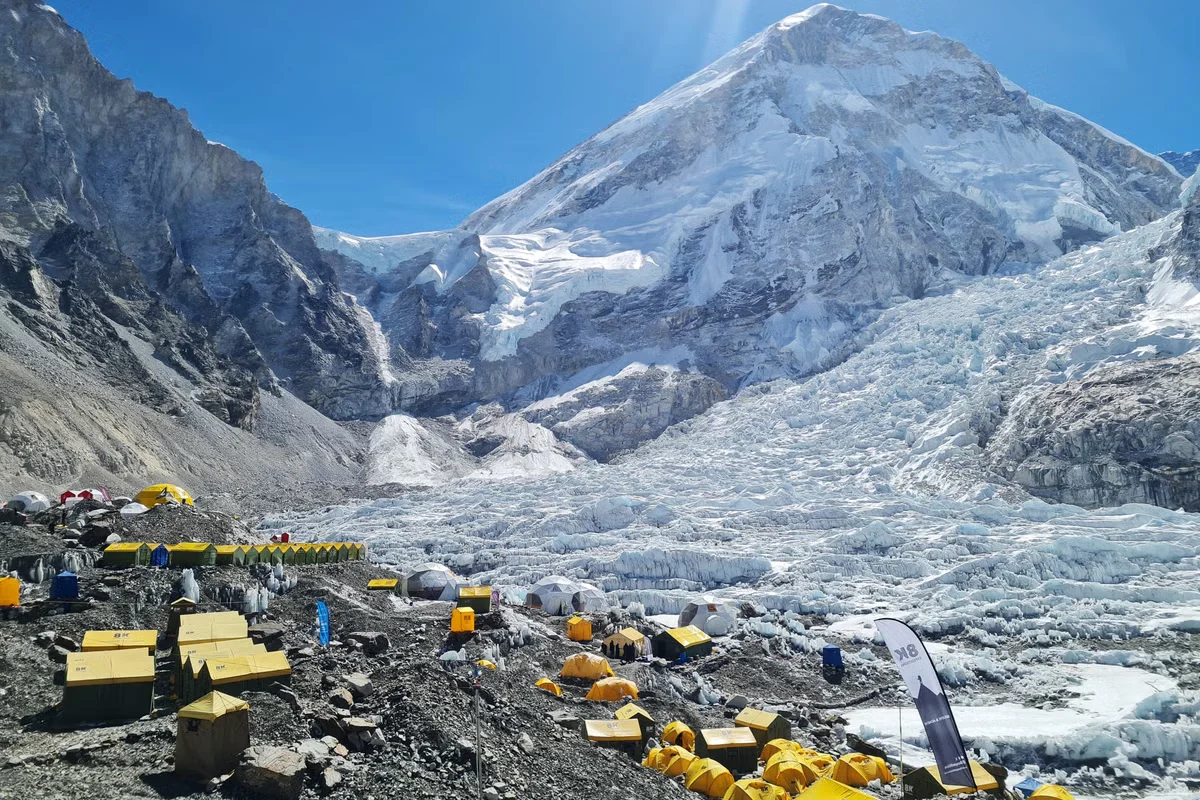
Urine, fuel and base camp heat speed Everest glacier melt, study finds
A Regional Environmental Change study links heat from Everest Base Camp—driven by cooking fuels, heaters and the daily urine output of climbers and staff, about 6,000 litres per day—to accelerated melting of the Khumbu Glacier, totaling roughly 2,492 tonnes of ice melted in a single spring season. The analysis estimates almost 850,000 megajoules of energy from camp activity and urine heat, notes warming at the camp outpaces the surrounding glacier, and warns the heavy human footprint on a rapidly retreating glacier is unsustainable, with relocation of the base camp proposed as a long-term option.