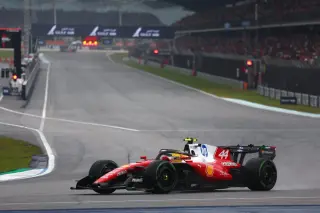
George Russell was summoned by FIA stewards and given a €5,000 fine (suspended for 12 months) after he threw his headrest onto the track following a retirement from the Canadian Grand Prix; the Mercedes driver was leading when a power-unit failure halted the car, and he later apologized, saying he was embarrassed by the incident which officials said could set a poor example.
The FIA has announced a planned shift for the 2027 F1 rules away from the current roughly equal split between combustion and electric power, with internal-combustion engine power set to rise by about 50 kW via a higher fuel-flow, while the Energy Recovery System (ERS) deployment power would be reduced by about 50 kW. The proposals are agreed in principle but still require votes from power-unit manufacturers and a World Motor Sport Council approval, with further technical discussion and possible hardware changes to the power unit. The package builds on earlier Miami tweaks aimed at improving safety and competition around energy harvesting.
FIA officials unanimously agreed to a 2027 engine redesign aimed at reducing reliance on energy harvesting and the associated speed penalties; final specs will be discussed in technical groups with teams and power-unit manufacturers, exploring methods to make harvesting less critical while managing costs and chassis constraints, with drivers welcoming the direction but saying more progress is needed.
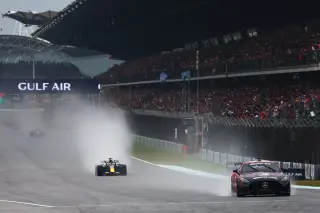
Thunderstorms in Miami forced the FIA to move the 2026 F1 Miami Grand Prix start forward by three hours, with the 57-lap race now due to begin at 13:00 local time (18:00 BST) after the weather disruption and a FIA decision.
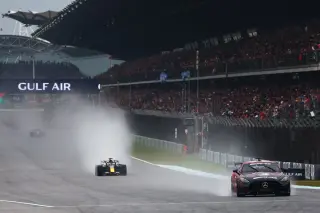
The FIA has declared a 'rain hazard' for the 2026 Miami Grand Prix as forecasts warn of heavy thunderstorms, with officials considering moving the race start from 16:00 local time; under the eight-mile lightning radius rule, the event could be suspended if lightning strikes occur, and a 30-minute countdown would resume once the area is cleared.
Following qualifying for the Miami GP, the FIA will hold two meetings to decide if Sunday’s 4:00pm start should be moved due to forecasts of heavy rain and thunderstorms, with Florida lightning rules potentially forcing suspensions; safety remains the priority, and F2 and Porsche Cup schedules could be shuffled if needed while the forecast stays uncertain.
Thunderstorms threaten this weekend’s Miami Grand Prix, prompting an FIA statement that weather could disrupt the schedule; while Friday/Saturday are expected sunny, rain on race day could force delays or a start-time adjustment under U.S. safety rules, with contingency plans in place to minimise disruption.
The FIA announced midseason tweaks to the 2026 F1 regulations aimed at reducing qualifying “superclipping” by cutting total energy regen from 8 MJ to 7 MJ and allowing 350 kW harvesting in more parts of the lap, tightening safety by capping boost at +150 kW and limiting MGU-K deployment in certain sections, and testing an automatic start-detection system to prevent slow starts (the race-start change will not be immediate). Most changes take effect at the Miami Grand Prix, with the start-procedure adjustment evaluated for later rollout.
FIA, Formula 1, teams and power-unit manufacturers agreed on energy-management changes for 2026: super clipping rises from 250 kW to 350 kW from the Miami weekend; qualifying energy harvesting is cut from 8 MJ to 7 MJ (with possible further reductions on 12 circuits); MGU‑K deployment remains 350 kW in key acceleration zones but is limited to 250 kW elsewhere, and boost mode is capped at +150 kW. A new low-power start-detection system will trigger automatic MGU‑K deployment to aid slow starts, with a visual warning for following cars; wet-weather safety is improved with hotter tyre blankets, reduced ERS deployment and simplified rear lights. The proposals, pending World Council approval, will be implemented from Miami (start-change tests will occur at the next race weekend). The aim is to make qualifying more on the limit and enhance safety while preserving overtaking.
Oliver Bearman’s dramatic 50G crash at the Japanese Grand Prix has prompted the FIA to push a structured review of the 2026 energy-management regulations. With gaps in electrical boost causing dangerously high closing speeds, the FIA says meetings with teams, power-unit manufacturers, and FOM will assess the system and whether refinements are needed after collecting more data in the opening phase of the season, all while prioritizing safety.
George Russell won the Australian Grand Prix from pole, beating Leclerc after a tight early battle and Mercedes teammate Kimi Antonelli, then urged the FIA to immediately review the new battle-promoting modes—specifically the straight mode—citing reduced front-end grip and understeer as potential issues, with a next race in Shanghai on the horizon.
Max Verstappen has urged the FIA and Formula 1 to tighten safety measures after a chaotic season-opening Australian Grand Prix, highlighting a dangerous start that included Franco Colapinto nearly colliding with Liam Lawson and signaling a broader push for safer, more robust rules in the new era.
Valtteri Bottas won’t have to serve the five‑place grid penalty from his 2024 Abu Dhabi Grand Prix at the Australian GP after the FIA applied a retroactive tweak to grid‑penalty rules, allowing him to line up where he qualified; Cadillac’s F1 debut weekend isn’t expected to be affected beyond that change.
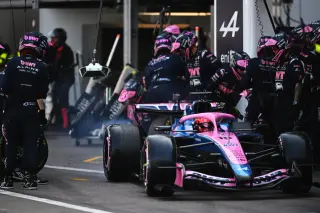
The FIA will implement a major change for the 2026 Australian Grand Prix weekend in Melbourne: Cadillac enters as F1’s 11th team under a new technical regime, and the pit-lane speed limit is reduced from 80 km/h to 60 km/h to accommodate more personnel and tighter space, a short-term measure as teams adjust to the expanded grid and new regulations.
The FIA updated F1 technical regs to require engine compression ratios be measured at ambient temperature through May 31, 2026, then at both ambient and 130°C from June 1, 2026 to December 31, 2026, and only at 130°C from 2027 onward, effectively giving Mercedes a seven-race window before full hot-temperature testing applies.