Democrats secured at least 55 Senate seats in the 2026 elections, prompting Senator Kirsten Gillibrand to pursue a 60-seat supermajority by 2028. She aims to flip seven additional seats, including in states President Trump won, to bypass filibusters and enact major legislation.
Senate Democratic leader Chuck Schumer has pledged to block President Donald Trump from appointing conservative judges to the Supreme Court and lower courts following a decisive Democratic victory in the 2026 midterm elections. Schumer, who is expected to retain his leadership role, indicated that Democrats may hold vacancies open until after the next presidential election, mirroring Republican tactics used in 2016. The party now controls a durable majority in the Senate, potentially reaching 56 seats, and plans to focus on lowering costs, healthcare, and investigating the Trump administration. While Schumer refused to confirm whether he will eliminate the filibuster, he signaled support for impeaching Defense Secretary Pete Hegseth, leaving the future of the filibuster and his own leadership tenure uncertain amidst internal party divisions.
The first primary debate for the South Carolina Senate seat, held August 3, 2026, exposed significant divisions within the Republican Party regarding the filibuster, the ongoing war in Iran, and data center expansion. Five candidates, including appointed Senator Darline Graham Nordone, clashed on procedural rules and military authority, marking a sharp departure from the late Senator Lindsey Graham's positions.
President Trump is demanding that Senate Majority Leader John Thune keep the chamber in session to pass the SAVE America Act before the August recess. The bill, which mandates proof of citizenship for voter registration and photo ID for voting, lacks the 60 votes required to overcome a filibuster. While the White House warns that Trump’s patience is running out, Thune argues the measure cannot pass without Democratic support or a controversial change to Senate rules.
President Trump is intensifying public pressure on Senate Majority Leader John Thune to keep the chamber in session until the SAVE America Act passes or the filibuster is eliminated. While the White House declares the president's patience is running out, Thune argues the bill lacks the necessary votes and urges the administration to persuade holdouts rather than blame leadership. Senate Republicans broadly support Thune, viewing his stance as a defense of procedural norms, though tensions persist ahead of the August recess.
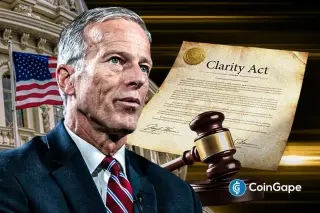
Senate Majority Leader John Thune is forcing a floor vote on the CLARITY Act before the August recess to put all senators on the record, even though the bill does not have the 60 votes to clear a filibuster; it faces Democratic opposition over consumer protections and illicit-finance safeguards, while Ripple, Coinbase, Fidelity, and Goldman Sachs back passage. A failed or delayed vote could stall SEC-CFTC regulatory clarity and shape the midterm political dynamics ahead of the election.
Republicans in the House and Senate are mired in internal fights over a summer funding plan, with the House pushing a stopgap bill and partisan add-ons while Democrats resist, raising the risk of a government shutdown before the midterms. The filibuster remains a sticking point, and Trump’s push on voter-ID legislation deepens divisions as lawmakers race to avert a funding gap with a two-month window before August recess.
The White House says Trump’s patience with Senate GOP leader John Thune is running out as Republicans remain split over the SAVE America Act, a voting-overhaul that would require citizenship proof, voter ID, and ban universal mail-in voting. Trump has urged eliminating the filibuster to pass it by the August recess, but four Republican senators oppose moving it forward and the measure faces uncertain prospects in the Senate. The House has advanced elements of the plan via reconciliation, but the Senate parliamentarian could block that path as well, leaving passage unclear.
House approved a $95 billion budget blueprint funding the Iran war, farm aid, and SAVE Act components; Scalise says Senate Republicans must figure out a way to pass a reconciliation bill to bypass the filibuster, with Trump likely leaning on them. Thune doubts the votes exist for a third reconciliation and McConnell’s absence adds timing uncertainty as lawmakers head toward August recess and a Sept. 30 funding deadline.
Despite Republicans controlling both chambers, the SAVE America Act remains stalled due to Senate filibuster rules and a lack of sufficient votes, plus legal and logistical hurdles around federalizing elections. House leadership has pressed for action by attaching provisions to other bills, but many GOP lawmakers worry about voter disenfranchisement, implementation costs, and the political risk ahead of midterms. The result is a partisan deadlock that reveals broader concerns about electoral reform and reelection incentives within the party, rather than a simple fight over Trump’s influence.
Trump is pressuring House and Senate Republicans to pass the SAVE America Act, a voting-overhaul that would require voter ID and proof of citizenship, but it lacks the 60 votes to clear a filibuster in the Senate. Republicans are exploring using budget reconciliation to move parts of the bill, though not all provisions may qualify, while Democrats and some Republicans warn the changes could disenfranchise voters. The timing for in-time implementation ahead of the midterms remains uncertain, with leaders warning that full passage faces significant political and procedural hurdles.
Senate Majority Leader John Thune says Republicans may have a viable path to moving the SAVE America Act—an election-reform measure requiring proof of citizenship to vote—through budget reconciliation, a route Lindsey Graham reportedly discussed with Trump before his death; however, passage remains uncertain due to the 60-vote filibuster, with House leaders rolling out a budget blueprint that could unlock reconciliation funding for the effort.
President Trump says he will not sign the bipartisan 21st Century ROAD to Housing Act in protest of Republicans' failure to pass the SAVE America Act, but the housing affordability bill is set to become law automatically on Saturday unless he vetoes it. He has urged Republicans to push to end the Senate filibuster to pass the election measure, while Senate Republicans say they lack the votes. The White House cited his Truth Social post in the decision, illustrating a developing dispute ahead of the midterms.
Trump’s SAVE America Act remains stalled in the Senate with Democrats united against it and Republicans divided on ending the 60‑vote filibuster; while the House pushes a budget reconciliation path, many Republicans doubt a third reconciliation is viable, and McConnell’s health-related absence further complicates the tally.
President Trump used a July 4th National Mall speech to mix patriotic celebration with a partisan pitch, praising his achievements, casting opponents as a threat, and urging action on the Save America Act and changes to election rules, while veterans, Artemis II astronauts, and a high-energy fireworks display framed the event as a continuation of his political narrative ahead of the midterms.