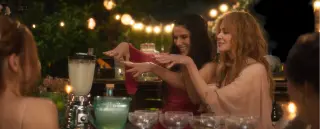
Ben Affleck’s new Netflix thriller 'Animals' has received overwhelmingly negative reviews, with critics calling it a lifeless, poorly written film that fails to leverage its strong cast and political premise.
Practical Magic 2 has opened to a $30 million domestic debut, topping the box office despite widespread critical panning. Reviewers argue the film relies too heavily on nostalgia and social media hype, failing to capture the original's charm or offer a fresh narrative. While the production successfully recreated the iconic Owens home, critics note the script feels like a disjointed rehash that prioritizes commercial appeal over storytelling depth.
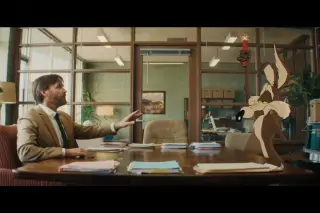
A critics’ take is that Coyote vs. Acme wastes its premise by turning into a tepid courtroom drama, failing to effectively use its beloved cartoon icons and delivering uneven humor and a disjointed story rather than a fresh, cohesive film experience.
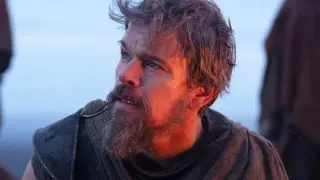
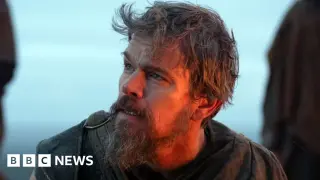
Emily Wilson, translator of the 2017 Odyssey, doubles down on her critique of Christopher Nolan’s Odyssey, calling the film emotionally empty and arguing it fails to grapple with the social, psychological and ethical questions Homer’s epic raises. In a The Atlantic op-ed she contends the movie’s technical prowess masks a lack of truthfulness about compassion and hospitality, a point she highlighted after a prior London Review of Books takedown describing the screenplay as abysmal. The piece notes backlash from Joyce Carol Oates, while the film remains a blockbuster at the box office.
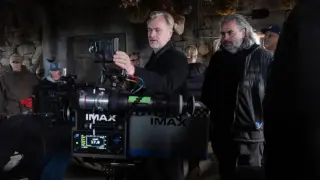
Christopher Nolan’s China interview with podcaster Zhong Shu dives beyond promo talk, exploring how The Odyssey is reframed around civilization at dusk, Bronze Age collapse, and Zeus’s Law (xenia); he discusses atonement, modern viewers’ role in shaping interpretation, and how his storytelling language—shaped by works like Oppenheimer and Memento—can accommodate audience expectations without deliberately Christianizing the epic.
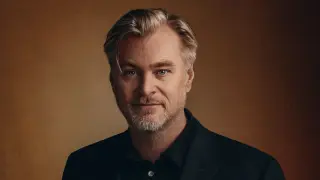
Christopher Nolan argues that amateur critics who claim to have identified a film’s underlying mechanism often miss that understanding doesn’t negate the mechanism, emphasizing that cinema’s language evolves and should be read as a craft rather than a formula. He cited his The Odyssey adaptation during press interviews and contrasted critics’ takes, including translator Emily Wilson and defender Joyce Carol Oates, as part of a broader debate about how audiences interpret movies.
Christopher Nolan argues that recognizing a storytelling mechanism does not invalidate it, criticizing amateur critics who say a story isn’t working because its tropes are identifiable. He frames The Odyssey as a modern, audience-aware adaptation that engages Hollywood’s universal storytelling language, while acknowledging that professionals understand these conventions. The Odyssey broad rollout includes a China release on August 14, 2026.
Emily Wilson, translator of the 2017 Odyssey, writes in the London Review of Books that Nolan's The Odyssey is gimmicky with abysmal writing and underdeveloped characters, noting it lacks depth and even contains no sex scenes, while acknowledging its role in renewing interest in the source. Despite her disappointment, many critics have lauded the film as a major cinematic event with strong spectacle, helping drive box-office success even as she remains critical of its narrative and character development.
Classicist Emily Wilson denounces Nolan’s Odyssey as gimmicky with abysmal writing and unmoved character motivation, criticizing the casting as not progressive and the female roles underemphasized compared with Homer. She argues the film’s relentless spectacle eclipses the story, yet acknowledges its ambition has rekindled public interest in The Odyssey, helping drive theater attendance and rising sales and audiobooks of the epic.
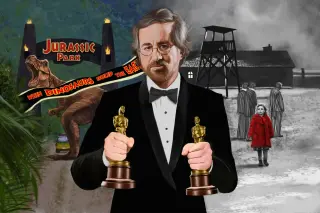
Slate revisits Spielberg’s pivotal 1993, when Jurassic Park’s blockbuster tech and Schindler’s List’s critical triumph redefined his reputation, proving critics wrong about his range and solidifying his status as Hollywood’s dominant force in both art and commerce.
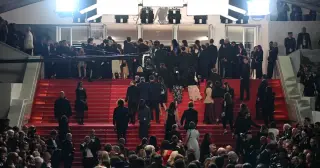
Vulture’s Alison Willmore argues Cannes 2026 marks a turning point for the festival as big-studio tentpoles pull back, leaving a leaner, more arthouse–leaning slate; even with boos for The Unknown and a generally underwhelming lineup, the festival still delivered standout performances and moments (like All of a Sudden and Teenage Sex and Death at Camp Miasma), highlighting cinema’s evolving economics and continued prestige amid industry turbulence.
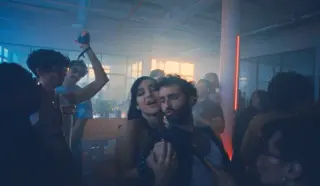
IndieWire critic David Ehrlich argues Cannes 2026 offered a weak lineup, but three films—Camp Miasma (Teenage Sex and Death at Camp Mishima) by Jane Schoenbrun, Club Kid by Pawel Pawlikowski, and Andrey Zvyagintsev’s Minotaur—stood out for their bold formal daring and incisive examinations of identity and reality. Camp Miasma uses autofictional horror to map mind and body, Club Kid follows a sober, maturation arc of a gay Manhattan scenester, and Minotaur places a domestic crisis within a brutal geopolitical frame, culminating in a haunting final image. Together, they demonstrate cinema’s power to disrupt and redefine perception even amidst a festival lineup Ehrlich found lacking overall.
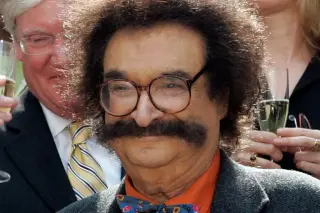
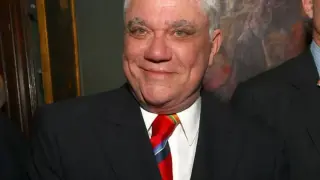
Rex Reed, a brash, sharp-witted film critic who helped redefine Hollywood commentary in the 1960s and wrote for The New York Times and The New York Observer, died at his Manhattan home at 87. A longtime New York social figure, Reed was known for provocative, sometimes offensive reviews and portraits of stars that sparked controversy— including quips about Oldboy and Melissa McCarthy— while also acting and publishing widely read profiles and books.
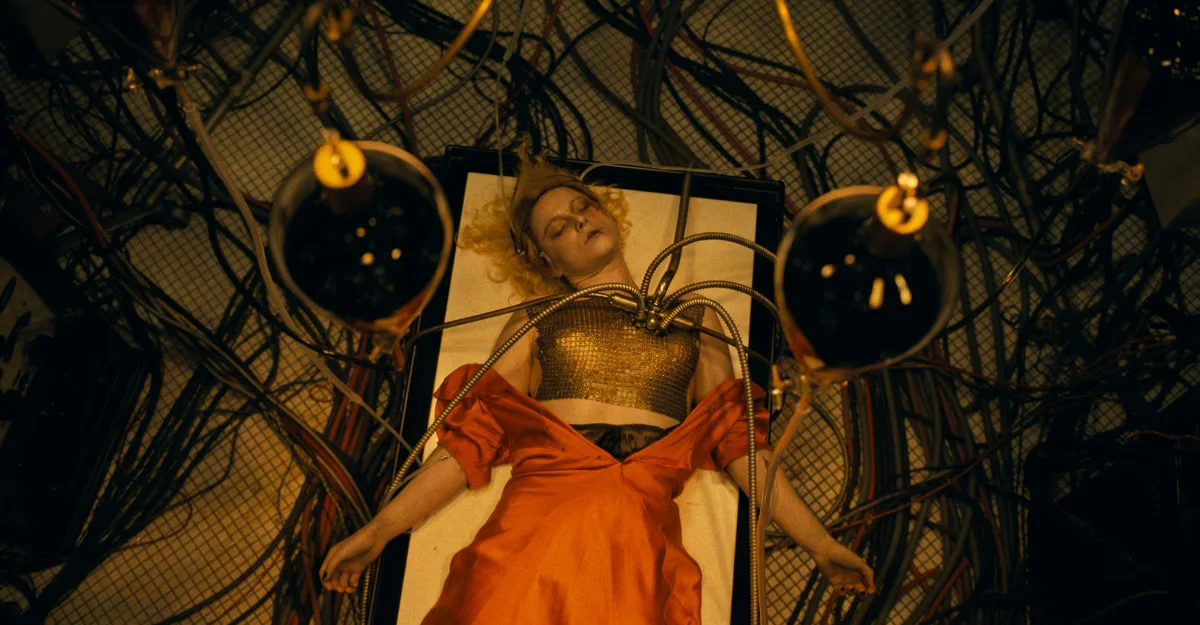
Maggie Gyllenhaal’s The Bride! attempts a bold, genre-busting reimagining of Bride of Frankenstein but is overwhelmed by constant meta jokes and over-the-top gore, ultimately failing to coherently land its social or thematic ambitions despite its ambitious scope.