
Sizing the Cosmos: How the Observable Universe Expands Through Time
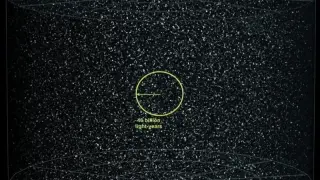
By applying the Friedmann equations—relating the expansion rate to the Universe's energy content (radiation, matter, dark energy) and curvature—cosmologists compute the observable Universe's size at any epoch. With current measurements of the Hubble constant and energy fractions, the present horizon is about 46 billion light-years across, and its past growth traces radiation-dominated, then matter-dominated, and now dark-energy–dominated expansion, yielding precise milestones for when the Universe reached fractions of its current size.