Tag

Dark Energy

All articles tagged with #dark energy

Cosmic Uncertainty May Reframe Dark Matter and Dark Energy
space20 hours ago

Cosmic Uncertainty May Reframe Dark Matter and Dark Energy

A Brown University physicist proposes treating the universe’s scale factor and expansion rate as non-commuting quantum operators, which deforms the Friedmann equation. With a single free exponent, the model can mimic late-time cosmic acceleration without dark energy and predicts a slight deviation from a true cosmological constant; reversing the exponent’s sign could also yield a “classical bounce” instead of a Big Bang. While speculative, upcoming surveys (DESI, Euclid, Rubin Observatory) could test these predictions and help confirm or rule out this quantum-cosmology approach.

Cosmic Voids: The Universe’s Quiet Labs for Big Questions
science4 days ago

Cosmic Voids: The Universe’s Quiet Labs for Big Questions

Cosmic voids—vast, underdense regions in the cosmic web—are becoming powerful cosmological laboratories for gravity, dark energy, and the Hubble tension. New surveys like DESI and Euclid will map tens of thousands to over 100,000 voids with high fidelity, while advanced simulations fill in their evolution. By tracing how galaxies and other tracers move through voids, scientists test gravity theories, study neutrinos, and sharpen our understanding of dark energy. Some researchers even speculate we may live in a colossal supervoid that could help explain the slightly faster local expansion rate, the Hubble tension. The next decade should decisively test these ideas and deepen our view of the universe.

Physicists Divide on the Cosmos: A Major Survey Finds Little Consensus
science12 days ago

Physicists Divide on the Cosmos: A Major Survey Finds Little Consensus

A large American Physical Society survey of 1,600+ physicists and science enthusiasts reveals broad disagreement on core cosmology topics. While 68% view the Big Bang as a hot, dense state (not necessarily a definite beginning), 20% see it as the absolute beginning with a singularity. On dark matter, only 10% endorse the traditional WIMP view, with about 21% proposing a hybrid of ideas, and on dark energy, 24% see it as a constant while 26% think it evolves over time, per DESI. The results highlight that scientific consensus is tenuous and progress comes from continued testing and debate.

One of Physics’ Biggest Surveys Finds Almost No Consensus
physics-and-chemistry14 days ago

One of Physics’ Biggest Surveys Finds Almost No Consensus

APS’s large survey of about 1,660 participants—ranging from researchers to science enthusiasts—reveals widespread disagreement on core physics questions, from the Big Bang to quantum gravity. The Big Bang is widely seen as a hot, dense state (68%), not necessarily the absolute beginning (25%). Quantum interpretations are not universally accepted: Copenhagen leads at around 36%, with many opting for other theories or 'no opinion.' About half agree on cosmic inflation, while dark energy and ΛCDM show no clear majority, with evolving dark energy edging ahead slightly. Only a minority subscribe to specific quantum gravity views, with string theory leading among them. The results underscore that physics frontiers remain active and data and theory must advance to resolve these debates.

Five-Year Sky Survey Maps 47 Million Galaxies to Probe Dark Energy
space16 days ago

Five-Year Sky Survey Maps 47 Million Galaxies to Probe Dark Energy

The Dark Energy Spectroscopic Instrument (DESI) completed the most detailed cosmic survey to date, mapping more than 47 million galaxies and quasars across about 14,000 square degrees to create a 3D map of the universe. The dataset aims to test whether dark energy evolves over time and will be analyzed further before broader public access, with future observations planned to extend the coverage and duration into the 2030s.

Ultra-Large FLAMINGO Simulations Build a Virtual Universe the Size of 500,000 HD Movies
space21 days ago

Ultra-Large FLAMINGO Simulations Build a Virtual Universe the Size of 500,000 HD Movies

Astronomers released the FLAMINGO project, one of the largest cosmological simulation datasets ever created, totaling over 2.5 petabytes and designed to model dark matter, baryons, and dark energy across cosmic time. Publicly accessible, the virtual universes help researchers study large-scale structure and galaxy formation, test competing cosmological models, and explore rare objects like massive clusters—aimed at accelerating interpretation of upcoming observations. The data release was submitted to Astronomy & Computing and is available via arXiv.

Astronomers unveil one of the universe’s largest simulated universes for galaxy and dark‑energy studies
science21 days ago

Astronomers unveil one of the universe’s largest simulated universes for galaxy and dark‑energy studies

The FLAMINGO project released a self‑consistent, hydrodynamical cosmological dataset (over 2.5 PB) that simulates dark matter, ordinary matter, and dark energy across vast scales, enabling study of galaxy formation and rare cosmic events while providing open access for researchers to compare models with upcoming observations.

Universe Could End in 33 Billion Years, New Dark-Energy Model Suggests
space29 days ago

Universe Could End in 33 Billion Years, New Dark-Energy Model Suggests

A new study applying a hybrid axion dark energy model to Dark Energy Survey data hints that dark energy may be dynamic. If correct, this could cause the universe’s expansion to slow, halt, and reverse, leading to a Big Crunch about 33.3 billion years from now—much sooner than the trillion-year lifetime traditionally assumed—though the result depends on several variables and requires further verification.

Largest 3D Map of the Universe Deepens Cosmology Puzzle
space1 month ago

Largest 3D Map of the Universe Deepens Cosmology Puzzle

DESI finished its first official survey, delivering the largest high‑resolution 3D map of the cosmos—47 million galaxies and 20 million stars across 11 billion years—unlocking a data trove that could test the constant nature of dark energy (lambda) and reveal potential evolution. While previous hints suggested possible tensions with the standard model, scientists emphasize careful error analysis and independent confirmation. With six data‑heavy paper batches planned and follow‑on surveys like Euclid and Rubin Observatory on the horizon, the DESI results are likely to refine or challenge current cosmology rather than settle it outright.

Roman Space Telescope Poised to Map the Cosmos
space1 month ago

Roman Space Telescope Poised to Map the Cosmos

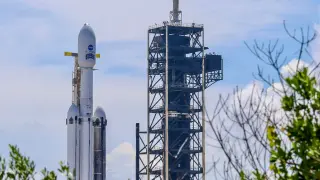
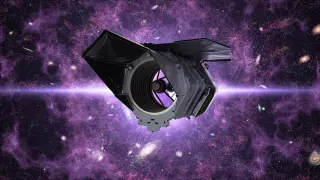
NASA’s Nancy Grace Roman Space Telescope, built at Goddard and standing about 40 feet tall, is complete and designed to map the universe with sweeping wide-field surveys that aim to shed light on dark energy and dark matter while also hunting thousands of exoplanets; it carries a coronagraph to enable direct imaging of planets, will undergo months of commissioning after launch, and is headed to Kennedy Space Center for a potential September liftoff.

Hidden Fifth Force: Could Solar-System Tests Unveil Cosmic Gravity Clues
science1 month ago

Hidden Fifth Force: Could Solar-System Tests Unveil Cosmic Gravity Clues

A NASA physicist argues that a proposed fifth force—potentially screened in dense environments—could explain cosmic acceleration while staying hidden in the Solar System; current observations align with general relativity locally, so any breakthrough would require a dedicated, falsifiable mission built on precise predictions and guided by cosmological survey data to bridge local gravity tests with the large-scale universe.

NASA targets September 2026 launch for the Roman Space Telescope
space1 month ago

NASA targets September 2026 launch for the Roman Space Telescope

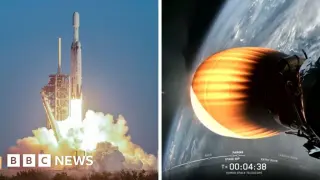
NASA aims to launch the Nancy Grace Roman Space Telescope in September 2026 aboard SpaceX’s Falcon Heavy, a wide-field observatory with a 300.8‑megapixel camera and a coronagraph to spot exoplanets and study dark energy; it will survey the sky about 100x larger than Hubble, operate from roughly 1 million miles from Earth, and work in concert with JWST and Chandra, with a latest possible launch date of May 2027.

NASA's Roman Telescope to map the universe and find new worlds
science1 month ago

NASA's Roman Telescope to map the universe and find new worlds

NASA unveiled the Roman Space Telescope, a 12-meter infrared observatory set to launch with SpaceX, capable of scanning vast regions of the cosmos to census tens of thousands of exoplanets, billions of galaxies, thousands of supernovae, and tens of billions of stars, while studying dark matter and dark energy. With a field of view about 100 times larger than Hubble and an expected data flow of 11 terabytes per day, Roman will complement other observatories like JWST and Euclid, helping build a new atlas of the universe and illuminate the evolution of cosmic structure.

Euclid Lens Hunt Invites the Public to Map Dark Matter with Space Warps
space-science1 month ago

Euclid Lens Hunt Invites the Public to Map Dark Matter with Space Warps

The European Space Agency’s Euclid telescope is powering a new citizen-science project on Zooniverse called Space Warps, enlisting volunteers to identify strong gravitational lenses in Euclid’s high‑quality images. This work helps study dark matter, dark energy, and cosmic expansion, with around 300,000 AI‑preselected images guiding the search and the team expecting to uncover more than 10,000 new lens candidates from Euclid Data Release 1.

Desi's 47 Million Galaxy Map Reveals the Cosmic Web and Dark Energy’s History
science1 month ago

Desi's 47 Million Galaxy Map Reveals the Cosmic Web and Dark Energy’s History

The Dark Energy Spectroscopic Instrument (DESI) at Kitt Peak National Observatory has produced the largest 3D map of the universe, charting about 47 million galaxies and more than 20 million Milky Way stars over a five-year survey. The map uncovers the cosmic web of filaments and voids and enables researchers to track how dark energy has shaped the universe’s expansion over the last 11 billion years, with DESI continuing observations through 2028 to expand the dataset and first full results anticipated in 2027.