Tag

Future Of Work

All articles tagged with #future of work

AI Could Be College Grads' First Workforce Test, Goldman-MIT Study Finds
business6 days ago

AI Could Be College Grads' First Workforce Test, Goldman-MIT Study Finds

Goldman Sachs and MIT researchers warn AI could soon affect entry-level hiring as adoption accelerates in finance, management and professional services where grads are concentrated; while many tasks in fields like law, architecture and engineering are highly automatable, the long-run view is more nuanced—AI may augment labor and create new roles, offsetting displacement as younger workers adapt, and students are already shifting majors toward healthcare to ride the AI-enabled shift.

Five AI-Era Job Archetypes Redefining How We Work
technology11 days ago

Five AI-Era Job Archetypes Redefining How We Work

Business Insider reports that Claude Code creator Boris Cherny identifies five archetypes—Prototyper, Builder, Sweeper, Grower, and Maintainer—to illustrate how AI blurs traditional roles and reshapes teams, suggesting a healthy mix of all five to scale products and reflecting a broader shift away from domain-specific titles toward a more product-centric, AI-aware organization.

The AI Coding Rush Triggers Workplace Paralysis and a Career Reckoning for Developers
technology16 days ago

The AI Coding Rush Triggers Workplace Paralysis and a Career Reckoning for Developers

A Business Insider piece tracks how the rapid surge of AI tool releases—from 18 major tools in 2023 to 69 in 2025 and more in 2026—has both energized and overwhelmed software engineers. The flood of new models creates anxiety and a sense of ‘paralysis’ as workers race to keep up, worry about job security, and confront shifts toward higher‑level tasks or even pivots to other roles. At the same time, some developers report fewer bugs, greater product involvement, and a willingness to share learning to ride the AI wave. Employers increasingly monitor AI use and set expectations, underscoring AI’s transformative, and sometimes destabilizing, impact on the craft of coding. Experts frame this as a “Great Coding Reset” reshaping the future of software work.

Mastering GenAI Becomes a Core Skill in the AI-Driven Workplace
technology1 month ago

Mastering GenAI Becomes a Core Skill in the AI-Driven Workplace

University of Vaasa research finds that workers who treat generative AI as a collaborative partner become more engaged and better positioned for long-term careers as AI integrates into daily work. The study emphasizes trust management and introduces an eight-step framework for organizations to move from experimentation to integrated GenAI use, signaling an AI-native future where AI is woven into workflows. While some roles may vanish, new opportunities in AI infrastructure and digital services are expected, making GenAI mastery a core career skill.

Coinbase bets on AI-driven 'one-person teams' after 14% cut
business2 months ago

Coinbase bets on AI-driven 'one-person teams' after 14% cut

Coinbase is cutting 14% of its workforce and scrapping traditional 'pure managers' in favor of AI-powered 'one-person teams' where managers oversee 15+ direct reports and fleets of AI agents. An AI-generated day-in-the-life imagines rapid, meeting-free decisions by AI with human roles focused on design/PM tasks, raising questions about trust, transparency, and the future of work at Coinbase.

AI bets and payroll cuts: is the productivity promise real?
technology2 months ago

AI bets and payroll cuts: is the productivity promise real?

Meta and Microsoft joined a wave of large-scale tech layoffs (about 8,000 roles, roughly 10% at Meta) even as they pour money into artificial intelligence, a trend echoed by peers like Atlassian, Block and Oracle. The Conversation frames AI in three ways—as emergent superintelligence, as hype (“AI washing”), and as a practical productivity tool—arguing the real impact will hinge on whether companies retrain and redesign workflows to harness AI or simply trim payroll for stock-market optics. The key takeaway is that AI’s effect on knowledge work is likely mixed and evolving; watch hiring and skills shifts to see whether AI delivers real productivity gains or just cost savings.

AI could reshape office work in 18 months — five steps to stay ahead
technology4 months ago

AI could reshape office work in 18 months — five steps to stay ahead

A Tom’s Guide feature cites Fortune’s warning that AI may begin replacing routine office tasks within about 18 months, not erasing jobs overnight but changing them. The piece outlines five proactive steps: treat AI as a capable coworker rather than a gadget; build “AI literacy” to context and constrain AI outputs; shift from repetitive task work to decision work; lean on non-automatable human skills like reading room dynamics and negotiating; and transition to roles that blend humans with AI (e.g., AI content strategist, AI-powered decision lead). It emphasizes weekly “AI hours” to explore tools, stay platform-agnostic, and prepare for rapid shifts in career cycles.

Humans in the Loop Are the Secret to Making AI Work
technology5 months ago

Humans in the Loop Are the Secret to Making AI Work

As experienced professionals retire, organizations risk losing tacit know-how and judgment. The piece argues AI’s value depends on humans teaching, debugging, and guiding it—through knowledge graphs, governance, and structured knowledge transfer—else they’ll fall into a “deployment trap” where automation fails without human oversight. The message: invest in people and infrastructure to train AI, not replace them.

AI Anxiety Grows as Veterans Fear Obsolescence in the AI Era
future-of-work5 months ago

AI Anxiety Grows as Veterans Fear Obsolescence in the AI Era

A Fortune/Conversation piece highlights widespread AI anxiety among veteran researchers, including Microsoft staff like Chris Brockett and Dario Amodei, who fear AI could eclipse their hard-won skills; economist David Autor counters that the future is a design problem and recommends deliberate investments and policies to help workers transition to higher-value tasks.

Pocket AI era arrives as Claude Opus 4.5 lets you build apps from plain English
technology5 months ago

Pocket AI era arrives as Claude Opus 4.5 lets you build apps from plain English

Anthropic's Claude Opus 4.5 (with Claude Pro at $20/mo) can write code, build apps, and produce downloadable files from conversational prompts, even via its macOS‑only Cowork agent; in a hands‑on test, Jim VandeHei used it to create a 30‑question AI aptitude quiz, five‑minute training sessions, and four fully functional apps in eight hours on his phone, illustrating how AI can perform complex tasks rapidly. With OpenAI, Google, and others racing to beat Claude, the piece argues that 2026 may mark AI’s shift from novelty to widespread, practical use and urges readers to embrace these tools to stay competitive in the evolving job market.

Microshifting: The Ultra-Flexible, Nonlinear Workday Gaining Ground
future-of-work5 months ago

Microshifting: The Ultra-Flexible, Nonlinear Workday Gaining Ground

Microshifting slices the workday into short, non-continuous blocks (roughly 45–90 minutes) separated by personal time, a radical form of hybrid work that aims to align productivity with energy peaks and life responsibilities. It’s moving from fringe experiment to mainstream in 2026, supported by parents, global teams, and gig workers, but critics warn it can foster an 'always-on' culture and create coordination challenges if not implemented thoughtfully.

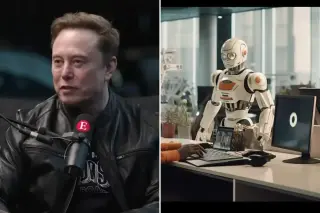
Musk lays out four bold bets: robot surgeons, future abundance, longer lives, and AI supremacy
technology5 months ago

Musk lays out four bold bets: robot surgeons, future abundance, longer lives, and AI supremacy

Elon Musk outlined four near-future predictions: robot surgeons could be commonplace by 2030, reducing medical shortages; if AI and automation continue, savings for retirement may become irrelevant as goods and services approach zero cost; lifespans could extend dramatically, potentially toward immortality; and AI will surpass human intelligence by 2030, accelerating changes to work and society.