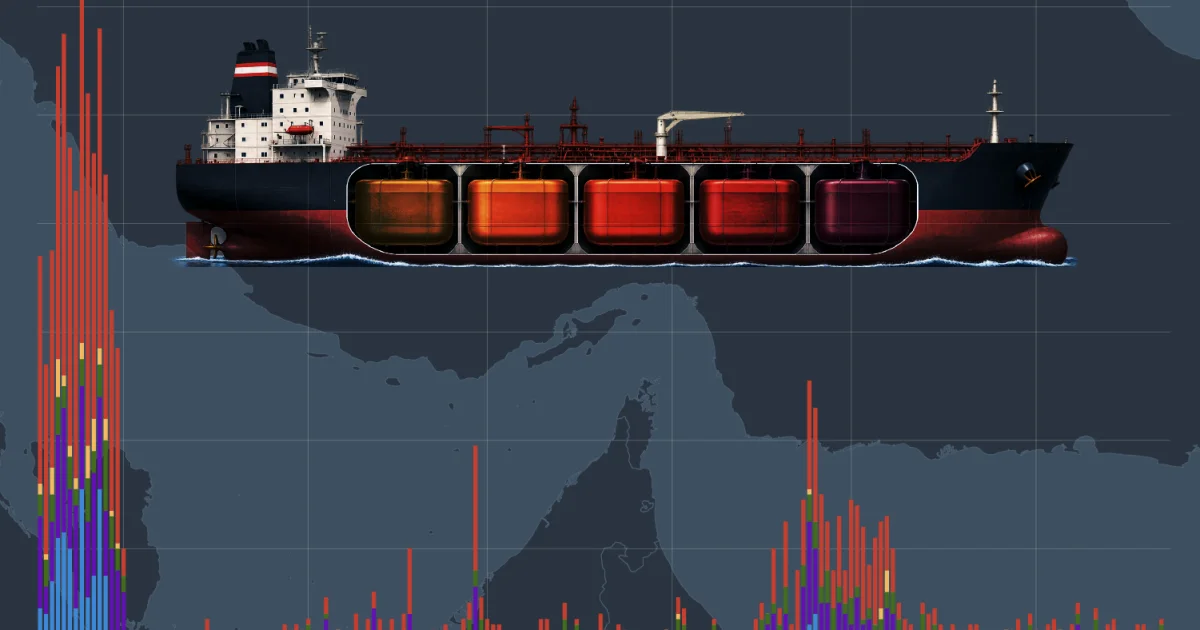
Traffic through the Strait of Hormuz has collapsed by about 95%—from roughly 100 ships a day to five—forcing a global shipping reroute via the Red Sea and Southeast Asia, cutting Gulf crude exports by about 47% and pushing oil prices higher as supply chains adapt to new chokepoint realities.
A data-driven map highlights the world’s key oil chokepoints, led by the Strait of Malacca (~29 mb/d, ~29% of global maritime oil trade) and the Strait of Hormuz (~21 mb/d, about one-fifth of global oil consumption, with ~84% headed to Asia). Together these routes move roughly 73 mb/d, underscoring how disruptions at these narrow passages could ripple through global energy markets.
The Strait of Hormuz remains a critical global oil chokepoint, handling about 20% of the world's petroleum liquids despite regional tensions and some decline in transit volumes due to OPEC+ production cuts and regional shifts. While no blockages have occurred recently, disruptions could significantly impact global oil prices, especially in Asian markets, with alternative routes available but limited in capacity.
Diesel markets are tightening due to refinery outages, changing global oil trade flows, low inventories, and increased demand from the trucking industry. This tightening is expected to raise diesel prices, which could lead to inflationary pressures and potentially impact the broader economy. The low inventories and refinery maintenance are also expected to reduce distillate fuel oil supplies to the East Coast, increasing demand for heating oil during the winter. Globally, oil inventories are falling, and OPEC+ production cuts are restricting the supply of sour crudes, which have higher yields of diesel and other distillate fuels. With larger-than-normal distillate draws expected in the U.S. and a tentative recovery in the trucking industry, diesel prices are set to rise, potentially impacting inflation forecasts and leading to higher interest rates.