

Tag

Hsp90

All articles tagged with #hsp90

The genome’s safety net: buffering mutations with HSP90 and partners
molecular-biology27 days ago

The genome’s safety net: buffering mutations with HSP90 and partners

A Nature feature explains how HSP90 and related heat‑shock proteins buffer harmful mutations, masking their effects and allowing genetic variation to persist. This buffering can influence disease risk (notably BRCA1‑related cancers), responses to therapy, and even evolution. New work maps additional buffering genes beyond HSP90, while environmental stress such as heat can exhaust buffering, with implications for drug development that target these master proteins.
Chaperones choreograph AGO2 loading to form active RISC
science1 month ago

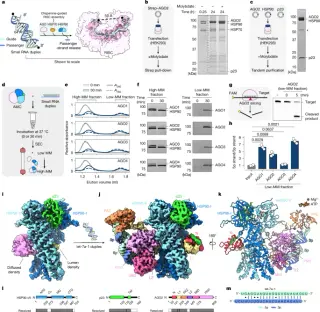
Chaperones choreograph AGO2 loading to form active RISC

Nature reports a structural study showing how the AGO–HSP90–p23 maturation complex (AMC) traps AGO2 in an RNA-free state and uses a duplex RNA to drive AGO folding and loading, revealing an open AGO2 conformation that accommodates dsRNA. A 5′-phosphate-containing RNA duplex acts as a cofactor guiding domain assembly, enabling de novo RISC formation and productive RNA silencing, with implications for designing siRNA therapeutics and understanding chaperone-guided protein folding.

Uncovering Safe Pain Relief: Molecular Pathways in Opioid Drugs
health3 years ago

Uncovering Safe Pain Relief: Molecular Pathways in Opioid Drugs

Scientists are studying the molecular pathways opioids use to carry out their effects in the body to design drugs that deliver effective pain relief without the risk of side effects, including addiction and overdose. One approach is to target the "good" signals like pain relief and avoid the "bad" signals that lead to addiction and death. Researchers are targeting a protein called Heat shock protein 90 (Hsp90), which has many functions inside each cell and is important in regulating opioid signal transduction. Manipulating opioid signaling through Hsp90 offers a path forward to improve opioid drugs and reduce the risk of addiction and overdose.