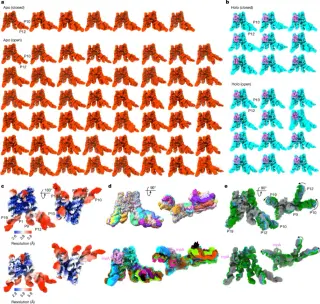
Researchers used a new cryo-electron microscopy protocol to visualize 76 distinct conformers of RNase P RNA, revealing that catalysis is regulated by dynamic structural ensembles and Mg2+ ion movements rather than a single static structure. The accessory protein rnpA shifts the equilibrium toward active states via allosteric effects, not by altering the local catalytic site.
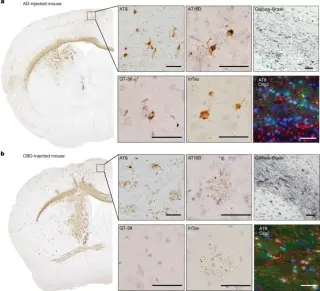
Researchers demonstrated that tau filaments from human Alzheimer’s and corticobasal degeneration brains can seed the formation of identical structures in mouse brains. This confirms that distinct tau folds act as prion-like strains, retaining their structural identity during transmission and driving disease-specific pathology.
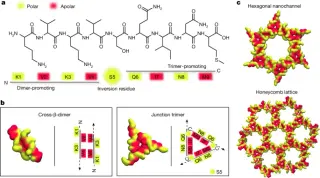
Researchers have demonstrated that minimal nine-residue peptides can self-assemble into complex, hexagonal nanofibrils with continuous internal channels. By combining a cross-beta dimer, a trimeric junction, and a central inversion residue, these short sequences encode specific lateral and axial interaction motifs. Cryo-electron microscopy reveals that these motifs tile into honeycomb lattices with approximately 5-nm solvent-accessible pores. The study establishes that sequence-encoded amphiphilicity can program long-range supramolecular order without requiring cyclic scaffolds or large pre-organized interfaces, offering a new framework for designing hierarchical peptide architectures.
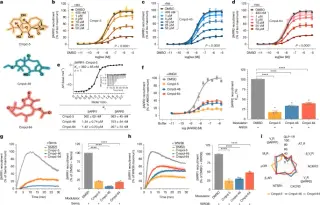
Nature reports the discovery of the first small-molecule inhibitors that directly bind and inhibit β-arrestins, blocking their engagement with agonist-activated GPCRs and downstream signaling while sparing G protein coupling. Using differential scanning fluorimetry, three modulators (Cmpd-5/oridonin, Cmpd-46, Cmpd-64) were characterized across biophysical and cellular assays, showing dose-dependent inhibition of β-arrestin recruitment and receptor desensitization/internalization. Cryo-EM reveals Cmpd-5 binding to a central crest (the MCL site) on β-arrestin1, stabilizing an inactive-like conformation incompatible with receptor engagement. Complementary ITC, MD simulations, docking, and mutagenesis validate this allosteric pocket as a drug-design target. Across GPCR panels, T cell migration, and cardiomyocyte assays, these modulators alter β-arrestin signaling and effector interactions without suppressing Gi or Gs activity, suggesting a path toward pathway-specific GPCR therapeutics. Data include PDB/EMDB structures for βarr1–Cmpd-5 and related states, and the work outlines a mechanistic framework for transducer-targeted GPCR drugs.
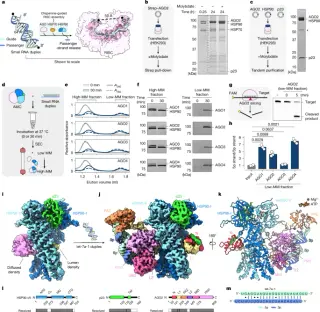
Nature reports a structural study showing how the AGO–HSP90–p23 maturation complex (AMC) traps AGO2 in an RNA-free state and uses a duplex RNA to drive AGO folding and loading, revealing an open AGO2 conformation that accommodates dsRNA. A 5′-phosphate-containing RNA duplex acts as a cofactor guiding domain assembly, enabling de novo RISC formation and productive RNA silencing, with implications for designing siRNA therapeutics and understanding chaperone-guided protein folding.
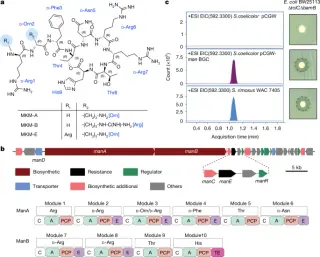
Manikomycin (MKM), a newly identified cyclic depsipeptide from Streptomyces rimosus, binds the E-site of the bacterial 50S ribosome to block translocation and halt protein synthesis. It kills multidrug‑resistant Enterobacteriaceae and mycobacteria, with resistance arising from mutations in 23S rRNA near the E-site or loss of ribosomal protein L35; the producer carries ManE, a methyltransferase that methylates Cm2395 to confer self-resistance. Cryo-EM reveals MKM in the primary E-site pocket formed by 23S rRNA and L35; biochemical and ribosome profiling data show context‑dependent translation inhibition. Activity is limited in many bacteria due to uptake, but MKM offers a new scaffold for antibiotic development, supported by in vitro, ex vivo, and pharmacokinetic data.
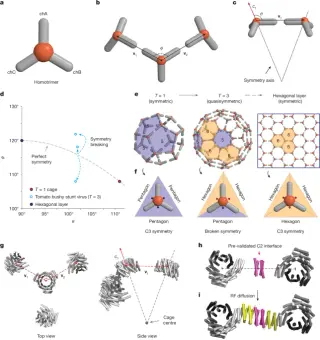
Researchers demonstrate de novo design of large, quasisymmetric protein cages built from a single building block. By leveraging spontaneous symmetry breaking, a parametric cage-design framework, and RoseTTAFold diffusion modelling (with ProteinMPNN for sequence design), they generate 3 ≤ T ≤ 36 cages containing 180–2,160 subunits and diameters from 68 to 220 nm. Cryo-EM confirms the structures and shows symmetry breaking across non-equivalent subunit positions, expanding the design space for one-component cages with potential for delivering biologics at large internal volumes.
Nature reports computational de novo design of miniproteins that bind G protein-coupled receptors (GPCRs) with high affinity, enabling both agonists for itch/pain receptors and antagonists for cancer, metabolic disorders, and migraine. Cryo-EM structures of five receptor–miniprotein complexes closely match the design models, validating the approach, and a designed chemokine receptor antagonist mobilizes hematopoietic stem and progenitor cells in vivo with fewer adverse effects than a clinically used drug.
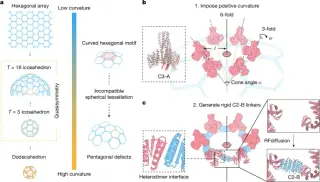
Nature reports a computational design strategy using geometric frustration to create two-component, quasisymmetric protein cages that assemble into sphere-like structures by embedding curvature-inducing pentagonal defects. By pairing complementary trimeric and dimeric blocks, the authors programmably control cage size from ~40 nm to >200 nm and mass from 2 to >50 MDa, comparable to viral capsids. The cages are functionalized for ribonucleoprotein cargo loading and cellular uptake, enabling studies of cargo delivery and size-dependent diffusion in cells. Data and code are publicly available (Zenodo, GitHub), underscoring a new route for biologics delivery and cell biology tools.
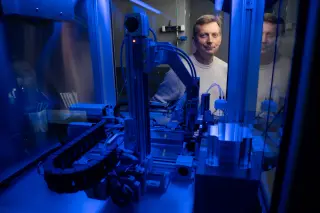
MIT biologist Joey Davis shows ribosome assembly is dynamic and can proceed via multiple pathways, not a fixed sequence. Using cryo-EM and the CryoDRGN neural-network approach, his work reveals diverse intermediate structures when assembly is blocked and aims to speed up data collection to improve AI-based protein-structure prediction.
The article describes how bacteria run on a proton motive force that powers the flagellar motor, a nanoscale engine at the base of the flagellum. Recent cryo-EM studies mapped the motor’s components—especially the C ring and its stators—revealing how protons drive rotation and how phosphorylation of CheY flips the motor to switch between running and tumbling, illustrating how proton energetics power core cellular processes and life’s physics-driven machinery.
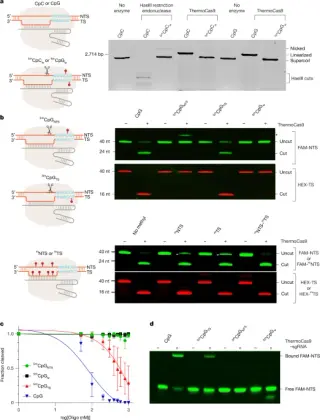
ThermoCas9 is a thermostable Cas9 whose activity is blocked by methylation of the PAM cytosine (5mC) in PAMs 5′-NNNNCGA-3′ or 5′-NNNNCCA-3′, restricting binding and cleavage to unmethylated sites. Cryo-EM structures of pre- and post-cleavage states reveal how PAM bases are recognized and why methylation prevents engagement. In human cells, unmethylated PAMs edit efficiently whereas methylated ones do not; a catalytically enhanced ThermoCas9 and optimized delivery methods boost editing at hypomethylated breast cancer loci ESR1 and GATA3, illustrating a new layer of precision for genome engineering and potential epigenetic screening applications.
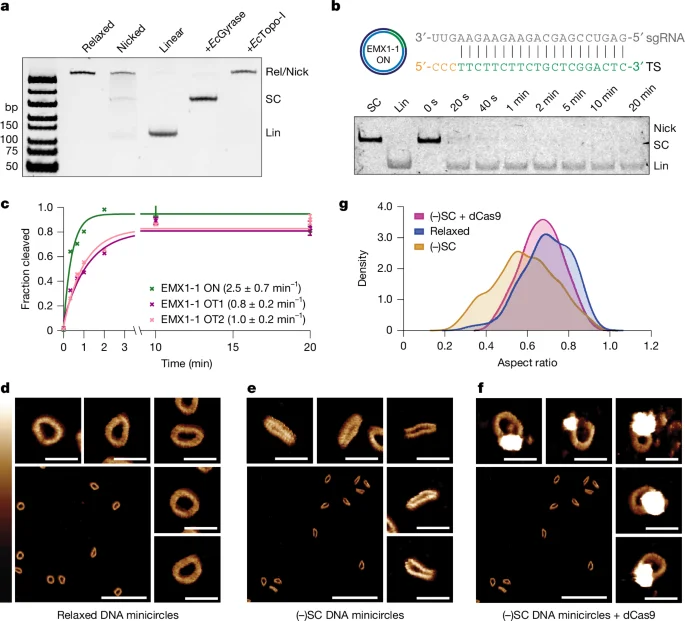
Negatively supercoiled DNA minicircles reveal that DNA topology promotes Cas9 binding and faster cleavage, with cryo-EM showing a 15 Å swing of the HNH domain toward the target strand and greater PAM-distal R-loop flexibility. The off-target structures OT1 and OT2 adapt via non-canonical base-pairing across the protospacer, enabling mismatches to be accommodated even in seed and distal regions; truncated guides retain activity under topology-induced stress. Collectively, the findings explain topology-driven off-target activity and offer design principles for high-fidelity Cas9 variants that consider DNA topology.
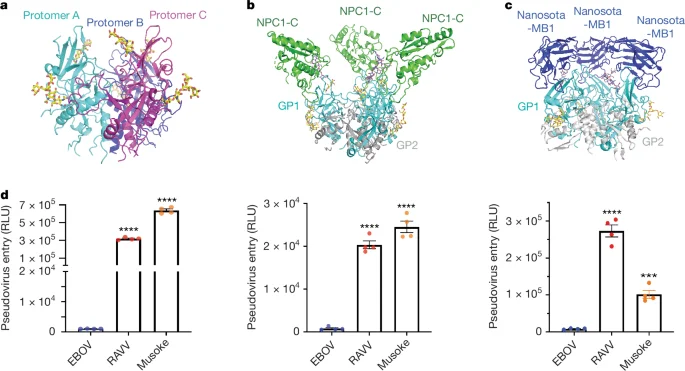
New cryo-EM structures of Marburg virus glycoprotein (MBV GP) in three states—unbound, NPC1-C bound, and nanobody-bound—reveal that MBV GP binds NPC1 with a distinct, higher-affinity orientation than Ebola GP, aided by a partially flexible glycan cap that blocks NPC1 only partially. NPC1 engagement induces substantial conformational changes in MBV GP that promote membrane fusion, explaining MBV GP’s markedly higher entry efficiency. A neutralizing nanobody, Nanosota-MB1, mimics NPC1 at the receptor-binding site and blocks NPC1 binding, neutralizing MBV pseudoviruses. Together, these findings illuminate MBV entry mechanisms and point to potential antiviral strategies targeting GP–NPC1 interactions and receptor-triggered transitions.
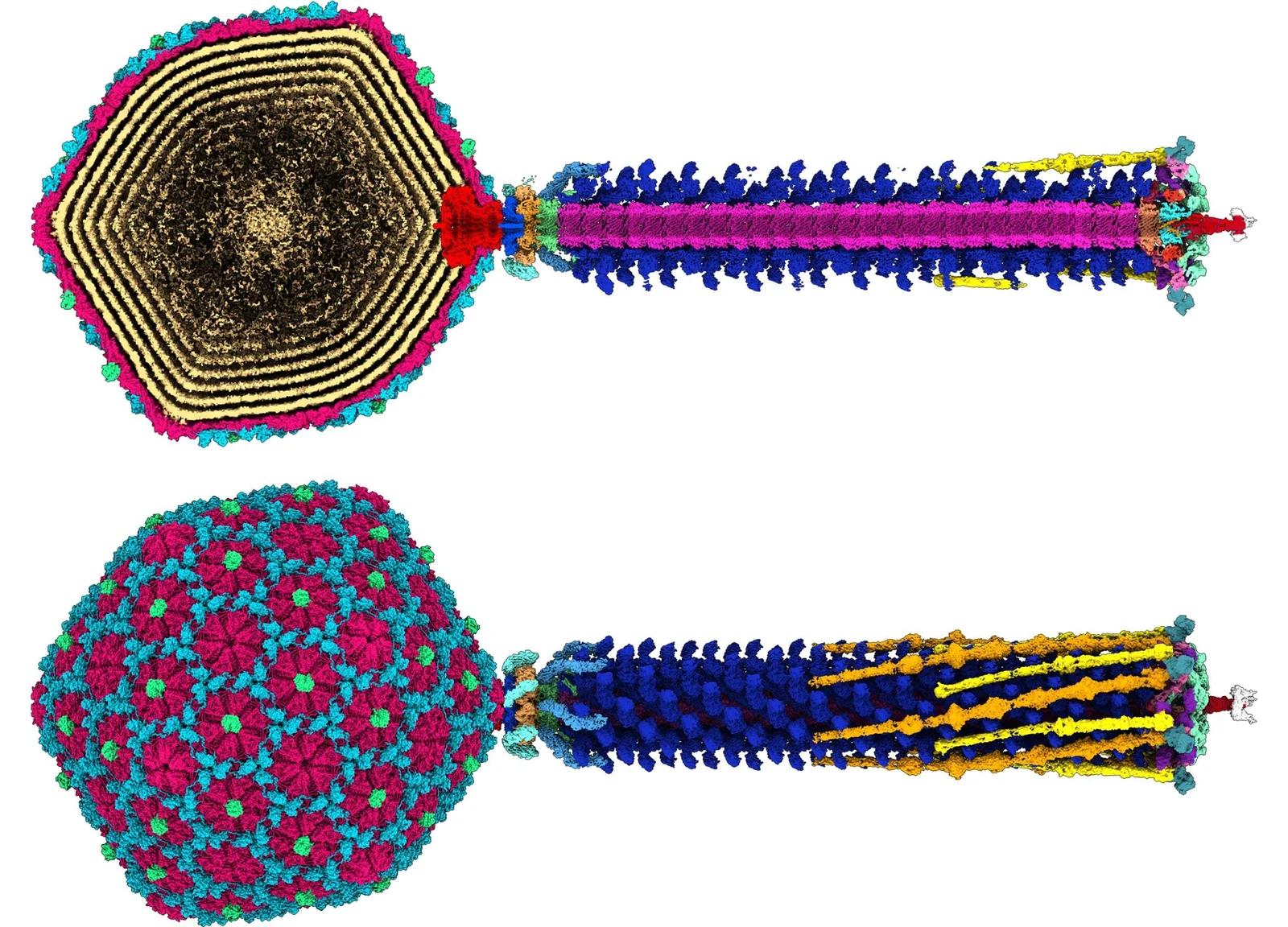
Scientists released a high-resolution cryo-EM map of Bas63, a bacteriophage that infects E. coli, revealing how its tail and distinctive surface proteins enable infection and offering a framework to select and optimize phages for treating drug-resistant bacteria; the study also highlights deep evolutionary links between bacteriophages and herpesviruses and builds on prior viral-structure work by the same team.