
UV-triggered hydrated electrons reveal deeper PFAS defluorination routes
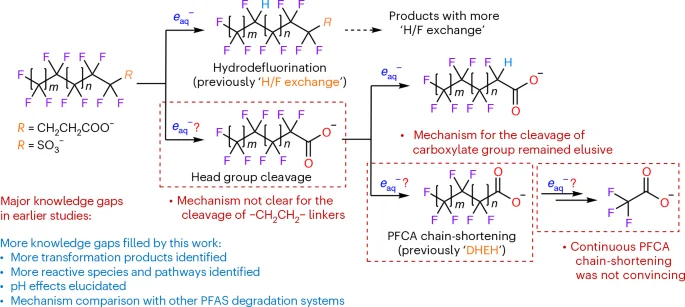
This study maps how PFAS degrade under UV irradiation with sulfite by generating hydrated electrons (eaq−). Across three PFAS families, degradation proceeds via sequential reactions with eaq−, hydroxyl radicals, and hydroxide, causing C–C bond cleavage and requiring carboxylate groups for further defluorination. Higher pH both preserves eaq− and promotes fragmentation and C=C formation, accelerating degradation. Notably, the main initial product is formate, not CO2 or CO, refining the mechanistic picture and informing both PFAS remediation strategies and the design of more degradable fluorochemicals.