
UV-triggered hydrated electrons reveal deeper PFAS defluorination routes
TL;DR Summary
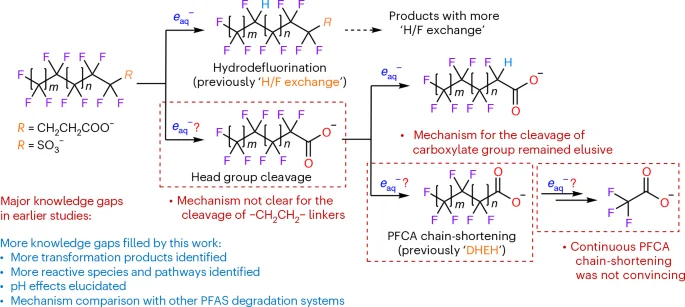
This study maps how PFAS degrade under UV irradiation with sulfite by generating hydrated electrons (eaq−). Across three PFAS families, degradation proceeds via sequential reactions with eaq−, hydroxyl radicals, and hydroxide, causing C–C bond cleavage and requiring carboxylate groups for further defluorination. Higher pH both preserves eaq− and promotes fragmentation and C=C formation, accelerating degradation. Notably, the main initial product is formate, not CO2 or CO, refining the mechanistic picture and informing both PFAS remediation strategies and the design of more degradable fluorochemicals.
Reading Insights
Total Reads
0
Unique Readers
26
Time Saved
18 min
vs 19 min read
Condensed
98%
3,670 → 83 words
Want the full story? Read the original article
Read on Nature